If you’ve ever looked at your ad data and wondered which channel to credit for a sale, it’s time to switch things up. Marketing attribution has become one of those things you can’t ignore anymore, especially in 2026. With all the privacy changes, disappearing cookies, new tracking rules, and customers jumping between different marketing touchpoints before converting, you can’t rely on whatever Google or Meta decides to tell you.
Now, marketing attribution has shifted from simply giving credit for each conversion event to understanding which of your marketing strategies are really working. As a result, you stop wasting money on campaigns that look good on paper but don’t convert.
This guide to data attribution modelling will take you from the basics to deep insights, so you can use real performance data to improve your campaigns. Whether you’re a beginner or pro, you’ll learn how to tighten up your reporting and make smarter decisions.
What Is Data Attribution?
Data attribution (or data-driven attribution) is the practice of tracking a conversion to the marketing touchpoints that led to it. Each time someone clicks an ad, opens an email, visits your site, or watches a video, that interaction becomes a touchpoint. Data attribution tells you which user interactions led to the final conversion.
Let’s break this down with an example of what data attribution looks like. A customer sees your TikTok ad for a product and then Googles your brand to learn more and see what others are saying about you. Then the customer finally purchases after seeing your ad in a gaming app. Data attribution connects those dots and shows you the actual path the buyer took, rather than blindly trusting what ad platforms say.
How Does Data-Driven Attribution Work?

Data-driven attribution (let’s call it DDA for short) examines every touchpoint throughout your customer’s journey and determines how much each platform contributed to a conversion. Instead of relying on static, pre-set rules, it uses machine learning and statistical modelling to identify actual trends in your data.
It evaluates thousands of past journeys, compares what happened when a touchpoint was involved vs. when it wasn’t, and then evaluates how much that step contributed to moving the user forward towards a conversion. Data-driven attribution feels more reliable because it adjusts as your buyers change, your channels mature, and your campaigns progress.
How Data-Driven Attribution Compares to Other Models
Data-driven attribution is nothing like the rule-based marketing attribution models most marketing teams are familiar with. Here’s how it compares to other marketing attribution methods.
Last-Click Attribution Model
The last-click attribution model assigns all conversion credit to the final touchpoint, even if several other ad interactions occurred earlier. It’s familiar and straightforward, but it leaves many activities in the user journey unaccounted for.
Data-driven attribution vs. last click: Data-driven models go deeper by looking at every step of the user journey and figuring out which ones nudged the conversion forward.
First-Click Attribution Model
First-click marketing attribution gives all the conversion credit to the first touch, and that’s the exact opposite of the last-click method. While it gives you a good view of the campaign that created awareness, it leaves out everything that influenced conversion.
Data-driven attribution vs. first-click: Data-driven attribution wins by recognizing that the first touch is only part of the conversion story (not the whole picture).
Time Decay Attribution Model
Time decay attribution assigns more credit to customer interactions closer to the conversion event and less to earlier ones. Say a customer sees your ad on Instagram, then later clicks a Google search ad, and finally purchases after clicking a link in an email. In the time decay model, the email link gets the most credit, followed by the Google ad, and then the Instagram sponsored post.
Data-driven attribution vs. time decay: Data-driven attribution doesn’t force a pattern. It simply checks whether recency actually mattered based on real user actions.
Position-Based Attribution Models (U-Shaped)
The U-shaped marketing attribution model assumes that the first and last touchpoints influence a customer’s purchase decision the most. Following the U-shape, this position-based model gives more credit to the first and last touchpoints, then evenly distributes the remaining credit across those in the middle.
Data-driven attribution vs. position-based models: Data-driven methods skip the templates and learn which steps matter most in your actual journeys.
Linear Attribution Model
The linear attribution method splits credit evenly across all touchpoints. It seems fair on the surface, but in reality, some steps barely contribute to the conversion event, while others carry the weight. For instance, a customer may not react after seeing your ad on Facebook but might click through to your landing page after seeing it again in their LinkedIn inbox.
Data-driven attribution vs. linear models: Data-driven attribution avoids assuming that all touchpoints are equal. Instead, it assigns credit based on real impact.
Multi-Touch Attribution Models (MTA)
Traditional MTA spreads credit across every marketing interaction a customer has with your business as they move through the conversion funnel. Sure, it’s better than single-touch attribution models, but you still have to set attribution rules based on your requirements. While it helps you avoid over-crediting the last click, it’s not entirely accurate due to tracking gaps and platform bias.
Data-driven attribution vs. multi-touch: The data-driven method removes all the manual tweaking and adjusts automatically as patterns shift.
Key Differences Between Data Attribution Model Vs. Older Models
Take a glance at the key differences between data-driven attribution vs. last click and other methods of marketing attribution:
| Attribution Models | Assumption | Drawback | What DDA Does Differently |
| Last Click | The final touchpoint did all the work | Hides the rest of the user journey | Considers every ad interaction |
| First Click | The first touchpoint is the key driver | Undervalues nurturing steps | Balances early and late influence |
| Time Decay | Recency equals importance | Penalizes early high-value steps | Weighs recency only if data supports it |
| Position-Based | Pre-selected positions matter most | Template-driven, not journey-driven | Detects which steps matter organically |
| Linear | All touchpoints are equally valuable | Over-credits weak customer interactions | Assigns credit based on real impact |
| Traditional MTA | Rules can predict influence | Requires manual weighting | Automates attribution without fixed rules |
Why Data-Driven Attribution Matters
75% of online marketers currently use or plan to adopt a marketing attribution model in the next 12 months. Here are reasons why you should, too:
Visualize Omnichannel Marketing Efforts
The modern consumer journeys through different marketing touchpoints before buying a product or service. One day, they’re binging Reels on social media, the next they’re searching on Google, and then they’re clicking an email a week later. Without the right attribution model, that journey looks like complete chaos.
Data-driven attribution stitches all of those messy touchpoints together so you can see the full picture. You’re not guessing which channels helped, and you’re also not fighting with biased reports from ad platforms. Instead, you’ve got a clean, unified view of your omnichannel marketing activities.
Optimize Performance Based on Historical Data
Data-driven attribution doesn’t rely on rules, but it learns from your past data. It checks what happened in thousands of buyer journeys and spots patterns you’d never catch manually.
For example, you could find that people who watch 20 seconds of your TikTok ad are likelier to buy the advertised products than those who skip after three seconds. Or you might also discover some nudge channels that assist but never close a sale.
As a result, you’ll make smarter decisions based on real buyer behavior instead of mere assumptions. And these changes can actually beef up your bottom line because they’re grounded in proof.
Prove Marketing ROI
As a marketer, you already know the pain of trying to justify your marketing spend when the data feels fuzzy. Data-driven attribution removes that pressure. When you can clearly show how different touchpoints contribute to revenue, it becomes easier to prove your returns, especially since teams using advanced attribution see higher marketing ROI.
Gain Real-Time Insights Into User Behavior
Online customers don’t always behave in a predictable way. Sometimes, a touchpoint you thought was just raising awareness actually led to the purchase. Other times, something you thought was essential actually makes very little difference. Data-driven attribution reveals these surprises and shows you how users discover your business, what they find appealing that ultimately convinces them, and what finally drives them to spend.
Direct Ad Spend More Effectively
Once you know which touchpoints led to a sale and which ones had the least impact, you stop spreading your budget thin. You put more cash into the channels that consistently perform and cut back on the ones that waste your ad spend. It’s a lot easier to scale when real conversation data shows you what’s actually driving results.
Limitations of Data-Driven Attribution
Data-driven attribution delivers more accuracy than rule-based models, but it does come with some limitations you should know before relying on it. These challenges help sales teams understand the conditions needed for data-driven attribution models to work well.
Data Requirements
The data attribution model requires a high volume of conversions, as well as accurate tracking data to generate statistically significant outputs. This model learns by analyzing thousands of user paths, meaning any business with low traffic, poor tracking, or conflicting data sources may see unreliable outputs. If you want reliable results, you need clean event tracking and steady conversions.
Privacy Restrictions
Several sites now operate without third-party cookies due to browser restrictions, and most platforms hold user data behind their own walls. This creates unavoidable gaps in the entire customer journey. The data-driven model can only evaluate the touchpoints it sees, so incomplete data leads to poor decisions. Even with server-side tracking and first-party data collection methods, privacy rules still limit how much detail any model can access.
Black-Box Algorithms
The data-driven attribution model relies on machine learning models that don’t expose their internal logic. You get the final credit distribution, not an explanation of the exact weight assigned to each touchpoint or why certain customer interactions mattered more. This can make reporting harder for teams that need step-by-step justification. It also reduces your ability to audit the model or adjust how credit is calculated.
How to Set Up Data Attribution in Your Business
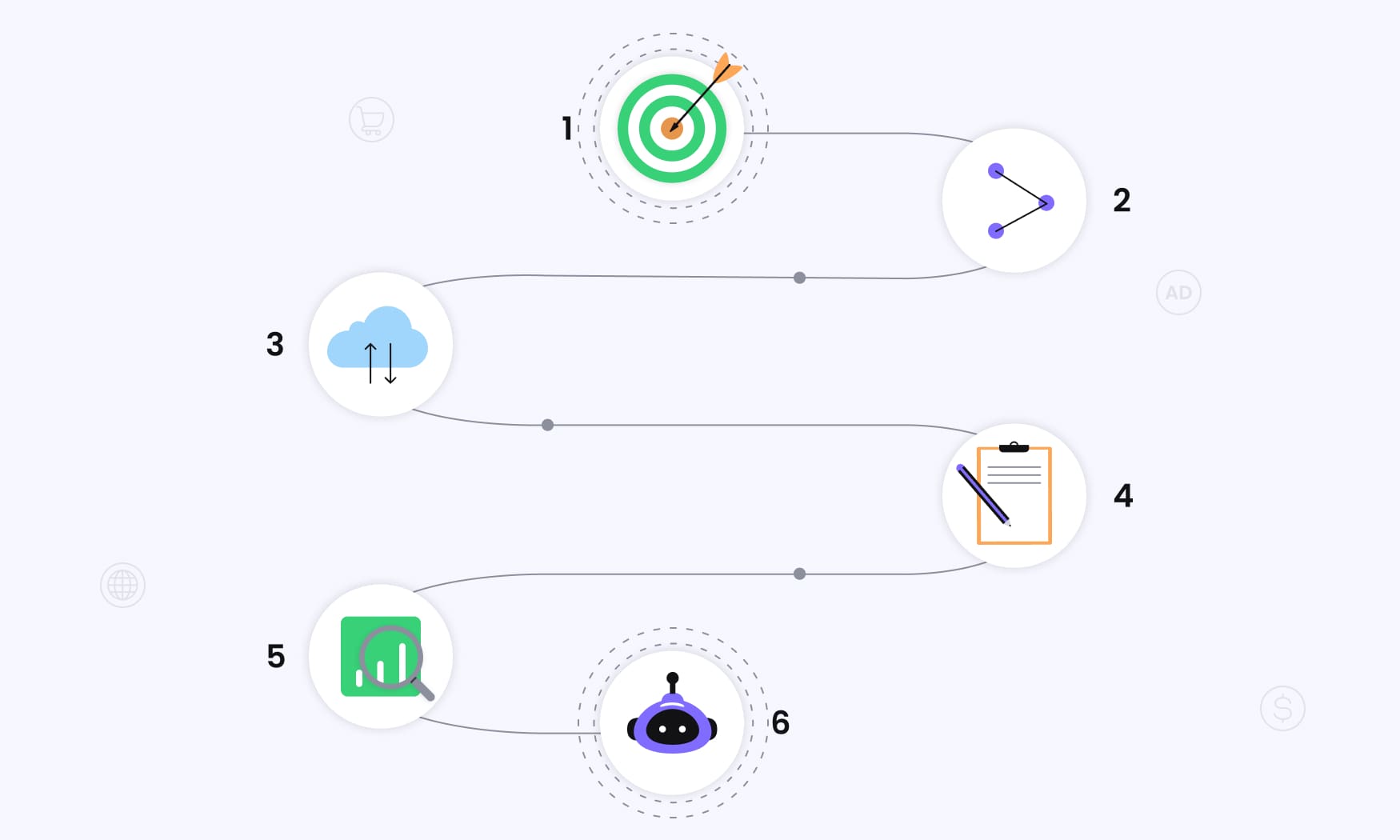
Setting up data attribution the right way gives you a clear view of what’s working across your marketing. Here’s how to set it up in a clean, practical way that supports your goals.
1. Set Your Attribution Goals
You need a clear reason for setting up attribution before you do anything else. If you’re not sure what you want to measure, the model won’t know what to prioritize either. Strong goals make every other step easier and help you build a setup that’s useful instead of just collecting data for no reason.
Follow these steps when setting your attribution goals:
- Identify what you want to track (such as first-time buyers, lead quality, channel efficiency, etc.).
- Choose the conversions that matter the most for your business.
- Decide how deeply you need to analyze the journey.
- Match your attribution model to the type of decision you want to make.
2. Identify Conversion Paths and Touchpoints
Before you track anything, you need to know the paths your customers take. People jump between channels, devices, and content types all the time. Mapping out these paths gives your attribution model a structure to work from, so it isn’t trying to guess how your funnel works.
To identify your conversion paths, marketing teams must follow these steps:
- List all your major channels.
- Define the touchpoints you want to track.
- Include offline interactions if your business depends on them.
- Note the common actions people take before converting.
3. Collect First-Party Data
First-party data is the information you collect directly from your customers, making it the most accurate data collection method. With cookies disappearing and tracking rules tightening, you need a reliable way to capture what’s happening across your site and multiple channels. The more consistent your data is, the more accurate your attribution results will be.
Typically, you can collect first-party data by:
- tracking website events (think conversions, product views, and scroll depth here);
- capturing email and customer relationship management (CRM) interactions;
- using server-side tracking when possible;
- connecting ad platforms through APIs instead of relying only on tracking pixels.
4. Organize Your Attribution Data
Choose a single hub for all your marketing, sales, and product data. For some sales teams, that’s a CRM system. Others prefer a customer data platform (CDP) because it handles identity resolution. Some stick with an analytics tool, and more advanced teams use a dedicated attribution platform that pulls everything together automatically.
The tool you choose doesn’t matter as much as keeping everything in one place. For example, if Google Ads says a marketing campaign generated 30 conversions and your CRM only shows 18 qualified leads, having a unified ad tracking solution, like RedTrack, makes it easier to figure out what really happened and which number you should trust.
Once that’s set, clean up the structure behind the scenes by:
- Standardizing your naming conventions so you don’t have any marketing campaigns named “test123” or “final_version_v7.”
- Removing duplicate or outdated events so you’re not inflating campaign results without realizing it.
- Making sure every tool you use sends data in the same format.
When your platforms label things differently, your attribution model works twice as hard to make sense of it, and the insights get less accurate.
5. Analyze Results
Attribution is only useful when you turn the data into valuable insights. This is where you look past vanity metrics and start spotting patterns in how people move through the conversion funnel. Some touchpoints quietly pull more weight than you expected, while others look busy but don’t do much. When you analyze the customer journey with that mindset, you finally see the leaks in your sales funnel, where small tweaks could make a big difference.
Here’s a quick rundown of what to do here:
- Compare how each channel performs beyond clicks and impressions.
- Look at assisted conversions to understand supporting roles.
- Identify drop-off points where users lose interest in your website.
- Spot touchpoints that consistently show strong influence across multiple customer journeys.
6. Train Your Model Continuously
Data-driven attribution works best when it has fresh conversion data to learn from. Your audience’s preferences and shopping behavior change, your marketing campaigns shift, and new channels pop into the mix. So the model needs regular updates to stay accurate.
That’s why you want to keep feeding it updated info on things like:
- conversion events;
- user behavior;
- CRM changes;
- email engagement;
- and whatever signals your ad platforms send back.
As your marketing strategy evolves, you also want to revisit the touchpoints you’re tracking. For example, if you introduce a new landing page or add a product demo step, the data-driven model can’t account for them unless they’re properly tracked.
Using Data Attribution to Improve Performance
Once your attribution system is running smoothly, this is where the real payoff begins. You’re no longer piecing together reports from several platforms or trying to guess which channels deserve more budget. Instead, you’ve got a clear picture of how your marketing works, and that lets you improve marketing performance in ways that boost ROI.
Check out some advanced ways to improve campaign performance using data attribution methods.
Improving Financial and Reporting Accuracy
Instead of debating where revenue came from, you get clean, consistent reporting that everyone (from marketing and sales to leadership) can trust. When your financial data lines up with your marketing data, you make decisions faster and with a lot more confidence.
With accurate data attribution, you can:
- see which channels drive revenue;
- align your reports across finance, sales, and marketing;
- track the real impact of campaigns without inflated platform numbers;
- build reporting that’s accurate enough to guide strategic decisions.
Budgeting, ROI Tracking, and Forecasting
Having clear attribution data makes budgeting simple. You stop randomly spreading your money across multiple channels, and you start putting more money into the ones that you already know consistently work. This will also make it clearer for you when calculating the ROI of your marketing since you’ll now be able to see the actual contributions each touchpoint made. And finally, having better data at hand will naturally make forecasting easier since you can predict outcomes based on real patterns.
Optimizing Ad Spend and Media Mix
Attribution helps you understand how your entire media mix works together. When you know how channels assist each other, you avoid cutting out an ad channel that quietly improves marketing performance. This is also where you reduce wasted spend and start tightening important growth metrics. In the end, you’ll get real-time insights that help you improve your cost per action (CPA), return on ad spend (ROAS), and conversion rates while optimizing cross-channel strategies.
Understanding Customer Behavior and Journeys
One of the biggest wins of attribution is seeing how people move through your funnel. Attribution helps you make sense of all the twists and turns between different devices and marketing channels. Once you understand these patterns, you can refine messaging and improve customer interactions.
Conclusion – Future-Proof Your Data Attribution With RedTrack
Online shoppers surf multiple platforms, privacy regulations are constantly updated, and every ad channel is hungry for conversion credit. All of these leave you guessing what’s working if you don’t have a solid attribution system.
However, with the right approach, you can finally see which touchpoints are pulling their weight, where your budget is leaking, and what’s genuinely driving revenue. And when your reporting lines up with reality, everything gets easier—budgeting, forecasting, scaling, all of it.
If you want campaign data you can trust, you need three things: first-party data, server-side tracking, and a setup that doesn’t collapse the moment cookies disappear. That’s where RedTrack comes in. RedTrack centralizes all your data into a single source of truth and provides valuable insights that ad platforms wouldn’t want you to know.
Ready to start making smarter decisions with real clarity? Give RedTrack a try, free for 14 days. Your future campaigns and marketing spend will thank you.