
The rules of digital marketing are changing fast.
With third-party cookies disappearing and privacy regulations tightening, brands can no longer rely on external sources for customer insights. That’s why learning how to collect first party data has become one of the most important skills for marketers in 2025.
First party data isn’t just a compliance requirement, but the foundation for smarter marketing strategies.
When you capture data directly from your audience, you gain reliable insights into their preferences, behaviors, and intent. The result? More accurate targeting, higher ROI, and stronger customer relationships.
This guide will walk you through the most effective ways to collect first-party data across websites, email, mobile, offline touchpoints, and more.
By the end, you’ll know how to build a sustainable data strategy that drives results in today’s privacy-first world. Leveraging expert insights for project success can also help businesses refine their first-party data strategy and avoid common pitfalls by learning from proven approaches.
What is First Party Data and Why Collect It
First-party data is the information you collect directly from your customers — when they browse your site, shop on your app, open your emails, or even engage with you offline.
It’s yours, no middlemen, no guessing. And because your audience willingly shares it, this data is not only more accurate, but also far more powerful than anything you could buy from an outside source.
Now, let’s clear the air.
Third-party data? That’s the stuff you buy from brokers.
Second-party data? That’s data borrowed through partnerships.
But first-party data? That’s the goldmine — real signals straight from your own audience. Accurate. Relevant. Reliable.
And here’s the kicker: research shows that 89% of companies believe that first-party data improves customer experiences than third-party data. Businesses that go all-in on it see up to 2.9X higher revenue and 1.5X cost savings. That’s not just “better reporting.” That’s a complete shift in how effectively you can grow.
So, why all the buzz now? A perfect storm hit digital marketing:
- Privacy laws like GDPR and CCPA raised the stakes.
- Third-party cookies vanished, taking old tracking models with them.
- And customers? They now expect control and transparency with their data.
But here’s the best part: moving to first-party data isn’t just about compliance, but about leveling up. With it, you can:
- Create laser-targeted campaigns built on actual customer behavior
- Send messages people actually want to read (goodbye, guesswork)
- Predict and improve customer lifetime value with confidence
- Stop overspending on expensive third-party lists
- Keep full control of your data quality and security
Primary Methods to Collect First Party Data
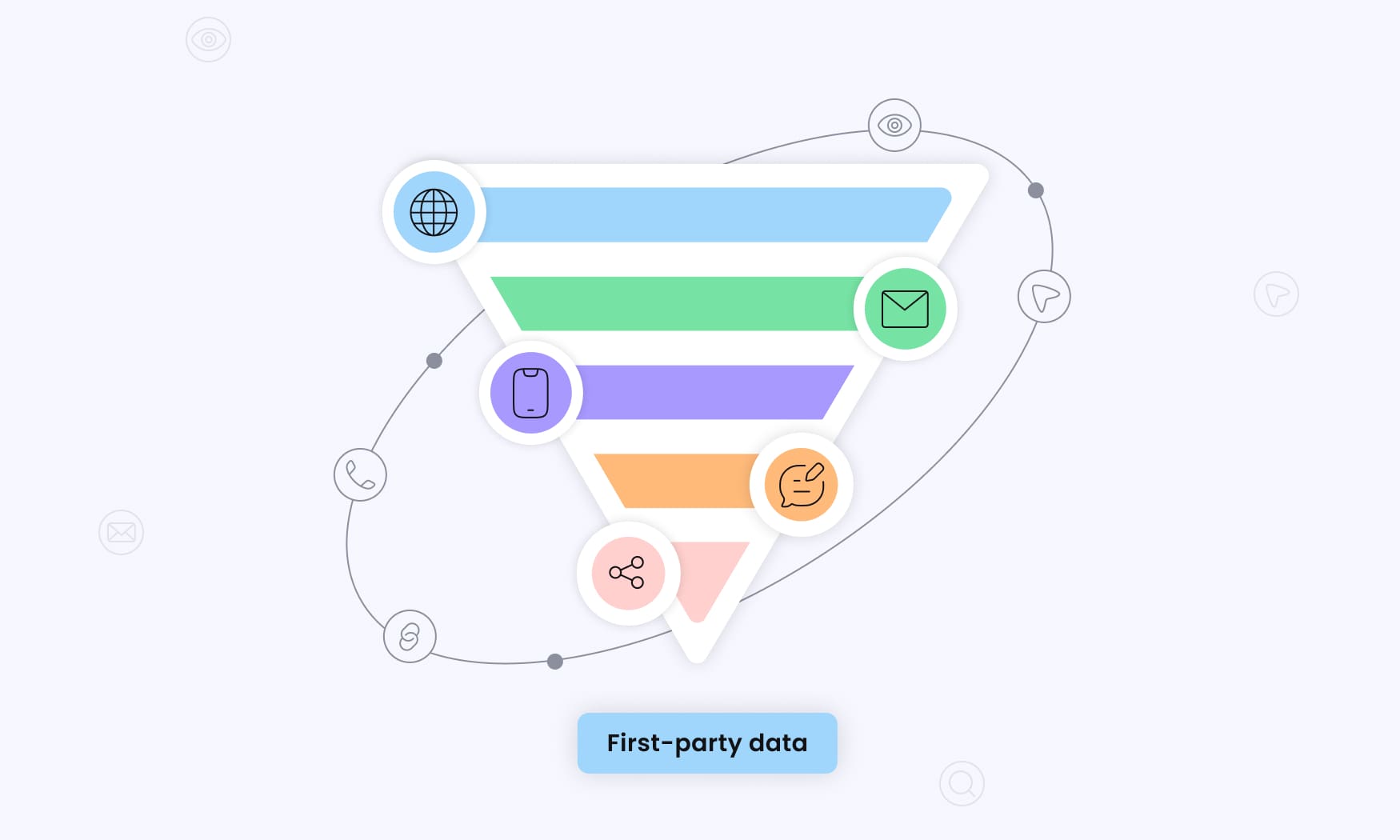
First-party data is the fuel for smarter campaigns, better personalization, and stronger customer relationships. The best results come from combining different methods — each one giving you a piece of the bigger picture.
Here are the main ways to collect it:
- Website behavior – track page views, clicks, and conversion paths to see what interests visitors most.
- Email engagement – measure opens, clicks, and preferences to shape content and timing.
- Mobile apps – capture in-app actions, purchases, and user flows for detailed product insights.
- Surveys & feedback – gather zero-party data customers willingly share about needs and satisfaction.
- Social media interactions – use engagement metrics to learn what resonates with your audience.
- Point-of-sale systems – link offline purchases with digital profiles through loyalty programs.
- Customer service records – analyze chat, call, and support logs to uncover pain points.
Used together, these methods create a comprehensive view of your customers — online and offline.
Website and Digital Platform Collection
Your website isn’t just a storefront. It’s the easiest place to start building real customer insights you can trust. Every click, form, and scroll tells you something valuable — if you know how to capture it without hurting the user experience.
The gain? You get accurate, consented data that fuels smarter campaigns and longer-lasting customer relationships.
Here’s how to do it in a way that works:
Start with consent and trust – Pixels and cookies are still useful, but only when managed the right way. Consent tools like OneTrust or Cookiebot make sure you stay compliant and explain the value to your visitors. When people see how their data improves their experience, they’re more likely to opt in.
Collect leads gradually – Forms work best when the trade feels fair. A helpful guide, a free trial, or a webinar invite makes giving an email address feel natural. And with progressive profiling, you don’t need to ask for everything upfront. Little by little, you build a full profile without scaring people away.
Pay attention to behavior – Numbers like page views are fine, but they don’t show the full story. Tracking things like scroll depth, clicks, and time on page tells you what customers enjoy — and where they get stuck. It’s insight you can act on right away.
Track the actions that matter – Newsletter signups, demo requests, purchases — these aren’t just clicks, they’re signals of intent. Every conversion event brings you closer to understanding where someone is in their journey with you.
Visualize it – Heatmap tools like Hotjar or Crazy Egg help you see exactly how people interact with your site. No guesswork, just clear visuals on what grabs attention and what gets ignored.
Catch them before they leave – Exit-intent popups might be simple, but they work. When timed right, they give you one more chance to capture interest — whether it’s a signup, a discount, or an offer for more value.
Naturally, the real magic happens when all this data flows into one place. That’s when you stop chasing numbers across tools and start working with a single, reliable source of truth.
Universal Tracking Implementation
If your tracking is scattered across tools and tags, you’re flying blind. A universal tracking setup gives you one consistent, reliable view of performance — no matter how many platforms, websites, or campaigns you’re running.
Keep it centralized – Google Tag Manager is a good starting point, but media buyers often need more. RedTrack consolidates tracking across all your traffic sources, offers, and domains in one place — no manual syncing, no scattered dashboards. You get one single source of truth for clicks, costs, and conversions. Want to see it in action?
Go server-side for accuracy – Pixels alone can’t keep up. RedTrack’s server-to-server tracking and pre-built CAPI integrations with Meta, Google, TikTok, and more ensure nothing gets lost to ad blockers or cookie restrictions. That means your conversion data stays complete, accurate, and ready to feed back into ad algorithms for better optimization.
Connect the dots with IDs – Your customers move across devices and platforms. By using unique identifiers (emails, account IDs, or hashed details), you can link behavior across touchpoints. Suddenly, website clicks, email opens, and purchase history become part of a single, unified profile.
Don’t lose sight across domains – If you run multiple sites or subdomains, cross-domain tracking is non-negotiable. Without it, a customer’s journey looks fragmented. With it, you see the full flow from ad click to checkout, even if they jump between properties.
When your tracking foundation is solid, every optimization decision you make is backed by accurate, unified data — not half-truths from scattered tools.
Email and Communication Channel Data
Email, SMS, and push notifications aren’t just ways to “stay in touch.” They’re goldmines of behavioral data that tell you what customers care about, how they like to engage, and when they’re ready to take action.
Start with email engagement – Platforms like Mailchimp don’t just track opens and clicks — they show you which content gets read, which links get clicked, and even when your subscribers are most active. Used well, this turns your email list into a live feedback loop for segmentation and personalization.
Don’t overlook SMS – Texts get seen faster than emails, which makes SMS engagement data incredibly valuable. Tools like Klaviyo or Twilio track delivery rates, opt-outs, and response times. That insight helps you adjust timing and frequency so you’re helpful, not intrusive.
Push notifications add another layer – Whether through Firebase or OneSignal, push data shows how customers respond to real-time nudges. Open rates, actions taken, and timing patterns all reveal when your audience is most responsive — crucial if you’re running flash sales or time-sensitive campaigns.
Preference centers are your best friend – When customers tell you directly what they want — from topics to timing to preferred channels — that’s zero-party data you can fully trust. It not only powers hyper-relevant campaigns but also reduces unsubscribes because you’re sending exactly what people asked for.
Listen to service conversations – Support chats, emails, or even call transcripts (collected with consent) give you qualitative data. This goes beyond clicks — it shows you customer pain points, needs, and frustrations in their own words.
Here’s the thing: the more you lean into communication channel data, the less you rely on guesswork. You’ll send fewer “spray-and-pray” messages and more that actually land — building stronger relationships and increasing lifetime value along the way.
Survey and Feedback Collection
Sometimes the best way to understand your customers is the simplest — just ask them.
Surveys and feedback give you zero-party data: information people choose to share about their needs, satisfaction, and intentions.
It’s direct, honest, and some of the most actionable data you can get.
Post-purchase surveys show the “why” – After a purchase, quick surveys capture how customers felt about the buying experience. Were they satisfied? Would they recommend you? Tools like Delighted make it easy to collect this data right after checkout, when impressions are fresh. The answers reveal what drives repeat business and referrals.
Onboarding questionnaires set the stage – When someone signs up, a short questionnaire uncovers their goals and expectations. This helps you personalize the onboarding journey, spot customers who might need extra support, and prevent early drop-offs.
NPS surveys track loyalty over time – Net Promoter Score (NPS) asks one powerful question: how likely are you to recommend us? The responses highlight potential advocates you can turn into brand promoters — and at-risk customers who need attention before they churn.
In-app feedback captures the moment – Feedback widgets inside your product show you how people feel while they’re actually using it. These insights are packed with context — highlighting what’s working, what’s frustrating, and what needs fixing fast.
Conversations go deeper – Surveys are great, but interviews and focus groups uncover the “why” behind the answers. With consent, recorded conversations reveal hidden needs customers don’t always put into forms.
Don’t just collect feedback for the sake of it. Customers should see the impact. When they notice you improving products, services, or experiences based on their input, trust grows — and so does their loyalty.
Offline Data Collection Methods
Not every customer interaction happens online.
People shop in stores, attend events, and meet your sales team. If you’re not capturing those touchpoints, you’re missing a big piece of the customer journey.
The trick is making offline data collection seamless and valuable for both sides.
Start with loyalty and POS data – Modern point-of-sale systems do more than process payments. Loyalty programs and receipt surveys can connect offline purchases with digital profiles — linking a customer’s email or account ID to what they buy in-store. Suddenly, your view of that customer is complete.
Make events work harder – Trade shows and pop-ups don’t need to end with a pile of business cards. Digital lead capture forms on tablets send data straight into your CRM. That means structured records, instant syncing, and automated follow-ups while the interaction is still fresh.
Use QR codes to bridge the gap – A simple scan can take someone from a physical product or flyer to a mobile form or landing page. When placed strategically — on packaging, signage, or printed materials — QR codes turn offline interest into measurable online engagement.
Install feedback kiosks where it matters – Retail stores, service centers, hotels — kiosks give customers an easy way to share feedback or leave contact info on the spot. Quick, natural, and far less intrusive than a paper form.
Train sales teams to collect consistently – When in-person reps gather contact info and preferences in a structured way, every conversation becomes part of your data ecosystem. Standardized processes ensure quality without breaking rapport.
Here’s the key: offline data should never live in isolation. When it flows into your digital systems, you get a unified view of the customer journey — online and offline — that makes your campaigns sharper, your attribution stronger, and your ROI higher.
Legal Compliance and Consent Management
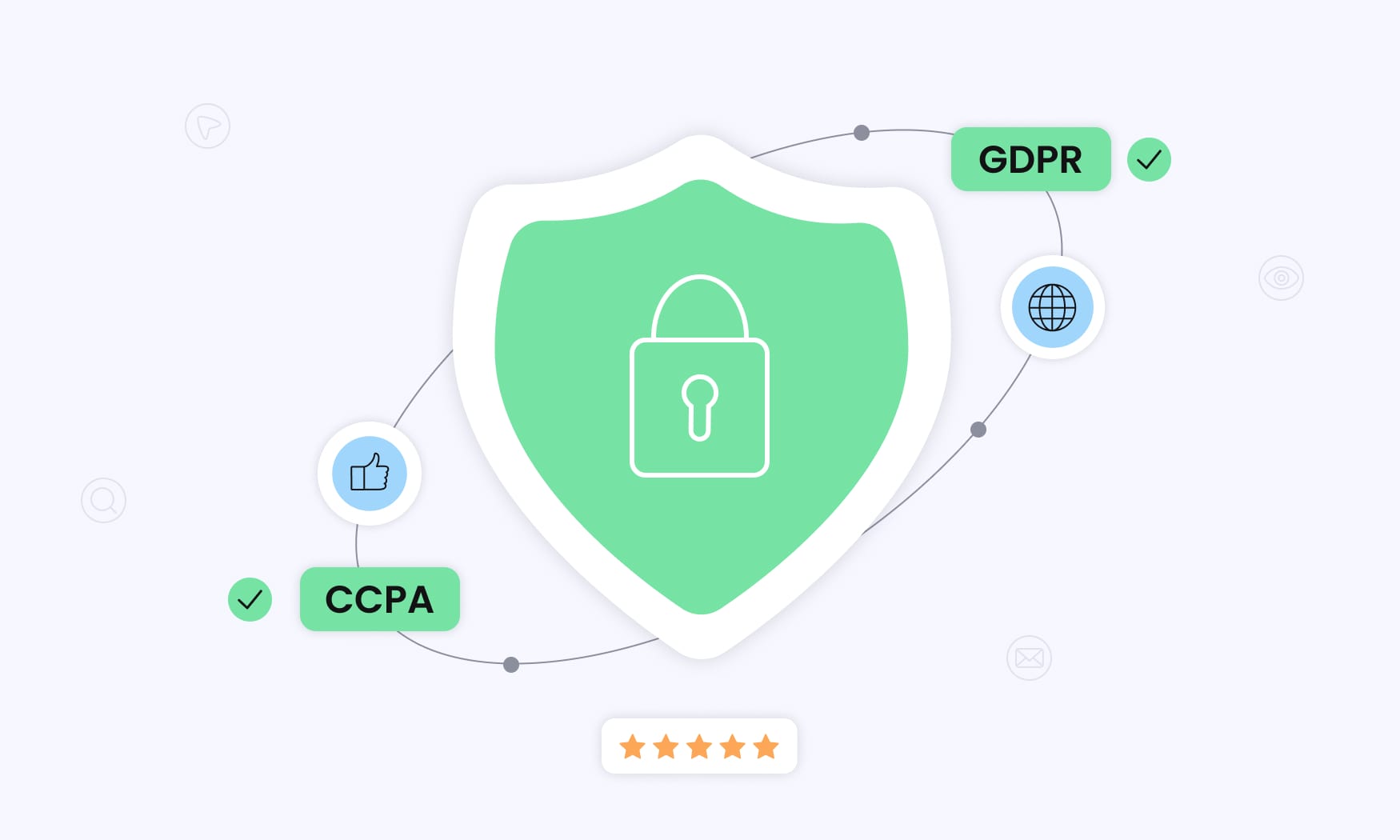
Data protection laws might feel complicated, but here’s the truth: compliance isn’t just about avoiding fines.
It’s about earning customer trust — and when people trust you, they’re far more likely to share data that makes your campaigns smarter.
Make consent clear and easy – GDPR requires banners that actually explain what’s being collected and why. Tools like OneTrust or Cookiebot help you do it right: granular choices, easy opt-ins, and just as easy opt-outs. Done well, you don’t just stay compliant — you improve consent rates because customers feel in control.
Respect local rules – If you have California customers, CCPA means providing a visible opt-out (“Do Not Sell My Personal Information”) and honoring requests on time. It’s not just about checking a box — it shows transparency, which strengthens your relationship with users.
Keep policies human, not legalese – Your privacy policy should be easy to read, not written for lawyers only. Be upfront about what you collect, how long you keep it, and how people can manage their data. And yes, update it regularly — nothing erodes trust faster than outdated promises.
Confirm consent with double opt-in – For email, a double opt-in does two things: ensures explicit consent and keeps your list cleaner. That means better deliverability, higher engagement, and subscribers who actually want to hear from you.
Have workflows for user rights – Under GDPR, people can ask to see, change, or delete their data. Automating these requests makes compliance smoother while respecting user rights. Customers see you take their privacy seriously, which pays off in loyalty.
Audit regularly – Privacy laws evolve. A quick audit with your legal team ensures your consent banners, retention policies, and sharing practices stay up-to-date. It’s far easier to fix gaps early than scramble after a violation.
In a nutshell, you want to build privacy into your systems from the start.
When compliance is part of your design, not an afterthought, you turn legal obligations into an advantage: more trust, more data, and stronger customer relationships.
Data Quality and Organization Best Practices
Here’s the truth: the value of your first-party data isn’t in the size of the pile.
It’s in the accuracy and organization. Clean, structured data collected from your own customers beats mountains of messy third party data every time — because you can actually trust and act on it.
Keep naming consistent – When events, properties, and segments follow clear naming rules, teams stop wasting time second-guessing labels. Consistency reduces errors and makes reporting faster, clearer, and more reliable.
Validate at the point of entry – Bad data sneaks in through typos, duplicates, or incomplete fields. Email format checks, phone number validation, and duplicate detection help ensure the data collected is accurate from the start — saving hours of cleanup later.
Unify data with CDPs – Customer data platforms pull signals from multiple sources into single profiles. They connect anonymous web visitors with known customers, giving you a complete picture of journeys across ads, emails, and purchases. No more silos.
Clean regularly – Outdated records drag down performance. Scheduled data cleansing removes inactive users, manages email bounces, and updates customer records — keeping your lists fresh and campaigns effective.
Protect with backups – Things break. Automated data backups protect raw data and processed insights, ensuring you can recover quickly if something goes wrong. Business continuity depends on it.
Control access – Role-based permissions mean the right people see the right data — and nobody else. Audit trails add accountability by tracking who accessed what and when.
Put governance in writing – Clear data policies outline who owns customer data, how it’s collected, shared, and eventually deleted. Without rules, teams improvise. With rules, you build consistency and trust.
Data quality isn’t a one-and-done project. It’s ongoing.
By staying on top of it, you ensure the data collected today fuels accurate attribution, smarter personalization, and better business decisions tomorrow — without falling back on unreliable third party data.
Common Collection Challenges and Solutions
Even the best first party data strategies hit roadblocks.
The good news? Most of these challenges are predictable — and fixable.
Getting consent can be tough – If people don’t see the value, they won’t share. Low consent rates usually mean unclear messaging or pushy collection methods. The fix: show exactly how sharing data benefits the user, give immediate value in return, and use progressive disclosure so trust builds over time.
Data silos block the big picture – When different teams hold pieces of customer data, you can’t see the full journey. Centralizing with a customer data platform (CDP) solves this, pulling everything together while still controlling access by role. The result: one complete view of each customer, not scattered fragments.
Profiles are incomplete – If all you know is an email address, personalization falls flat. Progressive profiling helps by collecting more detail over time, while preference centers encourage customers to share user preferences directly. That way, you get rich profiles without overwhelming them on the first touch.
Privacy rules feel overwhelming – GDPR, CCPA, local laws… it’s a lot. The solution is twofold: work with legal to set policies, and let consent management platforms handle the technical side. Add regular team training, and compliance becomes less scary and more routine.
Integrations don’t play nice – When tools don’t talk to each other, manual data entry creates errors and slows you down. APIs, CDPs, and middleware streamline the flow — keeping the data accurate and freeing your team to focus on strategy.
Data quality slips fast – Duplicates, outdated contacts, bad formatting — it all chips away at the value of data collected. Validation rules, cleansing routines, and clear standards keep data clean, useful, and ready to power campaigns.
The thing is, collecting first party data isn’t a “set it and forget it” project.
It’s truly ongoing.
By tackling these challenges head-on, you ensure the data you rely on stays accurate, trustworthy, and powerful enough to drive smarter campaigns.
Measuring Collection Success
It’s not enough to just collect data.
You need to know if the effort is paying off — both in business results and in customer trust.
Measuring success helps you fine-tune your first-party strategy, protect personally identifiable information, and prove the ROI of your efforts.
Track consent rates – A healthy consent rate means your value exchange is clear. Industry benchmarks fall between 40–60%. If you’re under that, revisit how you explain the benefits of sharing data and reduce friction in the process.
Check profile completeness – The richer the profile, the better your personalization. A completeness score tells you how much you know about each customer across channels. High completeness = smarter targeting and more effective campaigns.
Audit data accuracy – Bad inputs lead to bad insights. Validation rules and verification processes make sure the data collected stays reliable. Regular accuracy audits catch issues early, before they skew campaign performance.
Calculate ROI – Your collection systems cost money. The question is: do they generate more revenue than they cost? Comparing infrastructure spend against revenue lift from personalized campaigns gives you that answer.
Stay compliant – Regular compliance checks confirm you’re handling personally identifiable information properly under GDPR, CCPA, and other laws. Beyond avoiding fines, this builds the trust that keeps customers comfortable sharing their data in the future.
Balance metrics with trust – The most effective measurement blends hard numbers with qualitative signals. Consent rates, accuracy, and ROI matter — but so does customer satisfaction. If people feel your data collection respects their privacy, they’ll stay engaged longer.
The bottom line? Measuring success isn’t just about checking KPIs.
It’s about proving that your first-party data strategy drives real business impact while protecting customer trust.
Building Your First Party Data Strategy
Collecting first-party data isn’t just about setting up a few forms or installing tracking pixels.
True success comes from building a comprehensive strategy that connects every data point to your business goals and your customers’ expectations.
Companies that master this don’t just track behavior — they create meaningful connections and use those signals to fuel long-term growth.
The most successful strategies share a few core traits:
- Transparency and value exchange. Customers are more willing to share data when they understand the benefits. Show how their information leads to better experiences, personalized offers, and smoother journeys — while respecting their privacy choices.
- Systematic collection across touchpoints. Relying on a single source limits your view. Combining web, email, mobile, offline, and customer feedback data creates a fuller picture.
- Integration and organization. Without the right systems, you’re stuck with silos. Smart integration ensures every interaction contributes to a unified customer profile.
Most importantly, first-party data collection isn’t a one-time grab. It’s an ongoing process – one that builds trust, encourages loyalty, and produces the valuable insights that improve marketing efficiency year after year.
This is where RedTrack plays a critical role.
RedTrack goes beyond simple tracking. It acts as a single source of truth for performance data by:
- Consolidating collection efforts across multiple channels — ads, emails, mobile, and more — so you don’t waste hours piecing together fragmented reports.
- Ensuring accuracy with server-to-server tracking and Conversion API integrations that overcome ad blockers, iOS restrictions, and cookie loss.
- Unifying data with customer relationship management workflows, giving you a complete customer journey view instead of isolated touchpoints.
- Feeding enriched conversion data back into ad platforms, so algorithms optimize with better signals and deliver stronger ROAS.
- Supporting agencies and ecommerce brands with automated reporting, real-time analytics, and flexible attribution models.
The shift away from third-party data isn’t temporary but a fundamental change in digital marketing.
Businesses that embrace first-party data and use platforms like RedTrack to manage it will be the ones with the competitive edge.
Your journey starts small. Pick one collection method, ensure it’s compliant and high-quality, then expand. Layer in customer feedback, preference centers, and advanced tracking. Over time, you’ll create a system that not only delivers data but also builds trust.
The future belongs to organizations that turn data into relationships. With transparency, value, and the right tools, first-party data becomes the foundation for smarter campaigns, loyal customers, and sustained growth.


