
Today’s customers don’t shop in straight lines. They might discover your product on Instagram, check reviews on their laptop, click an email later, and finally buy through your app or even in-store. If you’re only tracking one of those steps, you’re missing the bigger picture.
Omnichannel ecommerce attribution addresses this challenge directly. It helps you understand how customers interact with your brand across multiple platforms and which of those touchpoints actually drive conversions.
But here’s the thing: tracking across channels and devices isn’t always easy. A wide range of omnichannel ecommerce solutions, tools, and platforms now define the industry, while privacy rules present additional obstacles. This is why building a clear view of the customer journey can feel overwhelming (but it doesn’t necessarily have to be).
Keep reading to learn how omnichannel attribution works and how it’s different from multichannel. We’ll also share a clear plan for putting ecommerce and omnichannel strategies into action and what tools can help you simplify the process.
Key Takeaways:
- Omnichannel attribution helps you understand the full customer journey across platforms so you can make smarter marketing decisions.
- It’s more powerful than single-touch models because it shows all the touchpoints that lead to a conversion.
- Using the right omnichannel ecommerce software (such as RedTrack) makes tracking, analyzing, and optimizing your efforts much easier.
- A solid setup takes effort, but the payoff is big: better ROI, more efficient ad spend, and happier, more loyal customers.
What Is Omnichannel Ecommerce?
Ecommerce omnichannel attribution is about figuring out which marketing channels actually drive your sales. It tracks how customers move across different platforms, like your website, social media, email, or even in-store, before they buy.
Instead of giving all the credit to the last click (like an ad or a Google search), omnichannel attribution helps you see the full journey. This means you can better understand what’s really working and what’s just noise.
Such insights are super important because shoppers don’t follow a straight path. A single customer might:
- see a product on Instagram;
- visit your website but leave;
- get retargeted with a Google ad;
- click an email offer;
- then buy in-store.
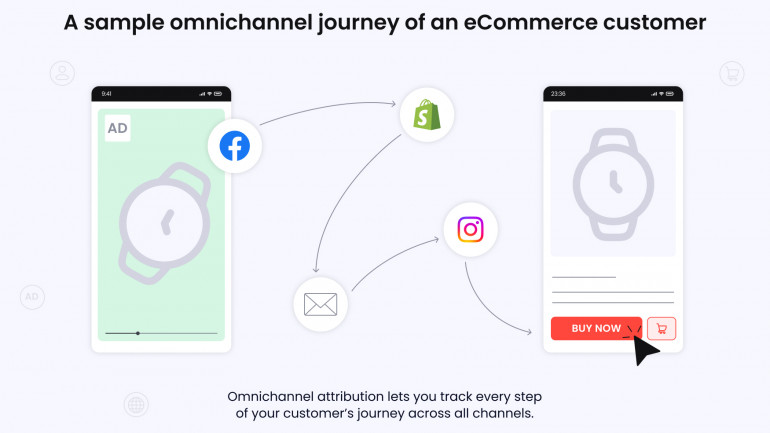
Limiting your focus to a single step leaves critical insights untapped. Therefore, you need to map out these touchpoints to learn how your audience behaves. You’ll see which channels they use, what messages get their attention, and what finally convinces them to buy. With that data at hand, you can:
- spend your marketing budget more wisely;
- personalize messages across different platforms;
- create smoother, more connected customer experiences;
- boost overall return on investment (ROI).
A cohesive marketing attribution system helps you bring all this data together. It breaks down silos between your marketing tools, so you can see the entire customer journey in one view. That means smarter decisions, more efficient campaigns, and happier customers.
Omnichannel vs Multichannel Ecommerce
Now that you know what omnichannel ecommerce means, let’s clear up how it’s different from multichannel. These two terms sound similar, but the way they work is totally different. And the difference matters.
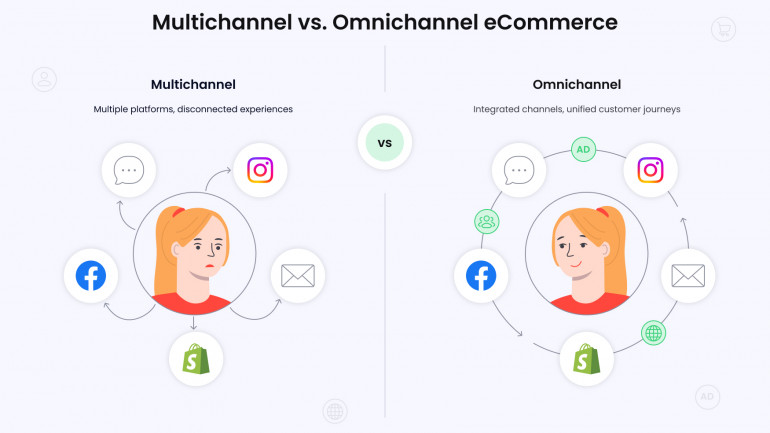
Multichannel ecommerce means you’re selling through multiple platforms. Maybe you’ve got a website, a Shopify store, a connected Instagram page with shoppable product tags, and a brick-and-mortar shop. Each channel works more or less independently. Customers can choose how they shop, but their experiences might not connect.
Omnichannel ecommerce takes it a step further. It connects all those channels to create one smooth, unified customer journey.
Imagine that a customer discovers your product through a Facebook ad while browsing on their laptop and lands on your online store’s product page on the website to explore it further. They later see the same product featured in an Instagram post with a shoppable tag, click on it, and add the item to their cart using the mobile app. However, they only complete the purchase after a couple of days after receiving an email with a discount code.
The experience feels seamless. But this sort of ecommerce omnichannel strategy is not just about being everywhere. It’s about making multiple digital touchpoints and channels work together and collecting precise data that can accurately follow all these possible footsteps.
When it comes to tracking performance, omnichannel attribution gives you a more complete view. Don’t get us wrong, multichannel attribution does it too, but omnichannel pulls it off way better, giving a holistic view. Here’s how:
- It follows the customer across platforms, not just within each one.
- It connects the dots between online and offline interactions.
- It helps you see how different channels influence the final purchase.
Why does this matter? Because shoppers don’t stick to one path. They bounce between channels before making a decision. Omnichannel attribution lets you see that entire journey. It tells you which touchpoints actually help close the sale so you can know for sure what’s working and what to pour more resources into to get the most out of your effort.
Here’s a table that gives a big-picture view of the omnichannel vs multichannel ecommerce comparison:
| Feature | Multichannel ecommerce | Omnichannel ecommerce |
| Sales channels | Multiple, but separate | Multiple, fully integrated |
| Customer experience | Different on each channel | Consistent and seamless across all channels |
| Data and tracking | Tracked per channel | Unified across all channels |
| Marketing strategy | Channel-specific campaigns | Connected, cross-channel campaigns |
| Customer journey visibility | Partial view | Full view across touchpoints |
| Personalization | Limited to each platform | Personalized across the entire journey |
| Goal | Be present on more platforms | Create one cohesive, connected experience |
Main Omnichannel Attribution Models in Ecommerce
To really understand which marketing efforts drive sales, you’ve got to know how credit is assigned during attribution modeling. Here are the most common ones:
- First-touch: gives all the credit to the very first interaction (like a Google ad or blog post);
- Last-touch: gives full credit to the final step before purchase (like clicking an email or ad);
- Multi-touch: spreads credit across several touchpoints along the customer journey;
- Total impact (or algorithmic): uses data to assign value to each touchpoint based on its actual impact.
While first-touch and last-touch models are simple, they miss a lot. They ignore everything that happens in between.
That’s why multi-touch attribution (MTA) is a game changer, especially in omnichannel ecommerce. It distributes credit across multiple touchpoints and gives you a fuller picture by showing how each touchpoint contributes to the final conversion. No matter if someone sees a Facebook ad, clicks a product email, and then buys through your app, such attribution helps you connect all those dots. With this insight, you’ll make smarter decisions. You’ll know where to invest, which messages work, and how to personalize the journey better.
Omnichannel Ecommerce Strategy Benefits
A solid ecommerce omnichannel strategy isn’t just a nice-to-have. When all your channels work together, you create better shopping experiences, make customers happier, and drive better business results.
Ecommerce Omnichannel Benefits for Shoppers
Customers (today, tomorrow, always) expect convenience. They want to move between channels without friction. With a connected experience delivered thanks to omnichannel marketing in ecommerce, your shoppers can:
- Start on one device, finish on another: browse on mobile during lunch and complete the purchase on their laptop at home.
- Pick up where they left off: add a product to their cart online, then get a push notification, email reminder, or in-store pickup option later.
- See consistent messaging and offers: no more confusion, the promo they saw on Instagram also shows up in their inbox or at checkout.
- Get personalized recommendations: tailored product suggestions like a smart shopping assistant based on browsing history, past purchases, and interests, and across all channels.
Omnichannel Ecommerce Business Benefits
So, omnichannel gives customers a smoother, more connected experience. But what’s in it for you? Let’s look at the real benefits your business and online retail store may get when adopting an omnichannel strategy.
For your business, the upside is huge, especially when you’re using the right ad tracking software and tools. Platforms like RedTrack help you connect the dots across every touchpoint, making it a lot easier to set up, track, and act on that data. So it’s not just more data, it’s useful data that drives decisions and results.
You’ll get clearer insights and make better calls. Here’s how it pays off:
- See what’s really working: know if Facebook ads, email flows, or your mobile app drives more sales.
- Adjust your budget in real time: cut wasted spend and double down on top-performing channels.
- Boost ROI: focus your energy (and money) where it makes the biggest impact.
- Deliver smarter personalization: use behavior across all touchpoints to tailor messaging that actually converts.
Unlock Insights!
Subscribe to our newsletter for exclusive tips on ad tracking, affiliate marketing, and targeted advertising strategies.
Major Challenges with Omnichannel in Ecommerce
These benefits are great, but pulling off a solid omnichannel strategy isn’t always easy. While omnichannel attribution is powerful, you may encounter a few bumps along the way. There are several common challenges you’ll want to watch out for.
Data Silos
One of the biggest issues? Data gets stuck in different tools. Your email platform, ad manager, website and ecommerce analytics, and POS system might not talk to each other. When data’s siloed, you don’t see the full customer journey, and that hurts performance.
Here’s how you can fix it:
- use an omnichannel ecommerce platform for tracking like RedTrack that connects everything in one place;
- the platform pulls data from all your channels into one clean dashboard. No more guesswork;
- you’ll spot patterns, fix what’s not working, and amplify what’s driving success.
Choosing the Right Attribution Model
No one-size-fits-all here. First-touch or last-touch is easy, but it only tells part of the story. Multi-touch gives you better insights, but it takes setup and testing.
To leverage it, start with these simple steps:
- map your customer journey;
- test basic models first, then move to multi-touch;
- use tools that let you tweak and compare models.
Complex Setups and Integrations
Getting all your data sources to work together can get technical. APIs, tags, tracking pixels. It’s a lot. That’s why centralized ad tracking platforms (like attribution tools or CDPs) are a lifesaver. They pull data from everywhere into one place, possibly into a single clean dashboard.
What to do:
- use platforms that handle integrations for you;
- centralize ad tracking to reduce manual setup;
- choose tools that support cross-device and cross-platform tracking to aid your cross-channel marketing efforts.
Privacy Regulations
Tracking has gotten tougher with laws like GDPR and CCPA and cookie restrictions. But server-to-server tracking can be a good workaround. It’s more privacy-friendly and reliable than old-school browser tracking.
Plus, it keeps your data accurate, even as rules change. Yes, there are challenges, but they’re manageable. The good news? With the right tools, a little planning, and a solid omnichannel ecommerce strategy, you’ll turn obstacles into opportunities since you’ll be tracking what’s actually working with smart attribution.
How to Adopt an Ecommerce Omnichannel Strategy [With Omnichannel Attribution Tips]
Putting omnichannel attribution into action takes some setup, but the payoff is worth it. You’ll get clearer insights, smarter campaigns, and better ROI. Here’s how to get started step by step.
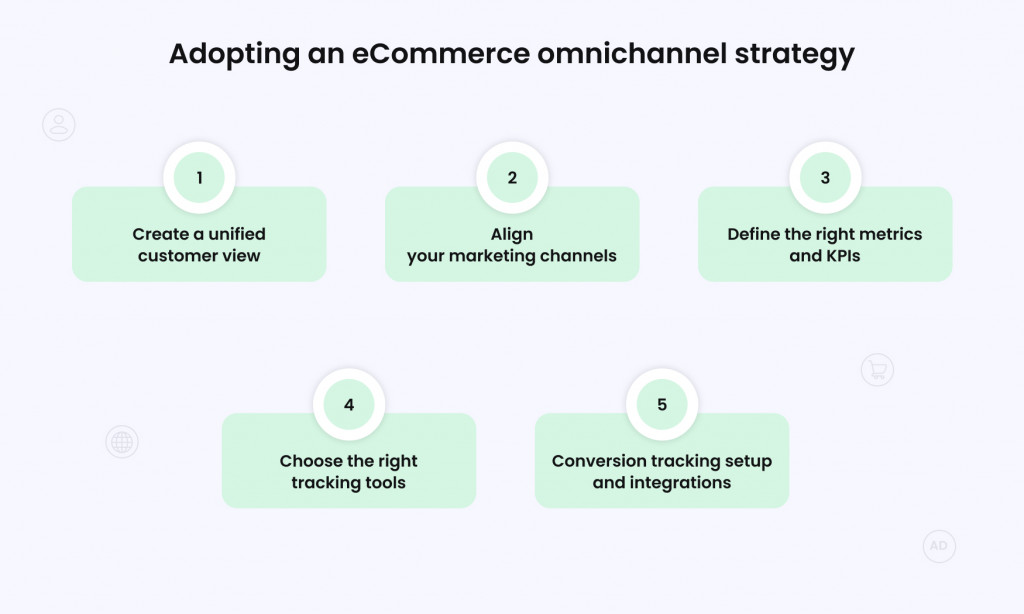
1. Create a Unified Customer View
First, bring all your customer data together. You want one unified customer profile per person, regardless of where or how they interact with your brand. No matter if it’s on your site, through email, in-store, or on social, that data needs to connect. This unified view lets you track the whole customer journey. It’s the foundation of accurate attribution.
2. Align Your Marketing Channels
Make sure your channels are working together, not in silos. This means:
- using consistent messaging across platforms;
- linking campaigns across devices and touchpoints;
- tracking how each channel contributes to conversions.
With attribution and conversion API tracking in place, you’ll see what’s driving performance. From there, you can adjust your marketing mix and focus more on what delivers results.
3. Define the Right KPIs
Don’t just track clicks. Focus on the ecommerce metrics that actually show success. Start with these KPIs which can help you evaluate attribution effectiveness and guide smarter budget decisions:
- Return on Ad Spend (ROAS) shows how much revenue your ads generate;
- Customer Lifetime Value (CLV) helps you understand long-term value, not just one-time purchases.
4. Use the Right Tools
Not all analytics tools are built for online stores. So, go for platforms that specialize in tracking across multiple channels and devices and have specific solutions for ecommerce businesses. These tools should also reduce the headache of manual data pulling. They must show you exactly what’s happening without digging through spreadsheets.
RedTrack is one example that has tailored ecommerce solutions. It helps you track every click, conversion, and customer journey in one place. You’ll get clear attribution models, customizable dashboards, and support for complex setups.
5. Set Up Conversion Tracking and Integrations
To get accurate results, you need to track conversions across all your touchpoints. That means:
- setting up tracking pixels and server-side tracking;
- connecting your CRM, ad platforms, and email tools;
- making sure your systems share data in real time.
This part can get technical, but platforms like RedTrack offer support to help you handle ecommerce integrations. With everything connected, your attribution models will be way more accurate and way more useful. Once you’ve got your strategy in place and you’re tracking your results, you’re in a great spot.
Concluding Thoughts on Ecommerce Omnichannel Attribution
Mastering omnichannel ecommerce attribution isn’t just about tracking clicks. It’s about seeing the full story. When you understand how each channel contributes to a sale, you can:
- spot what’s working and what’s not;
- create more personalized, consistent experiences;
- spend your marketing budget smarter;
- boost your ROI with data-backed decisions.
The result? Better omnichannel and ecommerce campaigns, happier customers, and stronger growth.
Omnichannel ecommerce ad tracking solutions like RedTrack can make this process much easier. It’s built with ecommerce business needs in mind and helps you bring all your data together, track across platforms, and see real results without the headache. If you’re serious about scaling your efforts and want clearer insights into your customer journeys, feel free to check out the demo or reach out to us to learn more.


