
This article is for performance media buyers, agencies and in-house marketers running paid traffic across multiple platforms. It explains what are the best ad tracking software in 2026 based on real-user testing and feature comparison per use case. It also explains how to choose the best ad tracking software. Article contains comparison of 8 ad tracking tools, covering top features, real drawbacks and specific use case each one fits.
Here’s one scenario you’ve been through at least once as performance media buyer: no centralized dashboard, but three dashboards all claiming the credit for the same sales.
Facebook says it drove 40 conversions, Google is claiming 35, while Stripe shows 52. Where does the truth lie?!
That’s actually one of the main reasons why you probably searched for best ad tracking software – you don’t know which campaigns are worth scaling, which ones are quietly burning your budget, and despite those conditions you have to make six-figure spend decision on the numbers you don’t trust at all.
And stats prove that:
- Study from 2025 showed that 82% of media buyers don’t trust the conversion data their ad tracking setup reports
- 78% of senior marketers believe at least 10% of marketing spend is wasted due to insufficient measurement
- 83% of marketers struggle to unify conversion data across multiple platforms which is the core job of ad tracking software
So looking for an ad tracker as third party tool is next logical step.
Just like that, you hit the second problem: every vendor sounds identical.
Server-side tracking.
Real-time reporting.
Accurate attribution and cross-channel attribution
Cool, but… What does that actually mean for a buyer running $80k a month across Meta Ads, Google Ads, TikTok, and a couple of native networks?
That’s why we decided to create an article that will help you, choose best ad tracking software for you and your case scenario. Not a feature checklist you could pull off any comparison page, but an honest look at which tools hold up under real spend, where each one breaks, and what you’re actually paying for.
What separates a tracker from an attribution platform, which setups survive privacy updates, how to match a tool to your need… That’s exactly what we’re going to talk about next.
1. RedTrack – The Most Complete Ad Tracking Infrastructure
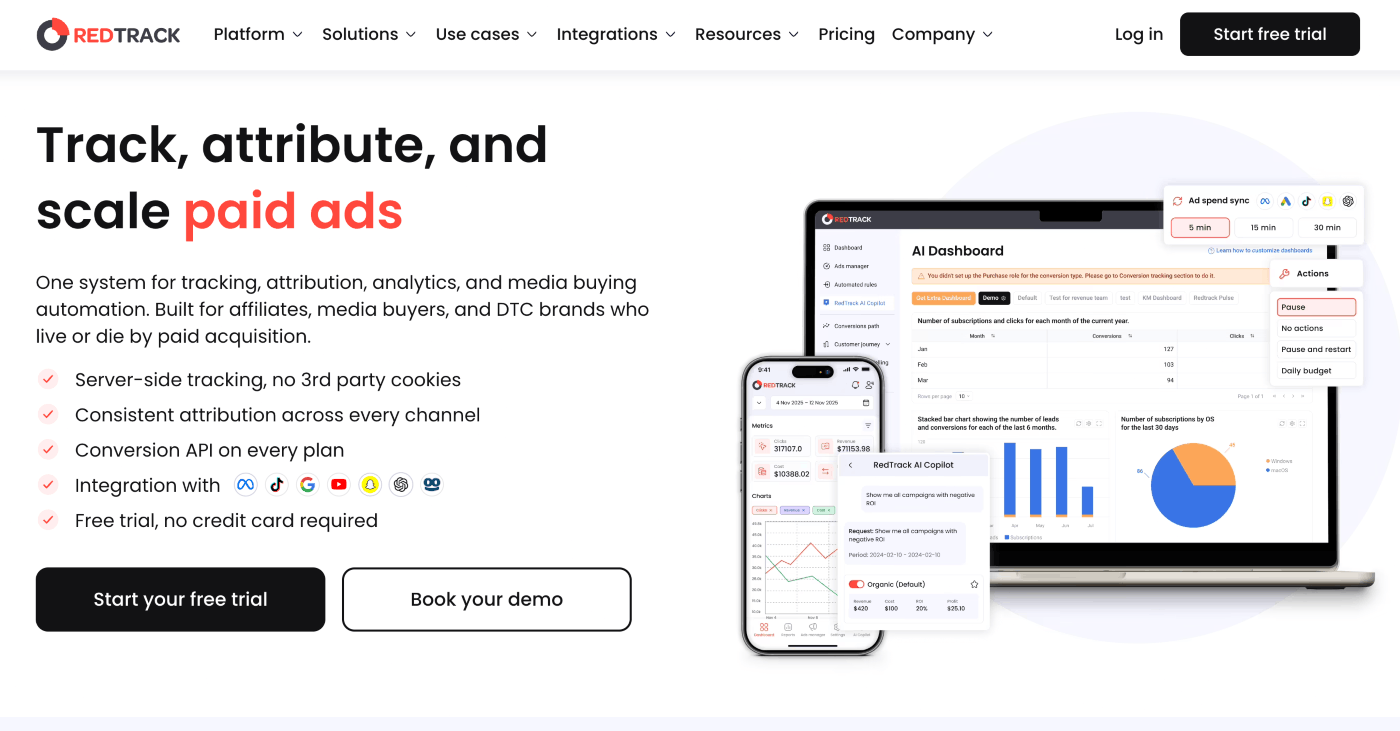
If you are looking for an all-in-one solution for your ad tracking and marketing performance at scale, RedTrack is a natural pick for many reasons.
First off, RedTrack offers more native, server-side Conversion API integrations than any other tracker on this list.
Second, RedTrack is designed to fulfill the needs of multiple industries:
- Affiliate marketers and lead generation
- DTC and ecommerce brands
- Agencies
Most platforms pick one, while RedTrack serves them all. Whichever one describes you, RedTrack covers it in a single platform.
Third, integrations can truly level up your game – RedTrack is currently leading in the industry when it comes to seamless integration capabilities, allowing 200+ integrations, among which are 100+ traffic channels, 80+ affiliate networks, ecommerce (Shopify, WooCommerce, BigCommerce, Magento), CRM, call tracking and analytics.
Calling it the most complete tracking infrastructure wouldn’t actually be accurate without capability to sync ad spend from 20+ networks automatically, as often as every five minutes. RedTrack, acts on what it finds – built-in rules pause losing campaigns and scale winners inside the ad platforms with no ceiling on how much you spend.
The whole point of ad tracking and ad optimization efforts is to provide you with valuable and actionable insights and real performance data where you’ll be able to make better decisions and improve your marketing effectiveness and that’s exactly what we believe RedTrack does more accurately than others.
Don’t take our word for it – Book a demo and see it in action for your case, or sign up for a 14 day free trial and find out for yourself!
2. Voluum – Best For Affiliate Media Buying
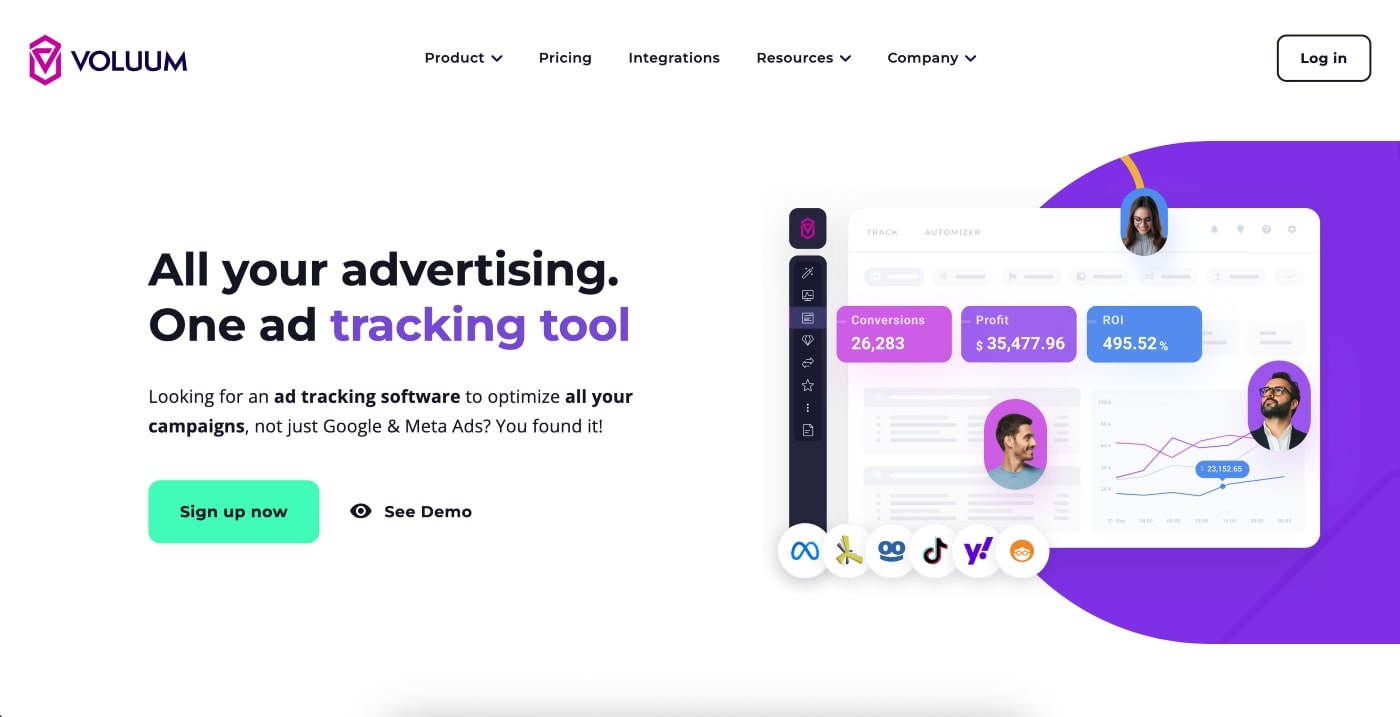
Voluum is one of the better choices for marketers who want an advanced level of control and overview of their campaigns and data.
Voluum comes equipped with robust features for A/B testing, fraud protection and fraud detection, and reporting. And it all comes packaged in an intuitive interface.
Pros of picking Voluum
As one of the more popular picks among ad trackers, Voluum comes with nice pros:
- With its AI traffic distribution, Voluum does more than just report which landers and offers are winning – It adjusts weights of paths, landers, and offers every minute based on the last 24h data set, and weights can be calculated on ROI, EPV, or conversion rate, with ROI as the default.
- Voluum’s anti-fraud tool kit analyzes traffic across 9 metrics including data center detection, fast clicker identification and suspicios frequency patterns
- with Voluum, you can download raw visit data with 30+ details per visit and use it to potentially claim refunds from your ad network
Cons of picking Voluum
There are couple of drawbacks you might encounter with Voluum that are not necessarily deal breakers, but worth mentioning:
According to the users that reviewed the platform on G2, Afftank and SourceForge, features you came for are usually on higher tiered plans. This may be a blocker for the ones with limiting budget, but it’s definitely a matter of change in the future.
Another drawback is that AI can override the metric you chose, which means your manually selected metric may be overridden if data calculated using a different metric suggested higher profitability, which futhermore means less control than the settings imply.
Who is Voluum best for?
Simply put, Voluum is ideal for affiliate and performance marketers who are dealing with multiple traffic sources at real volume, especially pop, push and native. It only makes sense if you’re spending enough on traffic that the optimization gains and fraud savings outweigh the subscription – below that you’re buying capacity you can’t actually use.
How users are rating Voluum
As of July 2026, Voluum is rated 4.5 on Capterra (125 reviews), 4.6 on G2 (149 reviews) and 3.0 on TrustPilot (99 reviews).
3. Triple Whale – Best For Shopify Brands
Triple Whale is an ad analytics platform made mostly for eCommerce businesses that need to have all of their ad data in one location for reporting and profit tracking.
Pros of picking Triple Whale
Triple Whale spent years building the solution with DTC brands in mind, so they come with quite a few advantages:
- it combines MTA, MMM and incrementality which provides more trustworthy data than majority of the solutions on this list.
- Their creative analysis agent performs frame by frame video analysis, emotional tone mapping of ad copy and color psychology evaluation of static assets, which can benefit ad spend decisions when creatives stale.
- A genuinely usable free tier for early stage brands
Cons of picking Triple Whale
Drawbacks may include:
- Triple Whale’s own onboarding documentation listsl BigCommerce and WooCommerce as Beta, and independent reviewers describe that integration with non-Shopify stores isn’t quite functional as it should be
- Shipping costs, cost of goods, payment gateway costs and custom expenses all have to be added before net sales and net profit calculate correctly, so the profit numbers are wrong until someone does that manual work
Who is Triple Whale best for?
Triple Whale is great choice for ecommerce and DTC brands on Shopify primarly, WooCommerce and BigCommerce with caveats. Triple Whale is an official Shopify Plus Certified App, which is where the depth genuenly is.
Ratings
As of July 2026, Triple Whale has a rating of 4.5 on G2 (481 reviews) and 3.0 on TrustPilot (55 reviews).
4. Hyros – Best For High Ticket and Long Sales Cycles
Hyros‘ biggest selling point is its impressive tracking precision. And it doesn’t just track your ads, but also your email open rates and booked calls, and all of that across all of your devices.
If your business is all about data-driven ad campaigns or you have complex customer journeys, you should definitely look into Hyros.
Pros of picking Hyros
Some of the upsides your marketing campaigns might have of choosing Hyros as your ad tracking software are:
- Offline and call attribution – CRM connections push closed-won events from Salesforce and other systems into Hyros, which is the core reason to pick it over an ecommerce native tool
- One certified implementation partner reports accuracy across active accounts running from 86% to 93% with the highest figures on accounts above $100k per month in spend, which is proven accuracy signal at high spend
- Hyros serves restricted-industry advertisers such as health insurance, immigration law and automotive finance, where pixel tracking is heavily limited
Cons of picking Hyros
Even thought it’s one of the most advanced tracking and attribution software out there, there are things to keep in mind before deciding to go with it:
- If you want to get Hyros, you have to go through demo call. There is no free trial, and sales call is the only way to see if it’s for you, which is something that definitely affects overall impression for the ones who want to test things out for themselves
- Cost scales with your revenue, not your spend. Yep, Hyros scales fees based on what your clients earn rather than what you spend on ads, meaning better campaign performance basically increases your bill
- Implementation timeline is up to 12 weeks and stated minimum fit threshold is $30k per month in paid ad spend, below which it rarely pays back
Who is Hyros best for?
Hyros is built for high ticket, long cycle funnels with a human or offline conversion step.
Ratings
Hyros is rated 4.9 on Trustpilot (703 reviews), they don’t have the account on Capterra, and on G2 they have 0/5 with two negative reviews.
5. BeMob – Best Free Tracker for Testing New Traffic
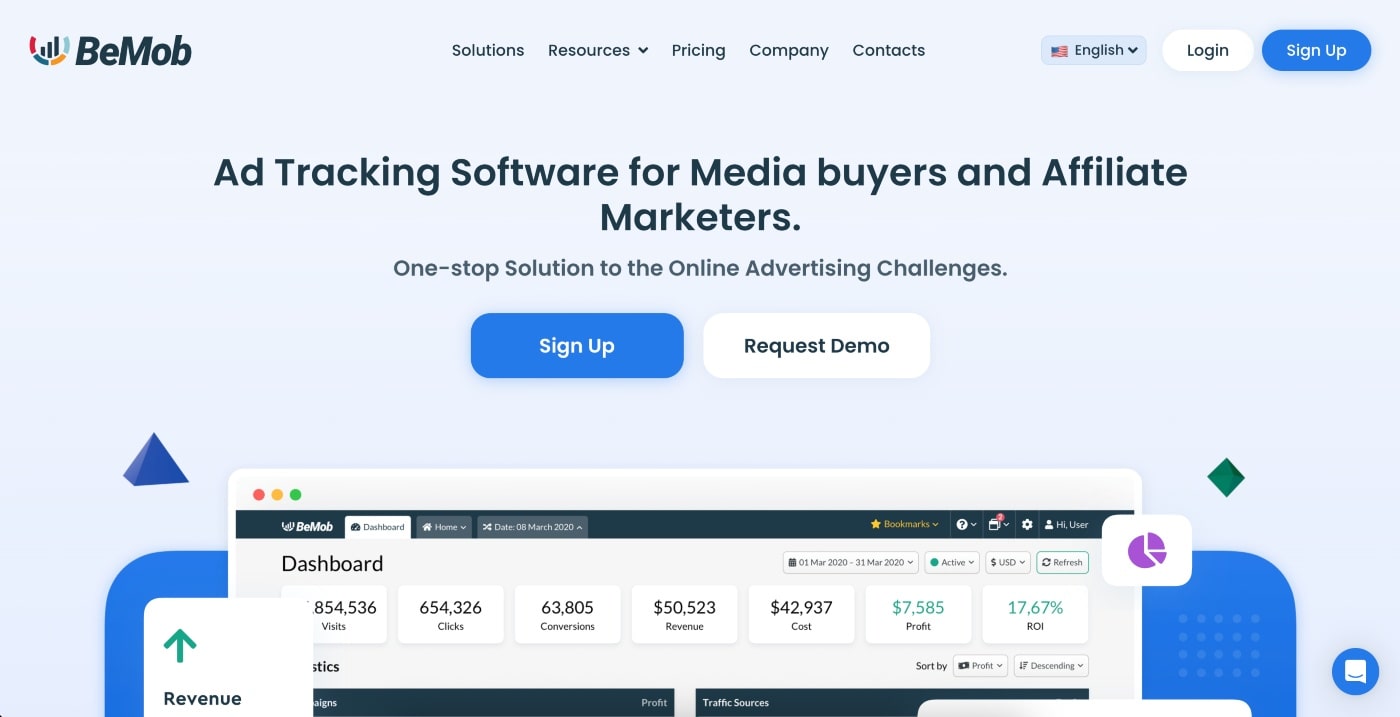
If you are just entering the ad tracking waters for the first time, Bemob might just be a good bet because it’s made with beginners in mind, with its free plan and its basic, but easy-to-use tracking functionalities.
Pros of choosing BeMob
Couple of key features we’re highlighting that we believe are the most mention worthy:
- If you work with PropellerAds, MGID, Revcontent or ExoClick, cost data can be collected automatically via API, and complete integrations let you receive traffic cost data and start/stop campaigns directly from the BeMob panel
- Integration with the Facebook source allows sending conversion data from the tracker directly to Facebook Ads Manager
- BeMob has created more than 150 traffic source templates from at least 130 sources and covers close to 300 affiliate networks with postbacks and tokens pre-configured
- Amazing free plan
Cons of choosing BeMob
While the solution is beginner friendly and quite well developed, there are couple of downsides we noticed customers reporting:
- API integrations cost extra and are gated – to use complete integrations you need to purchase the required integration in addition to your current plan, and the feature is in beta requiring you to contact support to enable it
- Only 5 platforms integrate via API, so everything else means manual cost entry or postback-only tracking
- If you select Auto with no corresponding token in the traffic source template, cost in the tracker will not be counted and will be equal to 0, which means your ROI reads as infinite rather than throwing an error. This, however, might be fixed soon
Who is BeMob best for?
BeMob is built for affiliates and media buyers, on pop, push and native traffic sources, particularly those already buying from the four API-integrated networks.
Ratings
BeMob is rated 4.5 on Trustpilot (13 reviews) and reviews on G2 and Capterra are insufficient for average rating.
6. SegMetrics – Best for Info Product Funnels
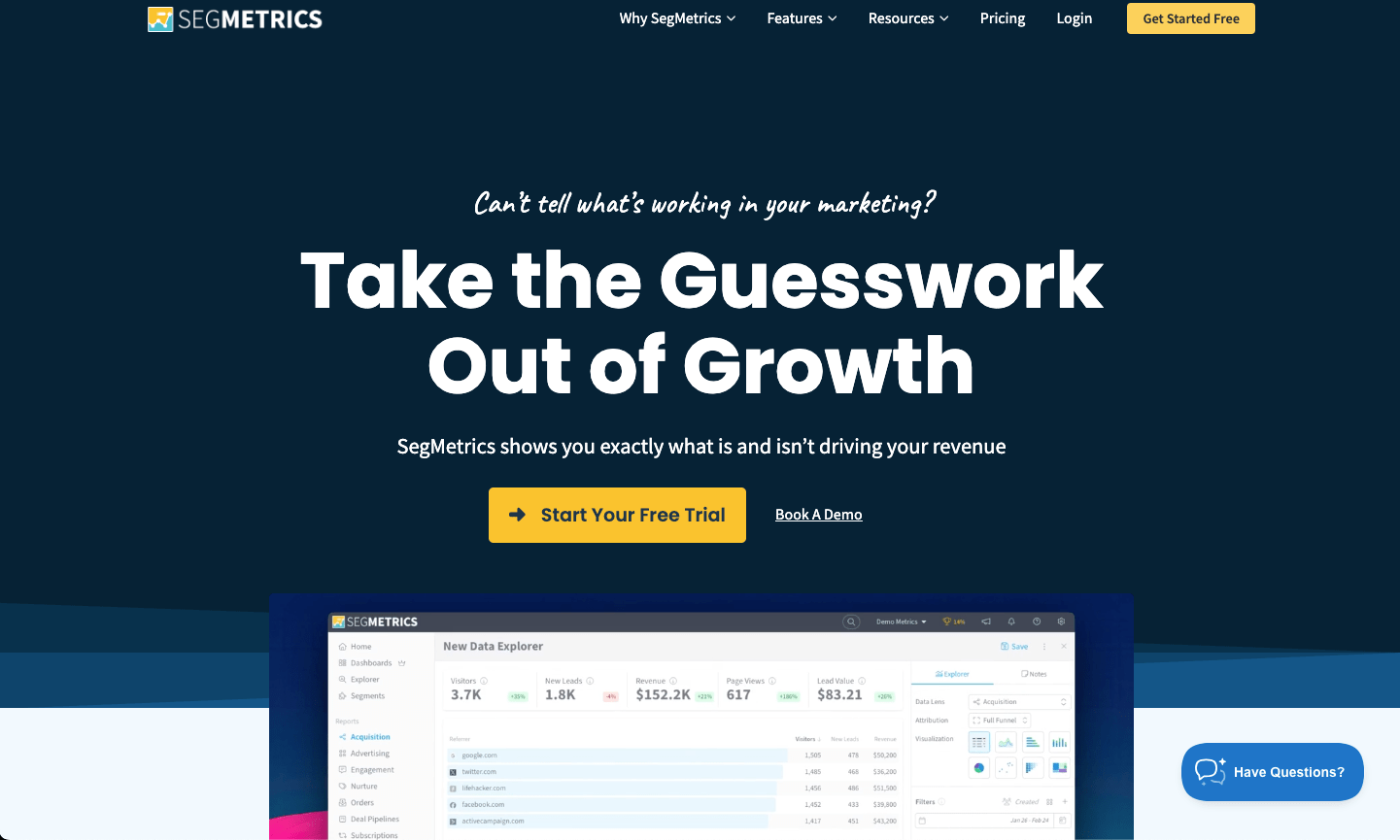
If you are in the market for an ad tracking tool that can also keep an eye on your purchases and clicks, SegMetrics might just be right up your alley.
Pros of choosing SegMetrics
One of the oldest trackers in the game, there are multiple pros of choosing SegMetrics, among which most notable ones are:
- Unlimited attribution windows capture the lifetime value of each lead even through a lengthy nurture sequence, letting you attribute purchases made months or years after someone became a lead
- SegMetrics’ data collection process also uses a range of identifiers such as IP and geolocation to identify each lead, and recent updates added account-level controls for IP address matching in lead attribution processing
- It doesn’t report on anonymous checkout events, but shows where every dollar in your bank account came from, accounting for bounced payments and refunds
Cons
SegMetrics isn’t really a standard tracker so it comes with few downsides:
- It’s basically built around a CRM or email platform you must already have, as it syncs with your email marketing platform or CMR to filter by custom fields and tags – without one the core filtering function doesn’t work
- SegMetrics doesn’t estimate lead value or customer LTV at the moment of acquisition, which makes every value backward looking, rather than something you can bid on today
Who is SegMetrics best for?
SegMetrics is built for info product sellers, course creators, SaaS teams, and agencies with email-heavy funnels. It tracks leads through middle-of-funnel steps like nurture sequences, webinars, demo calls, and free trials, all the way to purchases, which is exactly where ecommerce-native trackers stop.
7. ClickMagick – Best For Bot Protection
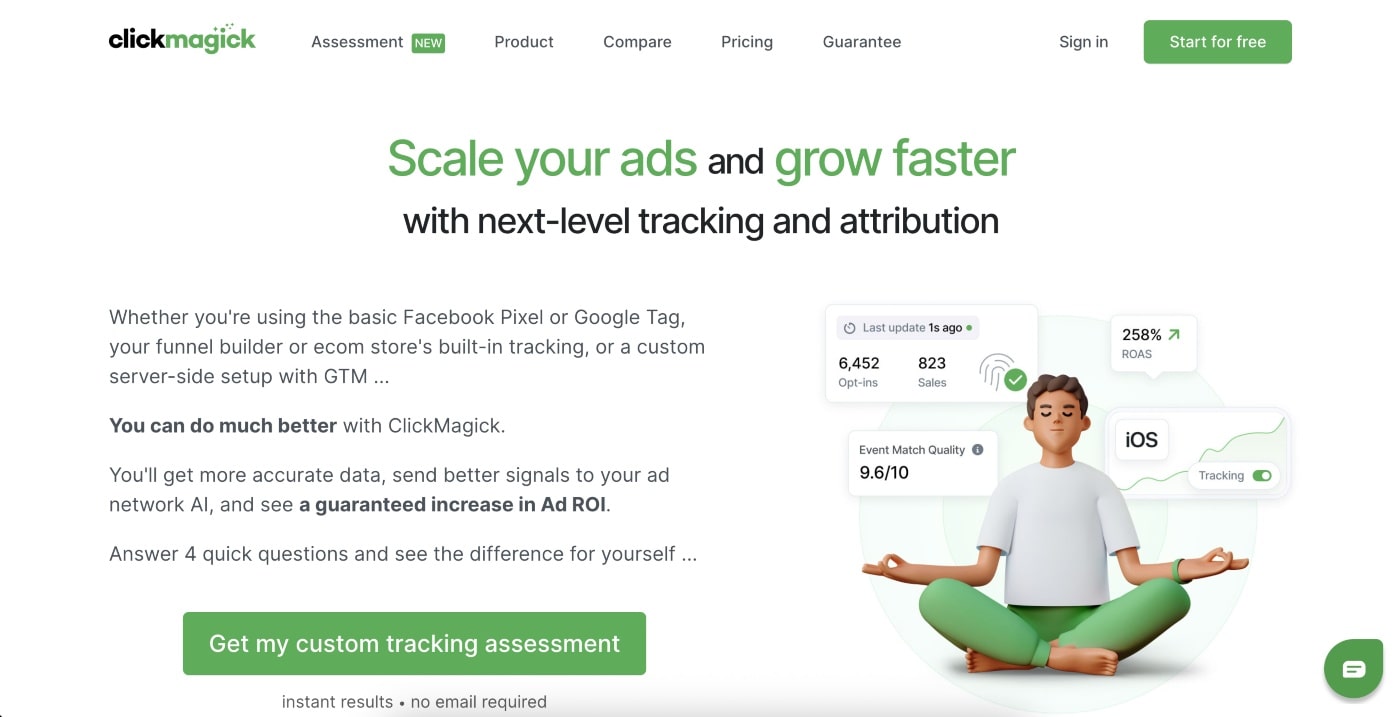
ClickMagick is a click-tracking tool that helps marketers gather first party data, optimize and scale their campaigns. Its particular focus is essential data, such as traffic distribution.
Pros of choosing ClickMagick
The most advanced pros that come with choosing ClickMagick are:
- You can sync a blacklist to your ad platform by setting rules defining acceptable paid click behavior, so violators are added to a custom blacklist, and that blacklist is automatically synced to your platforms so those users can no longer see your ads
- ClickMagick states that ad platforms generally misattribute about 20-50% of your conversions, and Audience Optimization automatically sends them your actual conversion data in real time.
- There are 5 types of suspicious clicks and for each you can flag, block or ignore, set globally in Account Settings and overridden per Smart Link or Rotator – that granular filter control per link is worth the mention
Cons of choosing ClickMagick
Just like with all the others, it’s not all sunshine and rainbows, so ClickMagick comes down with limitations:
- By default ClickMagick flags rather than blocks, separating automated clicks into a Flagged Clicks column rather than removing them, so clean stats don’t automatically mean saved spend
- It warns you to fully understand the difference between flagging and blocking before changing defaults if you’re using Smart Links or Rotators.
Who is ClickMagick best for?
ClickMagick is built for direct-reponse marketers and media buyers, running PPC, affiliate and lead-gen paid traffic who want hands-on control. It’s positioned around multi-touch attribution across top, middle and bottom of funnels, plus tracking phone call sales and offline conversions back to the originating ad, so it’s much more than just optimizing ad spend.
Ratings
As of July 2026, ClickMagick is rated 4.3 on Trustpilot (689 reviews).
8. Wetracked.io – Best Rated Ad Tracker By Users
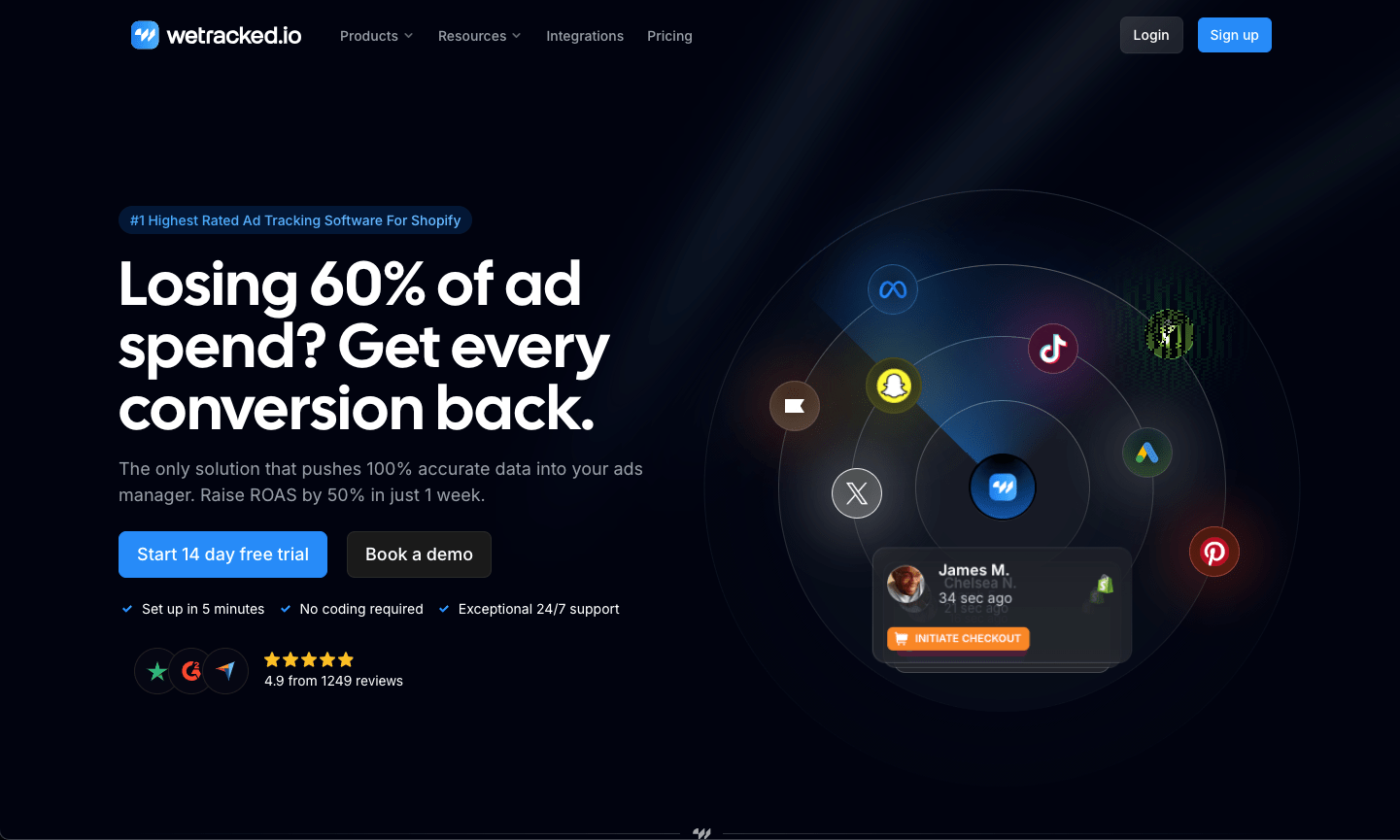
Wetracked.io is probably one of the fastest growing ad tracking tools in latest period especially those users who are relying on Shopify. With adblock-proof tracking, this platform can be a useful ally in generating more conversions for e Commerce businesses and help with the return on their ad spending.
Pros of using Wetracked.io
Wetracked.io is very user-friendly, but still pretty robust. Key benefits of using it include:
- The most reported testimonial from users is fast recovery of lost conversion signal, where users report improvements from 40-60% tracking rates to over 90% after implementation.
- A 360-degree data enrichment engine creates a digital fingerprint for each customer to enable attribution
- Wetracked.io pushes accurate data to your ad platforms rather than adding a new dashboard, so it works inside your existing ad manager
Cons
One of the most reported drawbacks is that the platform serves merchants across primarily Shopify and WooCommerce stores, ruling out lead generation, SaaS and affiliate entirely.
Who is Wetracked.io best for?
Wetracked.io is best for Shopify and WooCommerce advertisers with bigger ad spends on Meta Ads, TikTok Ads, or Google Ads.
Ratings
As of July 2026, Wetracked.io is rated 5.0 on Capterra (200 reviews), 4.9 on G2 (345 reviews), 4.8 on Trustpilot (1003 reviews).
Conclusion – Choosing the best ad tracking software for your need
Want to. hear a shortcut nobody really tells you? Stop comparing feature lists and start with your conversion event.
That one question eliminates most of this list in a matter of seconds.
If your conversion is a phone call, a signed retainer, or a deal that closes three to six weeks after the click, you need offline attribution – that’s Hyros territory.
If your conversion however is a Shopify checkout, you’re basically choosing between Triple Whale for analysis and Wetracked.io for signal recovery.
If it’s an affiliate postback, you’re looking at Voluum, BeMob, or ClickMagick.
And if it’s an email opt-in that pays off months later, SegMetrics is built for exactly that.
In a nutshell, you should match the tool to the event, and that’s the main thing.
The second thing is whether you actually need a new tool or you just need better setup.
Google Analytics gets a bad rap, but plenty of media buyers reach for a $300/month tracker when their real problem is broken UTMs and a pixel that fires twice. You should fix that first because if your data’s still wrong afterward, then you’ve got a tracking problem, not a hygiene problem.
Third: be honest about your spend level. Below roughly $25k a month, most of these tools are questionable in terms should you have them anyway as they might raise operating costs. It all depends on your setup, but essentially, the point of the tool is that it should be an investment.
Last but not least: no tracker gives you perfect data, and the data it gives you might not be usable at all if it’s not for your use case. That brings us back to beginning, you should pick the tool that fits your case and is built for your case. What good software does is narrow the gap enough that your decisions get better, which is the whole point.
So run through it in order. What does your marketing strategy look like? What attribution models are you after? What’s your conversion event? What platform are you on? What’s your monthly spend? How does your customer behavior look like? What does your customer journey actually look like, is it one click and done, or six touches across multiple channels? Do you REALLY need the tool for proper tracking?
Once you answer those questions, pick a tool that integrates with major ad platforms, one that handles large data volumes easily and of course, the tracker that’s GDPR compliant.
We believe that RedTrack is a choice worth giving a shot in 90% of the scenarios you as performance media buyer find yourself in because it’s built having different roles and different industries in mind.
As the most technologically advanced ad tracking software out there, RedTrack provides one thing that every media buyer constantly asks for during campaigns: reliability.
Want to see it in action? Book a demo and let us show you how it works, or if you prefer to investigate on your own sign up for a free trial and give it a shot!


