
Running a profitable Google Ads campaign in 2025 requires more than just picking keywords and setting a budget. With rising competition, evolving privacy rules, and smarter algorithms, success now depends on following proven Google Ads best practices that adapt to today’s digital landscape.
Whether you’re an ecommerce brand, a performance media buyer, or an agency managing multiple clients, the difference between wasted spend and scalable ROI often comes down to strategy.
In this guide, we’ll cover the essential tactics you need to stay ahead – from campaign structure and ad creative optimization to conversion tracking and budget management. By the end, you’ll know exactly how to refine your campaigns for maximum visibility, lower costs, and better results in 2025.
Understanding Google Ads Fundamentals
At its core, Google Ads runs on an auction system where advertisers compete for placements across Google Search, YouTube, and a vast network of partner sites.
Mastering this foundation is one of the most important Google Ads best practices, because every choice you make – from keywords to bidding – directly influences visibility, cost, and performance.
The auction considers three main factors: your bid amount, your Quality Score, and the expected impact of extensions or other ad formats.
Quality Score is often misunderstood but bear in mind that it’s critical. It’s based on click-through rates, ad relevance, and landing page experience. Advertisers who deliver genuinely helpful, relevant ads earn higher positions at lower costs.
Different campaign types match different goals.
Search ads capture high-intent users looking for specific solutions, while display campaigns build awareness across millions of sites. Shopping campaigns highlight products with images and prices, video campaigns engage YouTube audiences, and Performance Max campaigns use AI to optimize across all placements.
The key takeaway? Always align campaign type with business objectives.
For example, a SaaS company might run search ads for high-intent keywords like “CRM software,” display campaigns for retargeting, and video ads to showcase product features.
It’s super important that you know that each format requires its own optimization strategy, budget approach, and success metrics!
Keyword Research and Targeting Strategies
Effective keyword research is one of the most essential Google Ads best practices, especially for search campaigns.
The objective isn’t just to chase high-volume terms, but to uncover keywords that signal strong purchase intent while still fitting within your budget.
One might say it sounds simple!
Tools like Google Keyword Planner can guide you with search volume, competition, and bid estimates – but the real advantage comes from digging deeper into user intent.
Long-tail keywords often strike the best balance of intent and cost.
For instance, “running shoes” may cost $5 per click and face intense competition, while “best running shoes for marathon training” usually costs less and attracts users closer to making a purchase decision. They are relevant keywords, but with completely different search intent! Specific queries connect your search ads to the right audience at the right stage of their journey.
Keyword match types give you control over reach and precision. Broad match maximizes exposure but requires strong negative keyword lists to filter irrelevant traffic. Phrase match sits in the middle, ensuring your ad shows when the search includes your keyword phrase. Exact match offers the tightest targeting, only triggering ads for very specific queries.
Don’t overlook negative keywords. Excluding terms like “free,” “cheap,” or “DIY” prevents wasted spend on unqualified clicks. Regularly reviewing search term reports uncovers new negatives, tightening your targeting and boosting efficiency.
Finally, keyword organization matters. Group related keywords by theme and intent instead of packing dozens into one ad group. Tightly focused groups improve ad relevance, strengthen Quality Scores, and give you better control over bidding and budget distribution.
Campaign Structure and Organization
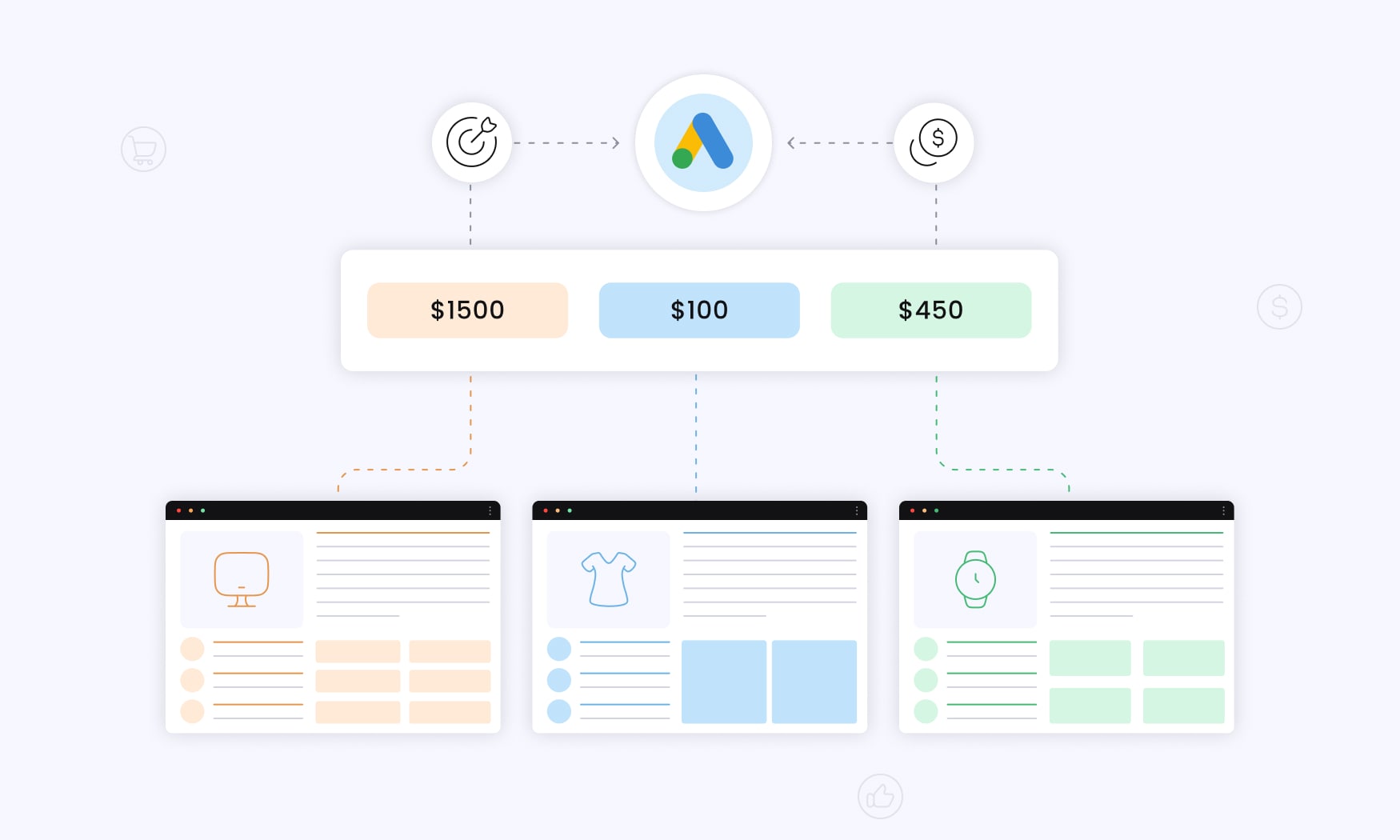
A strong campaign structure is the backbone of effective Google Ads management.
In the new Google Ads environment, where automation and AI features play a growing role, having a well-organized structure ensures you can still control budget allocation, messaging, and performance analysis. A properly built ads campaign mirrors your business goals while keeping clear separation between different objectives.
The best approach is to create separate campaigns for distinct categories, services, or markets. For example, a home improvement company might build unique campaigns for “Kitchen Remodeling,” “Bathroom Renovation,” and “Roofing Services.” Each one gets its own budget, targeting, and strategy – making it easier to prioritize based on profit margins and business goals!
Within each campaign, ad groups should stay tight and manageable. Limit them to 7–10 focused themes, each with 10–20 related keywords. This alignment strengthens ad relevance, improves Quality Scores, and ensures your Google search ads connect seamlessly to tailored landing pages.
Pay special attention to branded vs. non-branded searches. Branded campaigns often convert at higher rates and deserve dedicated budgets, while competitor-targeting campaigns should be organized separately to manage risk and benchmark results effectively.
For high-value, competitive terms, Single Keyword Ad Groups (SKAGs) can still provide benefits. Though they require extra management, SKAGs give you granular control over ad copy, bids, and performance for your most critical keywords.
Ad Copy and Creative Best Practices
Great ad copy is the engine of every successful Google Ads account.
It’s not just about showing up in results, but about writing ads that capture attention, match intent, and drive action. In Google search ads, where competition is almost always fierce, strong messaging can be the difference between wasted clicks and profitable conversions!
Headlines matter most.
They carry the heaviest weight in paid search performance, so balance keyword inclusion with a compelling message. Always include your main keyword naturally in at least one headline, but focus on benefits over features. For example, “Save 50% on Premium Running Shoes” outperforms “High-Quality Athletic Footwear Available” because it communicates value and urgency much better.
Aim to create 3–5 responsive search ads per ad group, each with different angles. Mix problem-focused (“Struggling With Slow Websites?”), solution-focused (“Fast, Reliable Hosting Plans”), and benefit-focused (“Boost Site Speed Instantly”). This variety allows Google’s machine learning to test combinations and surface the strongest performers.
Don’t overlook ad extensions. Sitelinks guide users to specific pages, callouts highlight key benefits, and structured snippets showcase products or services. These extras expand your ad’s visibility, increase click-through rates, and improve overall ad strength – all without additional cost.
Finally, align ad copy with landing page content. If your ad promises “Free Shipping Over $50,” make sure the landing page highlights it. Consistency builds trust, improves Quality Scores, and prevents wasted spend on mismatched messaging.
Landing Page Optimization
Landing pages are the critical bridge between Google Ads traffic and conversions, making optimization one of the most important Google Ads best practices.
A well-structured page can double or even triple conversion rates, which improves return on ad spend and lowers your acquisition costs.
Page speed is non-negotiable.
Google recommends load times under three seconds, and slow pages hurt both Quality Score and user experience. Since mobile drives over 60% of search traffic, test your landing pages across multiple devices and connection speeds to ensure a seamless experience for everyone, because that’s actually all that it comes down to – user experience.
SEO people know for ages that majority of ranking factors come down to user experience, and page speed is exactly one of them, because slow website = bad experience.
Keep the design focused on a single goal. Remove distractions like navigation menus or excessive outbound links, and direct all attention toward your primary call-to-action. Place your main CTA above the fold, and reinforce it throughout the page using contrasting colors, persuasive copy, and ongoing A/B testing.
Consistency matters as well!
Align your landing page headline with your ad copy to deliver a smooth transition. If your ad promises “Free Website Audit,” your landing page headline should reflect that exact offer. Just as ad extensions in your ads provide additional context, your landing page should back up the promise, building trust and confirming the visitor is in the right place.
Bidding Strategies and Budget Management
Smart bidding is one of the most powerful features inside Google Ads, using machine learning to optimize bids based on real-time signals like device, location, time of day, and user behavior.
For any Google Ads account, knowing when to let automation work (and when to add manual oversight) is critical to maximizing performance!
Target CPA bidding is ideal when you have stable conversion values and reliable historical data. Simply set your profitable cost-per-acquisition target, and Google will optimize bids across auctions. Target ROAS works better when order values vary, prioritizing revenue instead of raw conversion volume.
Budget planning should always start with the math. If your average CPC is $3 and you need 10 clicks a day, allocate at least $30–40 to avoid early budget exhaustion and lost evening or weekend traffic. Bid adjustments give you extra control on top of automation – for example, raising bids on mobile if those clicks convert better or lowering bids for underperforming geos.
Enhanced CPC offers a balance between manual and automated bidding, adjusting your chosen bids up or down depending on conversion likelihood.
Here’s where RedTrack gives you an edge: with real-time cost updates (as fast as every 5 minutes) and automated rules, you can spot overspending or underperforming Google search ads before Google’s own reporting catches up.
Instead of wasting budget, RedTrack helps you reallocate spend toward the campaigns and keywords that actually generate revenue.
So in a nutshell, smart bidding inside Google Ads, paired with RedTrack’s automation and cost-sync capabilities, ensures your money is always working in the right place at the right time.
Audience Targeting and Segmentation
One of the most impactful Google Ads best practices is mastering audience targeting.
It transforms basic keyword campaigns into precision tools that deliver the right message to the right people. By layering demographic, behavioral, and intent-based audiences on top of keywords, you can improve relevance while cutting down wasted spend.
Custom audiences built from on-site behavior are especially powerful.
For example, you can target visitors who browsed specific product pages, abandoned a cart, or engaged deeply with service descriptions. Each behavior reflects a different level of purchase intent, which makes it easier to adjust bids and craft tailored ad messaging.
Features like Customer Match let you upload email lists and re-engage existing customers with loyalty campaigns or exclusive offers. As privacy rules tighten, this type of first-party data becomes even more valuable. You can then expand reach with Similar Audiences, which mirror your highest-value customers.
Demographic filters add another layer of precision. A luxury brand might prioritize high-income audiences, while a test prep company could focus on parents aged 35–55. These combinations increase ad relevance and conversions while reducing wasted clicks.
Oh, and don’t forget campaign exclusions! Excluding converted users from acquisition campaigns prevents wasted budget, while retention campaigns (which can include search, display, or even video ads) help maintain relationships with existing customers.
The bottom line? Strong audience targeting in Google Ads ensures every impression works harder, driving efficiency across campaigns.
Geographic and Scheduling Optimization
Getting location and timing right is one of the most overlooked campaign settings in any Google Ads campaign.
Geographic targeting ensures your ads reach only customers you can actually serve, while excluding areas where fulfillment isn’t possible or profitable. This prevents wasted spend and directs your budget toward the regions most likely to convert.
For local businesses, radius targeting can be especially effective. A restaurant might run ads within a 10-mile radius of each branch, while a home services company could extend to 25–50 miles depending on capacity. You can even adjust bids by distance, since customers closer to your location usually convert at higher rates.
Ad scheduling is equally important! B2B advertisers often see stronger results during business hours, while consumer products might peak on evenings or weekends. Reviewing performance by hour and day helps you refine scheduling inside specific ad groups for maximum efficiency.
Location bid adjustments further improve ROI.
Increase bids in cities or regions with high conversion rates and scale back in low-performing areas. Likewise, exclude regions where you don’t deliver products, can’t provide services, or where shipping costs eat into margins.
These optimizations ensure every dollar in your Google Ads campaign works harder and delivers stronger results.
Conversion Tracking and Measurement
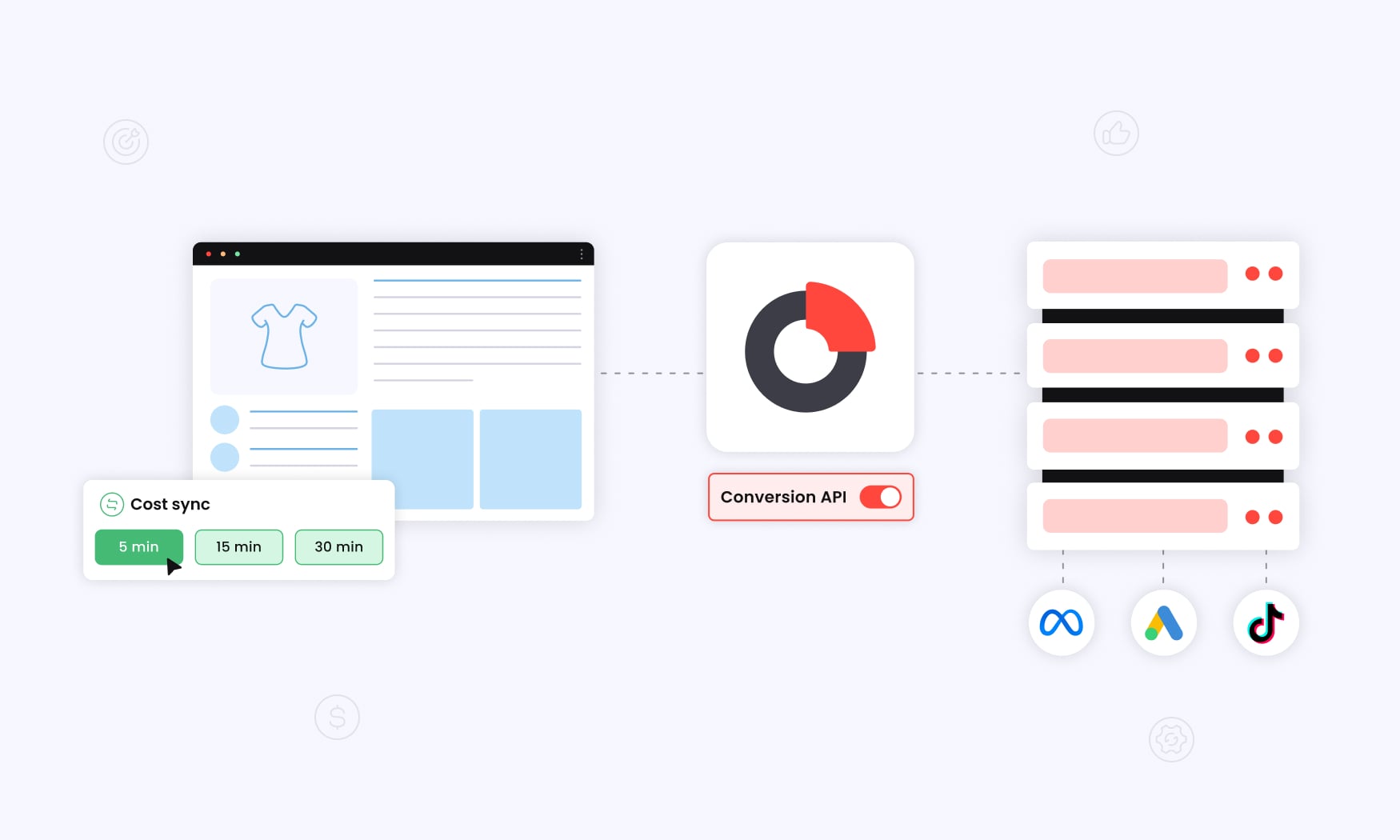
It goes without saying: accurate conversion tracking is the backbone of every successful Google Ads account.
Without it, you’re making optimization decisions blindly – unable to see which keywords, creatives, or audiences actually drive revenue. For search campaigns in particular, precise measurement ensures you’re bidding on terms that generate profit, not just clicks.
Google Tag Manager can simplify the setup process, allowing you to track multiple conversion actions such as purchases, phone calls, form submissions, or email signups, where assigning values to each action helps you prioritize based on business goals.
Meanwhile, Google’s enhanced conversions use hashed first-party data to improve accuracy in a world where cookies and iOS updates limit visibility.
But here’s the challenge: even with these tools, Google Ads often shows only a partial picture.
Many advertisers rely solely on Google’s reporting, which leans toward last-click attribution and sometimes misses multi-touch journeys. What happens to any other type of conversion? It frequently goes untracked.
That’s where RedTrack makes a difference.
With server-side tracking and Conversion API integrations for platforms like Google, Meta, and TikTok, RedTrack captures conversions that pixels miss.
Its conversion path reports show how users interact across multiple touchpoints before buying, revealing the real value of upper- and mid-funnel traffic that Google might undervalue.
Unlike Google’s sampled or modeled data, RedTrack provides unsampled, raw insights you can trust.
RedTrack also syncs real-time ad costs (as often as every 5 minutes) and applies automated rules to pause or scale campaigns based on performance. This means you can track ROI down to the ad or keyword level, ensuring your spend is always aligned with profitability.
Why is this really important? While accurate tracking inside Google Ads is essential, pairing it with RedTrack gives you the complete picture – online and offline conversions, cross-channel journeys, and revenue-backed attribution – so every decision is based on reality, not assumptions.
Interested to see it in action?
Automation and AI-Powered Features
Automation is now at the core of Google Ads.
Tasks that once required daily manual adjustments can be handled by Google’s AI, allowing you to focus more on strategy and less on repetitive work. Knowing when to embrace these features (and when to step in with human oversight) is key to scaling efficiently.
Google’s Automatically Created Assets can generate extra headlines and descriptions based on your site content. While they need review, they often boost ad strength by offering more combinations for testing. Performance Max campaigns represent Google’s highest level of automation, using machine learning to optimize across Search, Display, Shopping, YouTube, and more.
The trade-off? You get broad reach but less control over individual placements.
For ecommerce, Smart Shopping campaigns use your product feed to automatically build ads across multiple surfaces. They’re great for sales volume, but they limit visibility into performance at the individual product level.
Automation isn’t only about campaign types but, also about control!
Automated rules help you adjust budgets, pause underperforming keywords, or boost bids during high-converting hours without constant monitoring. They make sure your bidding strategy adapts even when you’re not in the account.
This is where RedTrack adds another layer of value.
While Google automates within its own ecosystem, RedTrack gives you cross-channel automation with features like auto-optimization rules and a centralized ad management hub.
You can set conditions to scale winning ads or pause budget-wasters across multiple platforms, not just within a single Google Ads campaign.
The best approach?
Let Google’s AI handle rapid data-driven optimizations, while using RedTrack to oversee performance, enforce smart rules, and maintain full control of your media-buying strategy. Together, they ensure you maximize efficiency without losing visibility.
First-Party Data and Privacy Compliance
With third-party cookies disappearing and stricter privacy laws taking hold, first-party data is no longer optional – it’s essential. Any Google Ads campaign, whether it’s built on search ads, display, or Google Shopping ads, now depends on a strong foundation of owned data to ensure targeting accuracy and long-term compliance.
One of the first steps is implementing Google tags sitewide to capture first-party data like user behavior, engagement, and conversion paths.
This information helps Google’s algorithms identify your best customers and find similar prospects across channels.
Enhanced Conversions in Google Tag Manager strengthens tracking by using hashed customer information to match conversions with ad clicks. This method closes attribution gaps caused by cookie restrictions or iOS updates while staying compliant with GDPR and CCPA.
Beyond tags, you should prioritize collecting email addresses via lead magnets, newsletter signups, and account creation!
These feeds power Customer Match, which allows you to retarget existing buyers, nurture leads, and exclude converted users. In a privacy-first world, such owned audiences often outperform third-party lookalikes.
Important to mention, even though it should go without saying, but compliance remains non-negotiable! Provide clear privacy policies, collect proper consent, and honor user data preferences. The cost of non-compliance goes beyond fines – it erodes trust and weakens campaign results.
Finally, building robust owned audiences through content marketing, CRM data, and email lists creates an advantage your competitors can’t replicate. With the right first-party data strategy in place, your Google Ads campaigns (from search ads to Google Shopping ads) become more resilient, accurate, and future-proof.
Testing and Optimization Strategies
Ongoing testing is one of the most valuable habits you can build into your Google Ads account.
Markets shift, competitors adapt, and user behavior evolves – which means your campaigns need continuous refinement. The best practice is to test systematically, measure with statistical confidence, and document what you learn for future optimization.
Start with A/B testing in ad copy.
When you create ads, test variations in headlines, calls-to-action, and value propositions. Emotional appeal versus direct benefit-driven messaging often performs very differently. Let tests run for at least two weeks or until you have enough clicks for meaningful results.
Don’t stop at ads – landing page testing can unlock huge gains! Try different headlines, layouts, button colors, and form lengths. Even a small lift in conversion rate can make your Google Ads campaign dramatically more profitable.
Testing also applies to bidding strategies. Compare manual bidding with automated strategies like Target CPA or Target ROAS, and give machine learning enough time to stabilize before evaluating results.
Experiment with campaign types as well! Performance Max may outperform traditional search and display campaigns in some cases, but in others, tightly controlled Google Ads campaigns focused on search ads bring better efficiency. Testing different formats reveals new opportunities and prevents over-reliance on one approach.
Don’t forget to document everything! It’s super important to keep a testing calendar to avoid overlap and make results easy to share with your team.
Remember: a failed test isn’t wasted – it saves future budget by showing what doesn’t work.
Common Mistakes to Avoid
Even experienced advertisers sometimes fall into traps that drain budgets and weaken performance.
Knowing the most common mistakes helps you steer clear and stick to proven Google Ads best practices.
Using Broad Match Keywords Without Control
Broad match keywords can uncover new opportunities in Google search ads, but without negative keywords, they often generate irrelevant clicks.
This leads to wasted spend on traffic that has no intent to buy. Always pair broad match with comprehensive negative keyword lists and monitor search term reports closely.
Setting Unrealistic Budgets
Daily budgets that are too low limit data collection, preventing Google’s algorithms from optimizing effectively.
On the other hand, overspending without proper monitoring can deplete your budget on low-quality clicks. Smart budget allocation should align with CPC ranges, campaign goals, and the size of your target audience.
Ignoring Mobile Optimization
With the majority of Google search ads clicks now coming from mobile, neglecting mobile optimization is one of the costliest mistakes.
Ensure ads, landing pages, and checkout flows are fast, responsive, and friction-free across all screen sizes. Poor mobile experiences kill conversion rates, no matter how strong your targeting.
Overlooking Quality Score
Quality Score remains a critical factor in ad performance.
Ignoring ad relevance, expected CTR, or landing page quality results in higher CPCs and reduced visibility. Focusing on alignment between keywords, ads, and landing pages improves Quality Scores – lowering costs while boosting ad positions.
Making Too Many Campaign Changes
Google’s machine learning systems need time to learn.
Constantly adjusting bids, ad copy, or targeting resets the learning phase, making campaigns less stable. Instead, follow Google Ads best practices by giving changes at least 1–2 weeks before drawing conclusions. Patience often pays off more than tinkering daily.
Skipping Proper Conversion Tracking
Running campaigns without reliable conversion tracking is like flying blind.
You can’t optimize toward profitability if you don’t know which ads or keywords are driving sales. Make conversion tracking setup a non-negotiable step before launching any Google Ads campaign, and audit regularly for accuracy.
Conclusion
Mastering Google Ads best practices is no longer optional. It’s the difference between profitable growth and wasted opportunities.
From campaign structure and keyword targeting to automation and conversion tracking, success comes down to making data-driven decisions at every stage.
But here’s the challenge: even the smartest optimization inside Google Ads is only as good as the data you’re working with.
That’s why advanced marketers look beyond Google’s built-in reports.
To truly understand which campaigns, keywords, and audiences drive ROI, you need accurate, cross-channel tracking and reliable attribution.
Otherwise, you risk making budget decisions on incomplete data, and wasting valuable ad spend on clicks that don’t convert.
This is where RedTrack becomes inevitable.
With server-side tracking, Conversion API integrations, and real-time cost updates, RedTrack ensures every conversion is captured and attributed correctly – across Google Ads, Meta, TikTok, and more.
Its automation rules and centralized campaign management help you scale efficiently, while granular reporting gives you a clear view of how your audience data translates into revenue.
The bottom line?
Google’s AI and automation tools are powerful, but without unbiased, accurate tracking in place, you’ll never unlock their full potential. Pairing Google Ads with RedTrack turns guesswork into certainty, giving you the confidence to optimize campaigns, protect your budget, and scale results.
If your goal is to maximize every dollar of ad spend, act on real insights, and get the most out of your Google Ads campaigns, RedTrack isn’t just helpful, but the missing piece that makes long-term success possible.


