
Believe it or not, choosing the right Cometly alternative has very little to do with the list of features or the price a competitor offers.
Sure, they matter (to an extent), but if that impressive list and its impressive price don’t resolve your main pain point, no matter how “powerful” or “robust” the tool sounds, it’s not going to help you.
So when the time comes to choose the right marketing attribution tool, you need to know exactly what you need that marketing attribution tool to do for you.
Do you need it for daily ad optimization?
OR
Do you need it to uncover Long-Term Customer Value (LTV) and to understand acquisition and retention patterns?
At first glance, marketing attribution tools may all look similar, but when you take a closer look, you’ll see each one has a specific use case and target market. In this guide, we give you five of the best Cometly alternatives. We reveal which one is best for which team type and use case. Now all you have to do is see which one ticks all your boxes.
1. RedTrack – Best Overall Cometly Alternative
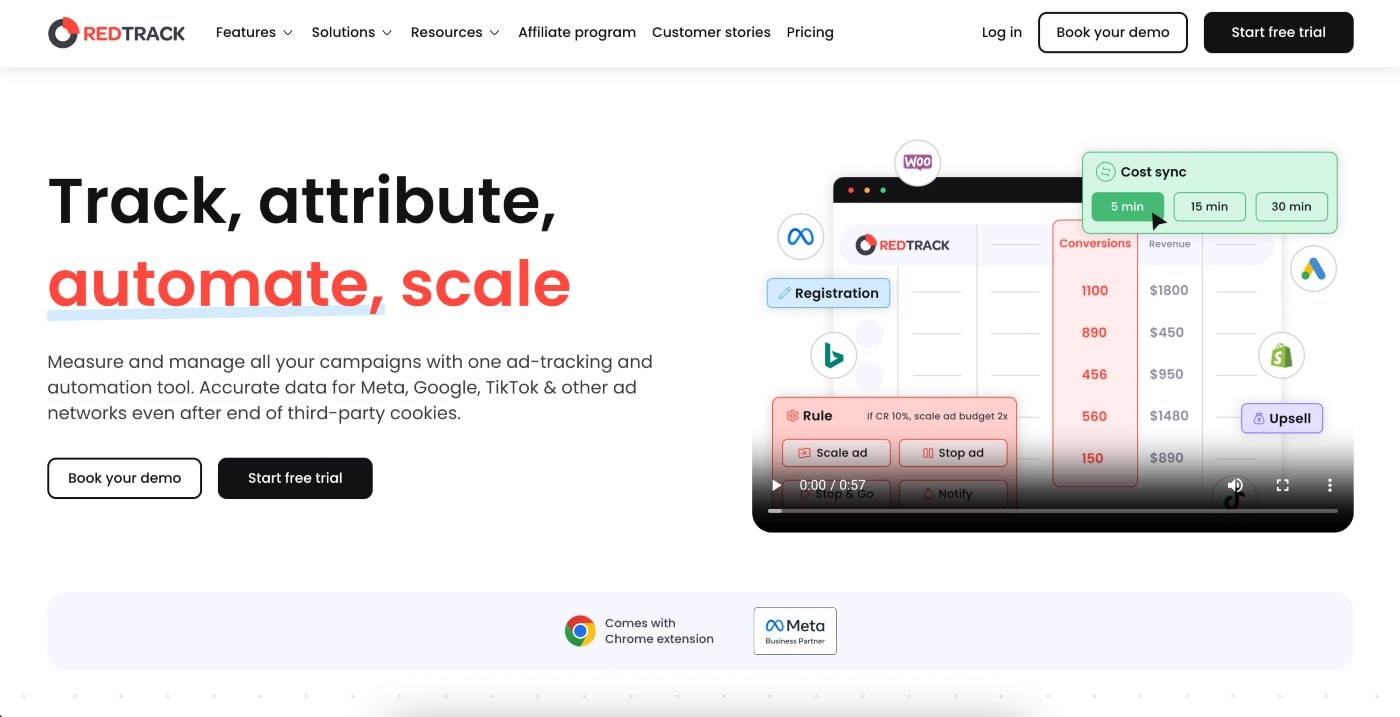
RedTrack is an all-in-one ad tracking software and performance analytics tool. It tracks every piece of advertising data and brings it together into one neat platform. Instead of treating tracking as a simple add-on to paid social, it acts as a foundational and complete attribution system that covers all channels, funnels, and teams.
What makes RedTrack The Best Cometly alternative?
Even though both tools use server-side tracking and deliver high data accuracy, they differ in their approach and their target market.
- RedTrack is a versatile end-to-end solution that caters to a diverse mix of use cases and follows the entire customer journey across dozens of platforms, conversion points, and optimization loops.
- Cometly is a specialized tool that covers attribution for a handful of channels with a focus on e-commerce and Direct-to-Consumer (D2C) brands.
But what does this mean for you as a marketer trying to understand where true impact is delivered? It means that with Redrack, there are:
- No missing touchpoints
- No fragmented reports
And most importantly, it means you no longer have to rely on a single traffic source to interpret your marketing and ad campaign’s performance.
This is exactly why RedTrack is the best Cometly alternative.
RedTrack doesn’t just show you the outcome. It shows exactly which activities and touchpoints delivered that outcome. It collects all your touchpoint data so you can feed it back into all your marketing channels, optimize them, and ultimately improve the results delivered by all your campaigns.
Who is RedTrack for?
RedTrack is for performance marketing pros who want accurate data and serious results. So if your work involves covering multiple ad accounts and full-funnel campaign optimization, it will feel like the perfect fit.
If any of the below activities describe the work you do, then RedTrack has your name all over it.
You are an individual or team that:
- Buys traffic across multiple networks
- Runs several affiliate programs
- Wants to scale eCommerce campaigns
- Coordinates performance or lead generation campaigns for clients
If you already do any of the above but feel like the tools you currently use are limited and simply not good enough when it comes to giving you the full picture of all your performance marketing efforts, then you need RedTrack.
It’s a tool that is used and loved by:
- Media buyers
- Digital marketing agencies and freelancing consultants
- Affiliate marketers
- Performance marketers
- Performance-driven e-commerce and D2D brands
RedTrack’s best key features
There are a bunch of features that make RedTrack a standout Cometly alternative in 2026. But the main one is that it’s a comprehensive marketing attribution platform that can be adapted to a number of different business models.
It’s a single tool that supports the day-to-day realities of a marketer’s work.
Some of RedTrack’s best features that deserve a mention include:
- Real-time insights – Instead of isolated metrics, you get real-time insights that give you the whole journey from first click to final conversion and revenue.
- Advanced automations – You can set up customizable automation rules across many platforms (pause ads, adjust bids, or auto-distribute traffic), all from one dashboard, where ad costs are updated every five minutes.
- Deep customizable reports – Get real-time reports where you can drill down across 50+ data points so you get deeper insights on performance.
What you get with RedTrack is not just a simple dashboard. It’s a platform that takes overwhelming data, feeds everything where it needs to go, so you can make better marketing strategies and ad buying decisions.
Want to see how it works in reality?
2. Hyros
Hyros is a slightly more advanced ad-tracking and marketing attribution platform. Unlike Cometly, which targets e-commerce and D2C brands, Hyros is made for high-end, high-spending businesses with large ad spend budgets and complex customer journeys.
What makes Hyros a good Cometly alternative?
Both Hyros and Cometly are ad tracking tools that use sophisticated server-side tracking and AI to power their accurate data collection. However, they differ in what they aim to deliver.
- Hyros puts a deeper emphasis on tracking and mapping out Long-term Customer Value (LTV) and offline conversions, and its strength lies in “print tracking” capabilities.
- Cometely focuses on multi-touch attribution and instant data insights that can be used immediately to optimize marketing campaigns.
So, with Hyros, you get to follow a lead or customer across multiple touchpoints, throughout the entire funnel of activities that would otherwise remain invisible. It uncovers how a buyer moves through multi-step funnels, interacts with calls, emails, or retargeting campaigns, and it helps you understand not just which ad sparked interest, but which touchpoint sustained it.
In a nutshell, Hyros doesn’t focus so much on the immediate performance. It works to map out the complete revenue trail that took place to make the conversion happen.
Hyros’s best key features
When it comes to Hyros, it offers a scalable, long-term tracking solution that brings disparate signals together into one platform.
Some of its best features include:
- “Print Tracking” – This is server-side tracking technology that can follow user journeys across devices, browsers, and even years, bypassing restrictions that limit standard ad platform pixels.
- Offline conversion & call tracking – Alongside online tracking capabilities, Hyros also covers offline conversions like sales calls or booked demos, and it then links that revenue back the the exact campaign that led to it.
- LTV Forecasting – The tool can calculate a bunch of marketing success metrics, including LTV, Monthly Recurring Revenue (MRR), and churn rates.
Potential drawbacks
The main drawbacks of Hyros revolve around its pricing and complexity.
- Non-traditional pricing and sign-up model – Hyros doesn’t disclose its pricing, and to get access, you must first apply, go through a sales call, and fulfill specific requirements before you can get your hands on the tool.
- Complex setup – Based on online reviews, some users find it comes with a steep learning curve, especially in the initial setup and configuration of the platform
- Limited tools for real-time optimization – If your campaigns run across multiple ad networks, need quick cost updates, or rely on automation to make daily decisions, Hyros might not work so well.
Hyros’s greatest strength is attribution quality. However, it doesn’t offer many tools for managing or optimizing campaigns immediately. So if your team needs daily insights to make affiliate or paid ads decisions, the platform won’t cover what you actually need.
3. SegMetrics
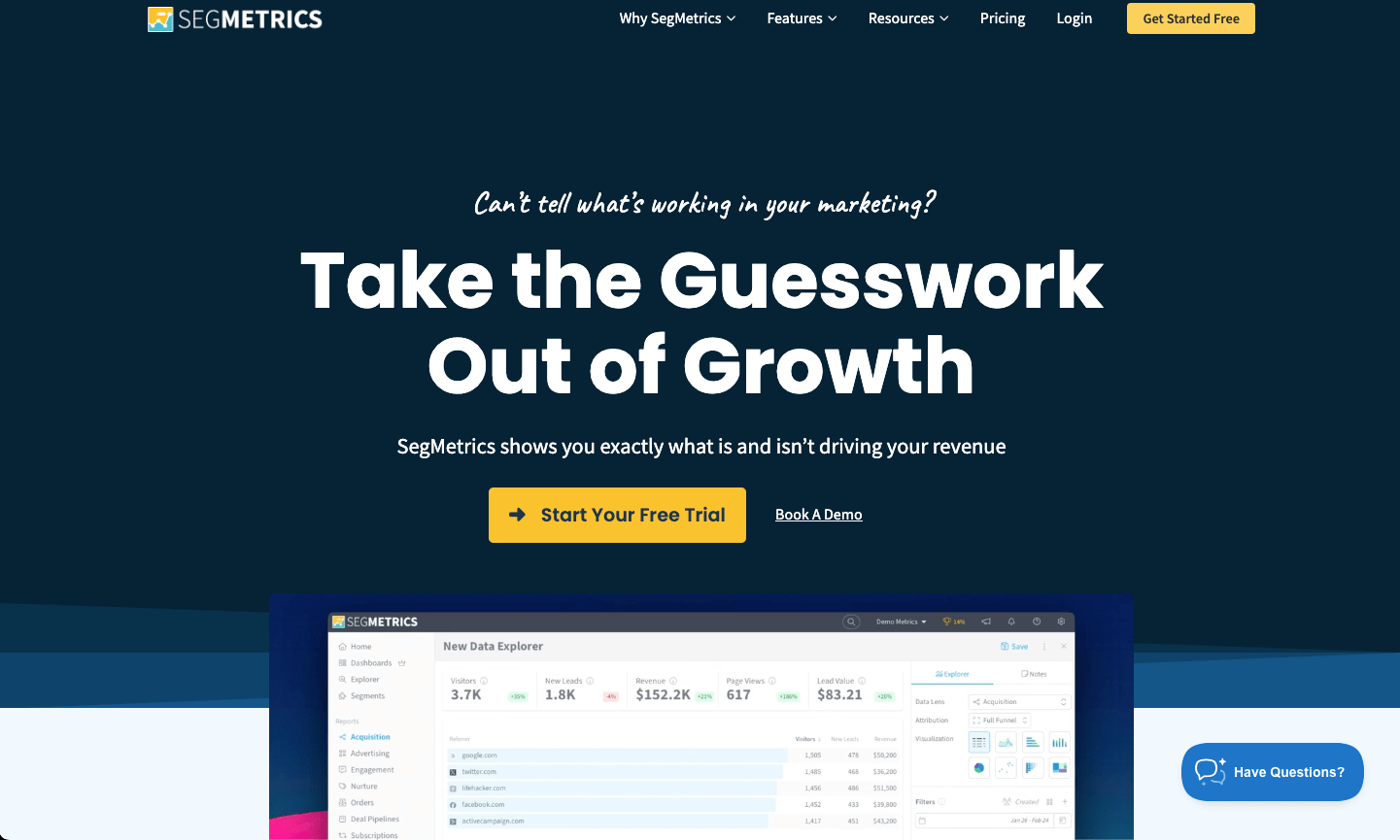
SegMetrics is a lead and revenue attribution tool built for marketers who need to connect all the customer’s dots from the moment they become a lead to the moment it turns into revenue.
It’s mostly used by agencies, SaaS & subscription-model businesses, and online course or coaching creators when they want to uncover how leads mature over time.
What makes SegMetrics a good Cometly alternative?
Even though both platforms are marketing analytics and attribution tools that show which campaigns contribute to bringing in revenue, they focus on different portions of the marketing funnel, and they also target different audiences.
- SegMetrics prioritizes deep customer LTV and segmentation insights for businesses with longer sales cycles.
- Cometley stays focused on real-time, multi-touch attribution for e-commerce and performance marketers.
So, with SegMetrics, you get to see how leads behave weeks or even months after the first touchpoint. Then, you can evaluate not just what brought the sale, but also what influenced the customer to stay, what their LTV is, and their recurring value.
Because of this, SegMetrics is a tool for businesses with a non-linear customer journey, where prospects take a much longer time to move from initial awareness to final purchase.
SegMetrics Best Key Features
What tends to stand out is how seamlessly SegMetrics pulls disparate backend signals into a unified view that mirrors the real pace of B2B and service-driven funnels.
- Full-funnel tracking capabilities – You get to determine which ads, content, and lead sources generate high-value, long-term customers, and connect all your customer interactions with a person within your CRM or email platform.
- Customer segmentation & reporting – Take all your customer behavior data, and filter your leads and customers to spot the most profitable segments so you can optimize specific offers or adapt copy across advertising platforms.
- Historical data management – Get instant insights into past performance by importing historical data the moment you set up the platform, so you don’t have to wait to gather new data.
Potential Drawbacks
When it comes to potential downsides, SegMetrics has a few.
- Dependent on the quality of external data – Because Segmetrics relies on data from external sources such as your CRMs, email, and ad platforms, the insight it produces will only be as good or accurate as the existing data you feed it.
- Hefty tool – If your use case is simple (like ad optimization), this tool might be more than you need, so unless you’re going to use all its core features, chances are other alternatives will be better suited.
- Not for all business models – If you’re looking to track simple, high-volume, low-margin transactions where your priority is not LTV but real-time ad performance and optimization, it’s not a good fit.
So, if your focus is rapid optimisation, multi-network media buying, or day-to-day budget control, SegMetrics might be a powerful tool beyond your needs.
4. AnyTrack
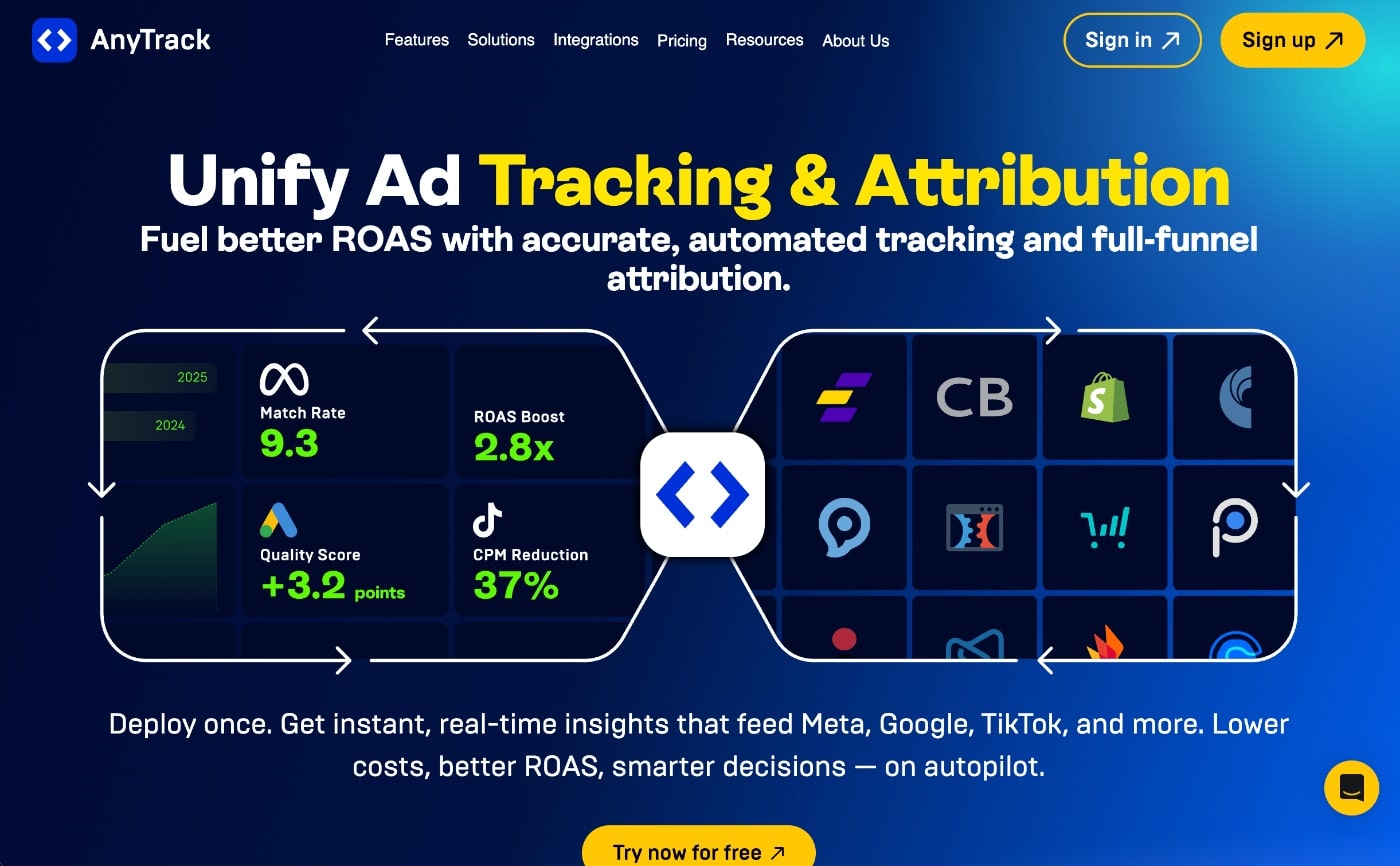
AnyTrack is a conversion tracking and attribution platform for marketers who don’t want the overhead of managing complex tracking setups.
It automates and syncs on-site and off-site conversion data with several marketing tools and ad networks like Google Ads and Facebook Conversion API, letting you take care of optimization.
What makes AnyTrack a good Cometly alternative?
Even though both tools use server-side tracking and APIs to land accurate real-time data for ad optimization across Meta or Google, AnyTrack goes broader by including affiliate networks and third-party revenue sources, which Cometly doesn’t support natively.
- AnyTrack focuses on resolving the main attribution challenges faced by affiliate and content marketers.
- Cometly prioritizes the job of performance marketers, where accurate attribution and a full-funnel view from ad clicks and closed deals are a key focus.
So what you get with AnyTrack is the ability to track outcomes outside traditional storefronts or in-house funnels, and you get this without needing to engineer custom integrations for each partner.
AnyTrack’s best key features
AnyTrack’s standout feature is that the moment you install and configure the platform, it removes the fragmentation faced by marketers who deal with blended customer journeys.
- Universal Conversion API (CAPI) – Data is automatically sent to major ad platforms, so campaign performance can be lifted and optimized for high-quality conversion.
- “AutoTrack” & “Redirectless” – These “smart” tracking features automatically tag and track things like affiliate links, forms, and product interactions without configuration or coding, and Redirectless tracking helps improve load times to improve the customer experience.
- Audience building – Because the tool is a multi-channel attribution platform, you can use the data to build specifically targeted, high-intent custom lookalike audiences for various remarketing campaigns.
Potential drawbacks
Some of the main disadvantages to keep in mind with AnyTrack include:
- Fewer tools focused on optimization – Because the tool is so heavily focused on accurate tracking and attribution, it offers fewer campaign automation and optimization features than similar platforms.
- Focused on affiliate marketers’ needs – If you work exclusively with paid social campaigns, this tool may be too broad and not targeted enough to your needs.
- Steep learning curve – With so many features and customization options, the tool can feel overwhelming for new users and will take some time to set up.
So if you’re looking for granular attribution, fast cost updates, or multi-network media buying, this tool may deliver the data, but it might not have the operational depth you want to make instant campaign changes from within the platform.
5. Wicked Reports
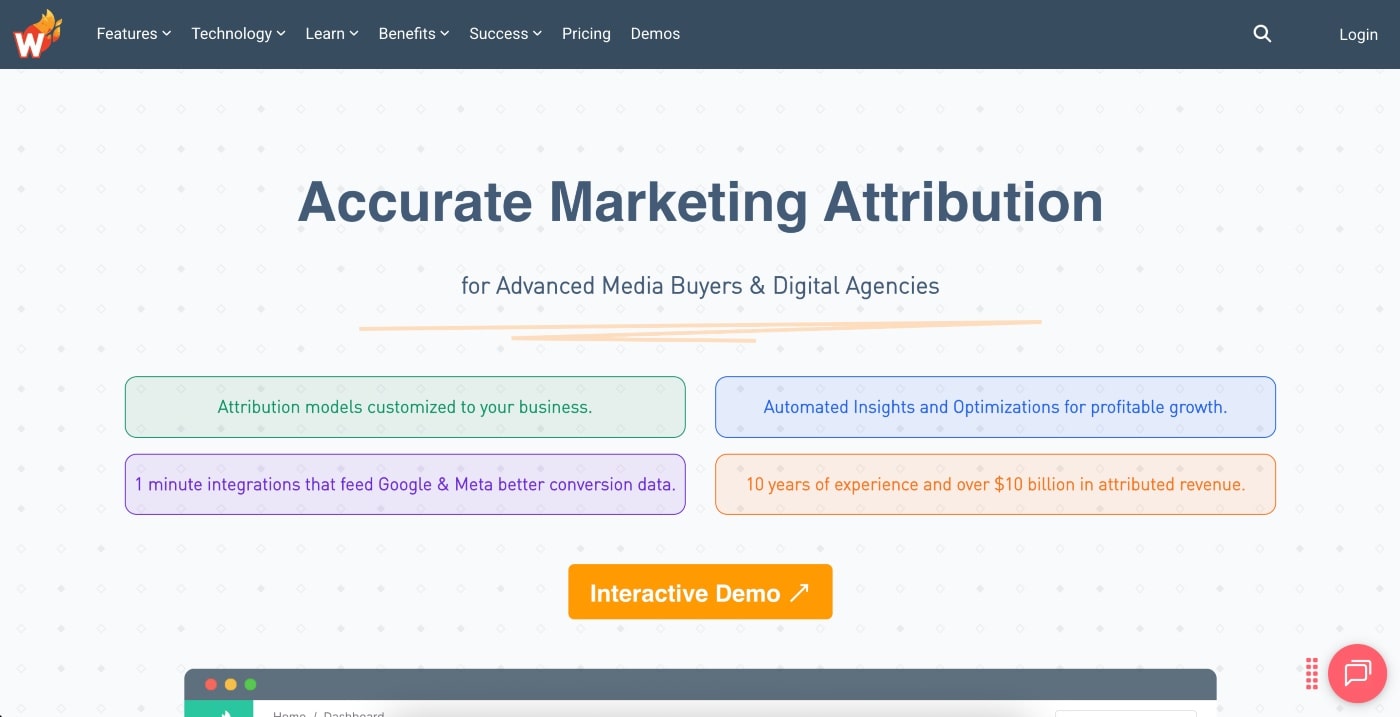
Wicked Reports is a marketing attribution platform designed for businesses with long sales cycles and those that depend heavily on email for leads.
It uses server-side tracking to connect marketing activities with sales revenue and LTV to uncover customer journeys that can take anywhere from a few days to multiple months.
What makes Wicked Reports a good Cometly alternative?
Even though both marketing platforms help you see which ads contribute to revenue and which don’t, Wicked Reports goes a step further.
- Wicked Reports looks at how marketing efforts accumulate over time and how all the various touchpoints contribute to LTV.
- Cometly stays laser-focused on real-time analytics so teams can optimize their campaign performance on the go and make smarter ad spend decisions.
So while Cometly takes care of the short-term ad optimization, Wicked Reports users get a clearer idea of how all the touchpoints mattered. It tracks multiple touchpoints and looks at Google Ads and email sequences to uncover customer patterns that short attribution windows often miss.
Wicked Reports is more than just a simple ad tracking tool. It’s a multi-touch, cross-channel tracking marketing tool that delivers detailed insights for teams trying to reconcile long-range marketing strategies with smaller daily campaigns to get the entire user behavior story.
Wicked Reports best key features
Wicked Reports has several key standout features, but its star feature without a doubt is the platform’s ability to track and trace how a customer’s value grows over time, and then align that growth with specific marketing or ad campaigns.
- LTV tracking features – You’ll be able to spot and attribute suture subscriptions and recurring revenue back to the marketing campaign that led to the first click, which will help you understand the return on investment on new customer acquisitions.
- Customizable attribution models – You get to define attribution time windows and models so they match a specific buying cycle and get an accurate view of performance.
- “FunnelVision” feature – A feature that shows you exactly where in the funnel marketing activities are converting, so you know which ads work best for cold traffic and which ones nurture existing leads.
Potential drawbacks
Before you decide to go with Wicked Reports, there are a few potential drawbacks you need to bear in mind:
- Not for daily ad optimization – Like some of the other tools in this list, Wicker Reports is more focused on retrospective customer journeys to inform future marketing strategies than giving you instant evaluations and operational tools for daily ad optimization.
- Complex setup & interface – Initial platform setup and onboarding can be extensive, so be prepared to dedicate some time to launching the tool. Also, when compared to similar tools on the market, it doesn’t have the most user-friendly interface
- Specialized intent – The tool works best for subscription model businesses and teams whose marketing strategies depend on understanding customer retention as well as customer acquisition.
Essentially, Wicked Reports serves companies that are not so much interested in understanding today’s marketing activities as they are interested in treating attribution as a way to protect future growth.
Conclusion – How To Choose The Best Cometly Alternative?
To choose the right Cometly alternative, you need to know your business and customers inside out. You need to know which channels your team manages, the speed at which they need to optimise, and the type of customer journey you’re trying to understand. Do you work on short or long sales cycles?
Some teams will need instant cost updates and automation rules to keep on top of high-volume paid social. Others might be looking for a tool that maps out long revenue cycles, multi-step nurturing paths, or LTV patterns. These are two very different scenarios, and they demand very different tools.
So the key lies in aligning your priorities and marketing workflows with the platform that brings all the features your marketing attribution model demands.
As you compare the tools in this list, try to picture where you see your team in terms of compatibility. The right Cometly alternative is the one that removes your biggest friction points and gives you one reliable source of truth so you can make all the right marketing strategy decisions.
If your priority is instant, real-time attribution insights and daily ad optimization, then RedTrack is your best Cometly alternative. It doesn’t just track touchpoints. It unifies every traffic source, every conversion path, and every optimisation loop into one system that mirrors the real pace of performance marketing. With real-time insights, advanced automation, multi-network cost updates, and a complete end-to-end attribution framework, RedTrack gives you both speed and depth.
So whether you manage cross-channel campaigns, run affiliate programs, or need accurate attribution to scale profitably, RedTrack is the tool built to keep up with you, not the other way around.


