
Meta, Shopify, and all your other traffic channels may have reporting data, but that doesn’t mean it’s data you can count on and compare directly. Even though the platforms pull real data from your business, they are not measuring the same things in the same way.
While Meta Ads Manager shows conversions and ROAS, Shopify shows orders and revenue. Logic would tell you that comparing these two would be a good way to get the insights you need to understand what’s performing and what isn’t.
However, if you take a deeper look at how platforms operate and compile their data, you realize this won’t work. Every platform can only report what it sees and how it sees it. Meta claims credit and reports what its pixel and attribution model sees. Shopify favors the last visit before purchase, and reports what its session tracking can attribute. But neither one tells you the full, honest story about what drove each conversion.
In this blog, we explain why the solution to this drama is a third-party app that gives you a neutral reporting layer. Find out why platform reports don’t match and can’t be directly compared, see what this issue is costing you, and learn how you can prevent it all with RedTrack.
3 Reasons Why Meta & Shopify Don’t Match
There are three core reasons why your Meta and Shopify data don’t match. As we go through each one, you’ll realize just how much of a problem it is to make optimization decisions solely on these unvetted numbers.
1. Different Attribution Models = Different Outcomes
Even though both platforms are technically correct within their own ecosystems, your numbers will rarely align because they use different attribution logic systems. This includes attribution models and windows.
- Meta: Typically attributes conversions 1 day after view or up to 7 days after a click.
- Shopify: Attributes orders to the session, which it can track, which is normally the last session before purchase.
So if we apply both their logics, it means:
- Meta can claim credit for purchases that happen days later and even on different devices.
- Shopify may end up claiming credit for a purchase where a user clicks on an ad, leaves, and then returns a day later, directly to the shop and buys the product.
What you get is one purchase being claimed by both platforms because their attribution models and windows both count it as theirs. Meta claims the conversion for the earlier ad interaction, while Shopify claims the order as Direct Traffic.
In a nutshell, the two platforms are actually answering different questions:
- Meta looks at influence over time.
- Shopify looks at the final interaction. The same conversion gets interpreted
2. Tracking Limitations = Incomplete Tracking Data differently differently
The next issue is tracking limitations. This isn’t just about the platform not picking up all of its own platform’s interaction, but also the lack of cross-channel interactions.
- Meta relies on browser-based tracking, which is unreliable because of iOS privacy changes, ad blockers, and cookie loss.
- Shopify has reliable purchase records, but it doesn’t account for previous interactions, like other channel visits and touchpoints on different devices, which contributed to the sale.
These are the technical issues. But then you also have the full customer journey problem.
A buyer’s full customer journey might look like this:
- They click a Meta ad
- Then they go and search Google for the product
- Finally,y they go directly to Shopify and buy the product
Each platform sees the interactions that happened on its system, but there is no single platform to reconstruct the complete path to purchase.
3. Platform Bias = Each Tool Favors Itself
Then we come to an additional problem: each platform is constructed in a way that proves its own value.
What you get is a result that naturally overrepresents the role it played in the conversion:
- Meta does this by expanding its influence across time and touchpoints
- Shopify favors the last interaction
- Neither platform distributes credit fairly across the entire customer journey
Chances are you’re using more than one ad platform, and your buyers are seeing ads from multiple sources. And when you have Meta, Google,e and TikTok applying their own attribution logic, which is skewed to make them seem like they are doing more of the work, you get biased data.
So, without a neutral layer, you’re left with competing data, which is hard to decipher,r and every platform is fighting for the same conversion. You’re left trying to guess what truly drove the sale.
The Impact: What the Mismatch Costs You
The impact of all this misalignment is ultimately ineffective decision-making that can see your ad campaign performance take a dive in the long-term.
With incomplete and inaccurate data, you end up optimizing, scaling, ng and reallocating budgets that don’t drive profits.
You Scale Campaigns, But on Inflated Performance Numbers
If you go and use Meta’s reports and see strong ROAS for certain ad campaigns, you’ll probably go and scale these ads.
However, because these numbers usually include conversions Meta ads influenced, but didn’t actually drive, you risk allocating budgets towards campaigns that don’t deliver true incremental value.
Doing this repeatedly will result in:
session data, they have to learn and improve who the ads target. When that data is incomplete and inaccurate, the algorithms end up optimizing towards the wrong signals.
So instead of ads finding the users that are most likely to actually buy your products, it only finds ones that are similar to the dataset the platform sees.
This leads to:
- Wasted spend on the wrong audiences
- Missed high-value customers that the algorithm can’t find
You Never See True Profitability
Shopify will show your revenue, while Meta shows your performance metrics. But because neither platform can connect the data to show you the full picture, to tie revenue directly back to the exact spend that it generated.
So, you’re working with and making costly decisions based on partial information because you don’t have a single view that combines:
- Confirmed conversions
- Ad spend
- Consistent attribution
Instead of making precise decisions that you can be sure will keep the business’s profit growing, you’re optimizing everything on fragmented signals that don’t reflect reality.
This makes it hard to:
- Measure ROAS, CP, A, and profit accurately
- Identify where your budget is being wasted
The Solution: A Third-Party App That Tracks & Captures Accurately
The only way to solve this data gap between Meta and Shopify is to turn to a tracking app that sits above these platforms. One that is not limited to browser restrictions, attribution b,ias, or platform-specific logic.
Complete & Accurate Conversion Data
Third-party tracking tools like RedTrack remove reliance on browser tracking entirely. Instead, it captures conversions server-to-server from your store’s backend. So every conversion can be tracked, regardless of the device, browser, or privacy settings of the user.
It then consolidates and cleans that attribution data, and then gives you a unified, full picture of performance and touchpoints across all your channels.
On top of that, it also sends optimized conversion signals back to your ad platforms, helping their algorithms learn from complete customer journeys instead of partial tracking data.
What this means: You eliminate the blind spots that traditional pixel and cookie-tracking deliver.
Neutral & Cross-Platform Attribution
With third-party tracking tools, you also bypass the platform-specific rules that make your data incomparable. This is because these types of tools (like RedTrack) let you apply one consistent attribution logic across all your channels.
So you no longer have to rely on:
- Meta’s view-through or click-window for attribution
- Shopify’s last interaction or direct traffic assumptions
- Any platform’s self-claimed contribution to the sale
What this means: You get a single, consistent attribution model to view and understand the true and full customer journey that took place across multiple sessions, devices, and platforms.
Unified Dashboard With Revenue & Cost Data
Finally,y the highlight of using a third-party tracking solution is that you end up with one unified dashboard to view ad campaign performance across all your channels.
No more switching between platforms or putting screens side-by-side for comparison.
This means you’ll finally be able to see as ad performance in one place, and it will show:
- Revenue (confirmed conversions, not estimated attribution)
- Ad spend (automatically picked up from every ad platform)
- RAOS (real revenue vs real spend)
- CPA (actual cost per purchase)
What this means: You have a single source of truth, which immediately shows you which ads are driving profits and deserve your budget.
How To Use RedTrack’s Data to Manage Ad Campaigns Smarter
RedTrack replaces fragmented, platform-specific data with a single, accurate report. It can do this, thanks to its server-side tracking feature, which captures all conversions.
And because it sits outside Meta and Shopify, it’s not limited by various platform-specific attribution systems, which also overrides the bias factor.
It reconstructs the entire customer journey and applies one logic that standardizes performance across campaigns and channels.
Here are five ways you can use RedTrack to manage your ad campaigns smarter.
1. Spot the Gap Between Reported & Real Conversions
Start by comparing RedTrack’s conversion with Meta’s report data. The difference you see between the two will show you exactly how many purchases were invisible due to platform tracking limitations.
Action: Take the campaigns with the greatest discrepancies and work out if they are under- or over- attributing performance before making scaling decisions.
2. View Campaign Performance By True ROAS
Next, calculate performance with RedTrack’s unified view of revenue vs. ad spend, and then re-rank all your campaigns on real return instead of reported attribution.
Action: Reallocate budget to campaigns that consistently deliver strong ROAS in RedTrack, even if they tell a different story in individual platform dashboards.
3. Identify Hidden Winning Ads & Audiences
If you want to go deeper, then go and break performance down to campaign, ad set, and ad level inside RedTrack. Spot the ads that are underevaluated in Meta, but seem to consistently convert well in verified data, and red-flag the ads that aren’t driving real purchases.
Action: Scale the hidden winning ads through new ad sets or campaigns and see if the same performance holds with this higher spend.
4. Use Real Conversion Signals to Improve Channel Algorithms
Take advantage of RedTrack’s server-side tracking and CAPI integrations to feed the complete and accurate conversion signals back to Meta, Google, TikTok, or whatever other channels you’re using. That way, your platform’s algorithms will work to reel in and target the right audience.
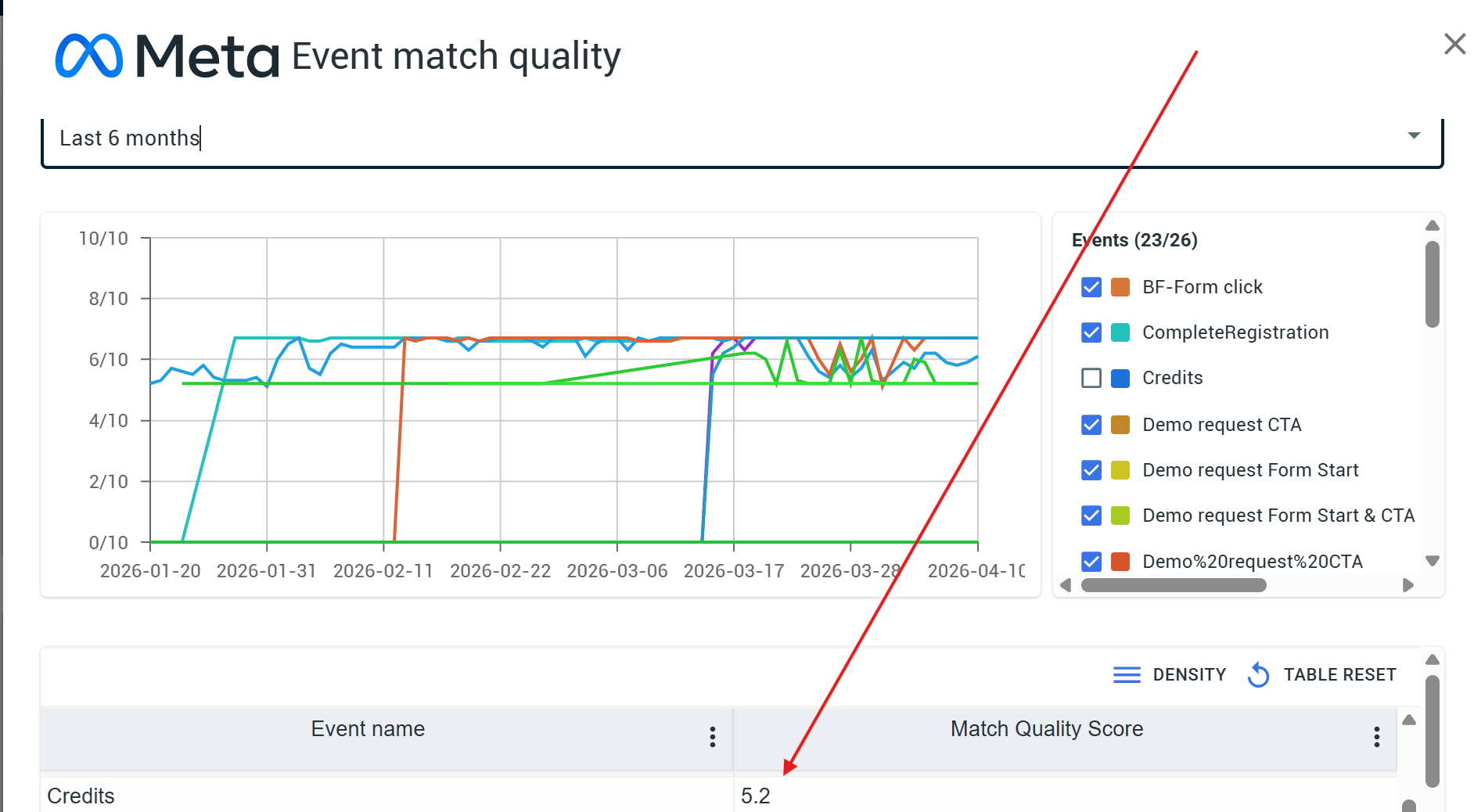
Action: You can also monitor event match quality and slowly refine checkout data capture, such as email, phone, and other identifiers, to continue to improve signal strength over time.
5. See Which Ads to Pause, Fix & Scale
Finally, let RedTRack guide you on which ads to pause, fix, and scale, by basing it on confirmed CPA and ROAS metrics.
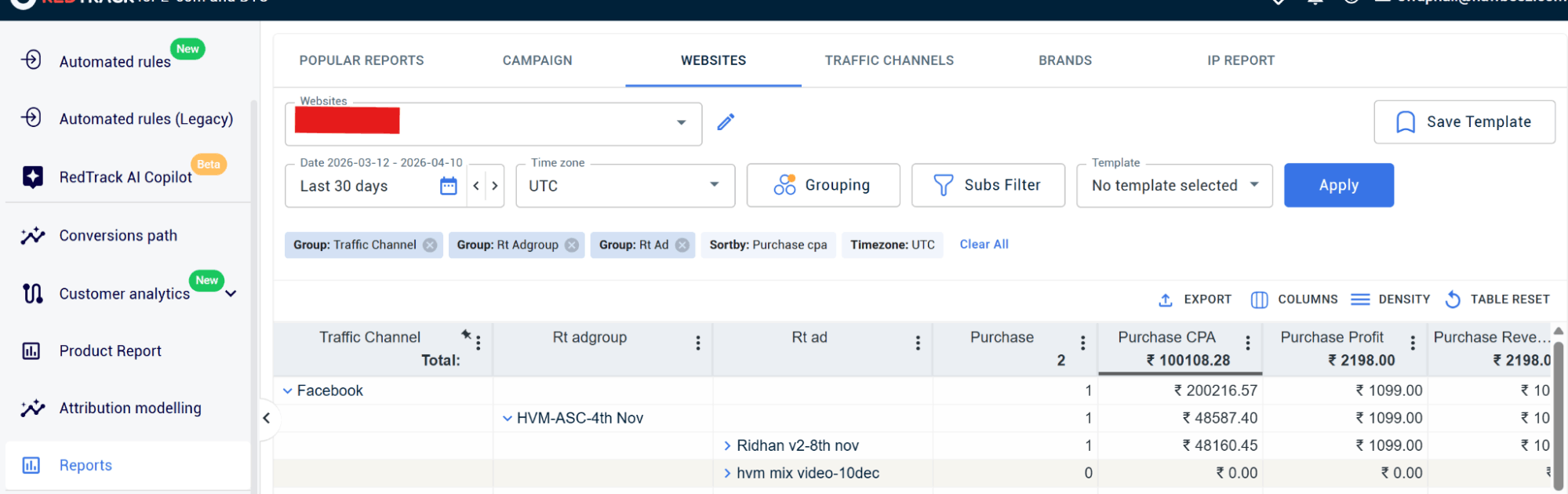
Action: Don’t move budgets all at once. The better approach is to shift incrementally. This gives algorithms time to stabilize after being fed new performance data.
Why RedTrack Will Be Your Ad Performance Turning Point
It’s only when you move away from depending on platform dashboards in isolation that you realize how much information you were actually missing in your decision-making. No more reconciling different versions of the same data. No more incomplete customer journeys.
Just end-to-end visibility showing how your ads actually perform in reality.
The switch will completely change how you approach ad performance management, day to day. All of a sudden, you have confirmed conversions tied directly back to ad spend, which explains clearly what is driving revenue, and what isn’t.
So all of a sudden, your ad optimization activities become more precise, and you make decisions with confidence, because you trust the data that’s informing you.
Over time, it becomes easier and quicker to pick and choose which ads to scale, which need creative changes, and which need to be dropped altogether.
But this is only possible with a third-party tracking tool like RedTrack. If you haven’t already, sign up for our 14-day free trial to test out the tool, book a demo with one of our team members to walk you through the platform, and show you what you’re missing in your performance marketing operation.


