
Many website owners use Google Analytics to track site performance, gaining valuable insights into traffic sources, user behavior, conversion rates, and how paid channels compare. However, GA4 wasn’t designed with performance media buyers in mind.
And here’s why: Tracking gaps grow larger every year, and data privacy rules continue to get stricter. For large-scale campaigns, you probably run ads across social media, Google, affiliate networks, or whatever your multichannel strategy includes. Campaign optimization depends on how well you track your performance. Yet GA4 tells you only part of the story. And let’s not even mention real-time data. You know the struggle.
That’s why performance marketers are moving away from Google Analytics to dedicated analytics and attribution platforms that actually give clean data, clear attribution, custom reports, and actionable insights you can use right away.
So, how do you choose an analytics tool that makes up for these GA4 limitations? Read this guide to find out. We’ll review the eight best Google Analytics alternatives in 2026, going over their key features and drawbacks to help you choose right.
1. RedTrack
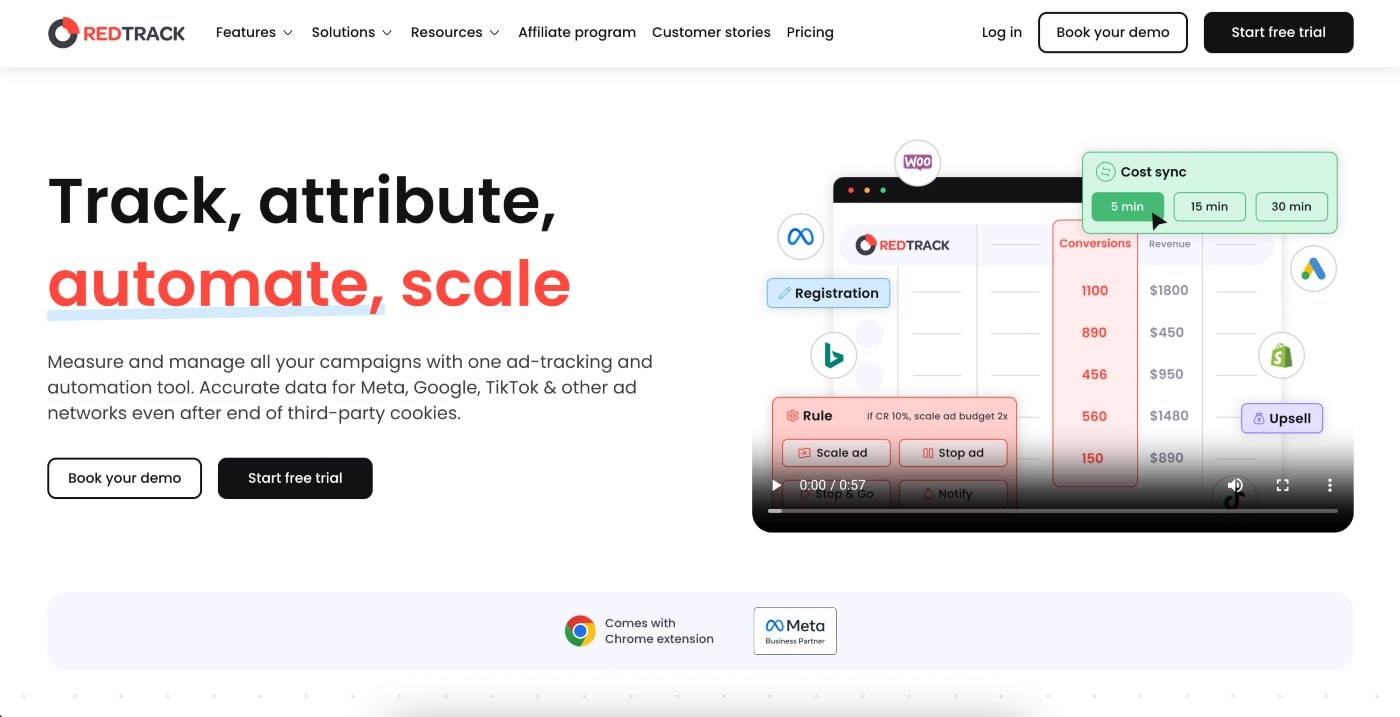
If you’re running paid ads and are tired of guessing which channel actually drove a sale, RedTrack is the web analytics tool you’ve been wishing Google Analytics would grow up to be. It’s built for performance media buyers who need real-time marketing attribution they can trust.
RedTrack pulls all your traffic sources into one place and gives you a unified view of the customer journey, without the usual platform bias.
You’ve got server-side tracking, API integrations that actually work, multi-touch attribution models, click and conversion tracking, rule-based automation, and real-time analytics.
Whether you run your campaigns on social media apps, search engines, or some other platform, RedTrack accounts for every click and conversion, making it the best alternative to Google Analytics.
It’s especially powerful for e-commerce teams using Shopify or WooCommerce, as well as media buyers who want to scale winning campaigns fast without wasting ad spend.
If you’re serious about maximizing your marketing spend and getting accurate performance data, the investment in RedTrack pays for itself pretty quickly.
2. Matomo
Matomo is a Google Analytics alternative that lets you keep full control over your analytics. If you’re one of those people who really need to own their data and don’t like the idea of it being shared with Google, or you want to have everything on your own server, Matomo is worth a try.
Not too many marketing attribution tools give you an overview of where your campaign’s traffic comes from, what actions users take when they arrive on your site, how much they spend on average in your ecommerce store (if applicable), and customer journey analytics. Plus, it’s privacy-friendly right out of the box, which keeps you safe with GDPR and other compliance requirements.
On the other hand, Matomo can be a little clunky compared to Google Analytics; there’s definitely a learning curve. And because it uses first-party data collection methods, you’re limited to your owned channels (think website and ecommerce store). You can still bring in outside data through your customer relationship management (CRM) tool, but it’s not built for the kind of cross-channel attribution that media buyers need.
3. Plausible Analytics
Plausible Analytics is the web analytics software you choose when you want straightforward performance data without the complexity of GA4. Plausible doesn’t bore you with vanity metrics, but it shows you the figures that actually matter, including scroll depth, time spent on page, and bounce rate. You can also track custom events, outbound click links, and ecommerce revenue. For performance media buyers who want a quick look at what’s happening on a landing page or in a store, Plausible is a breath of fresh air.
One really cool feature of Plausible is that you can import your historical stats from Google Analytics into your dashboard so you don’t have to deal with data gaps and double-counting. Also, Plausible Analytics has a tiny tracking script (under 1 KB), so it barely impacts page speed. And since it’s fully privacy-compliant and cookie-free, you don’t need annoying consent banners either.
The trade-off is that Plausible keeps things minimal, which means you won’t get advanced behavior analytics, multi-touch attribution, deep ecommerce reporting, or automation features. So if you’re running a lot of paid campaigns and need detailed channel-by-channel attribution, Plausible won’t replace an ad tracker like RedTrack. But as a lightweight Google Analytics alternative for basic insights, it does its job well.
4. Fathom Analytics
Fathom Analytics is one of the closest web analytics tools you’ll find to Google Analytics. It works well for marketing teams that want quick insights, reliable traffic numbers, and a dashboard that’s easy on the eyes. The reporting style uses a glance-and-go approach, which is useful if you don’t have the time to deep dive into lengthy management reports.
Also, Fathom uses a lightweight script that bypasses pesky ad blockers, giving you far more accurate data than many other cookieless tracking tools. And because it’s built with privacy regulation compliance (such as GDPR, CCPA, and PECR) from day one, you don’t need cookie banners. If creating a good user experience is important to you (and really, why shouldn’t it be?), then that’s another big win.
But this simplicity comes with drawbacks. Fathom can’t tell you how each channel contributes to conversions or let you see the complete picture of a more complex customer journey. So, if you need anything beyond basic website analytics, you’ll kind of grow out of Fathom quickly.
5. Simple Analytics
Simple Analytics is a GA4 alternative made for performance marketers who want to track key metrics without having to deal with complicated features. If you find yourself overwhelmed by GA4, or just simply want an analytics tool that feels more human and easy to use, Simple lives up to its name.
It doesn’t use cookies at all, so it’s fully GDPR compliant right out of the box. Also, it gives you a public dashboard, so you can share your reports with clients and give access via email for collaboration. For anyone managing multiple landing pages, content sites, or ecommerce stores, Simple Analytics has you covered.
The catch is that Simple Analytics is not designed for high-performance teams. You won’t get deep attribution, detailed ecommerce analysis, or complex audience segmentation. It doesn’t track user behavior across channels. If your livelihood depends on knowing exactly which channel or ad led to a transaction, don’t replace a dedicated marketing attribution solution with Simple Analytics.
6. Heap Analytics
Next on our list of what’s replacing Google Analytics is Heap Analytics, the opposite of manual analytics tools. Heap Analytics automatically captures every single user interaction on your site or app without you having to tag events upfront. If you’ve ever wished your web analytics tool could just remember everything for you, Heap is pretty much that. It’s popular among growth teams, product managers, and marketers who want deep behavioral insights.
Heap’s standout feature is Autocapture. Every click, tap, form field, scroll depth, page view, and custom action gets logged instantly, and you can retroactively create events or funnels without touching code. You don’t even choose what you want to measure. Heap handles all of that for you.
Bear in mind, though, that Heap leans toward product analytics rather than pure marketing performance. You’ll find this tool useful if you care about user behavior, but it isn’t sufficient for attribution modeling, paid channel comparison, or real-time ad performance. Also, Heap can feel overwhelming for first-time users because of the amount of data it captures.
7. Adobe Analytics
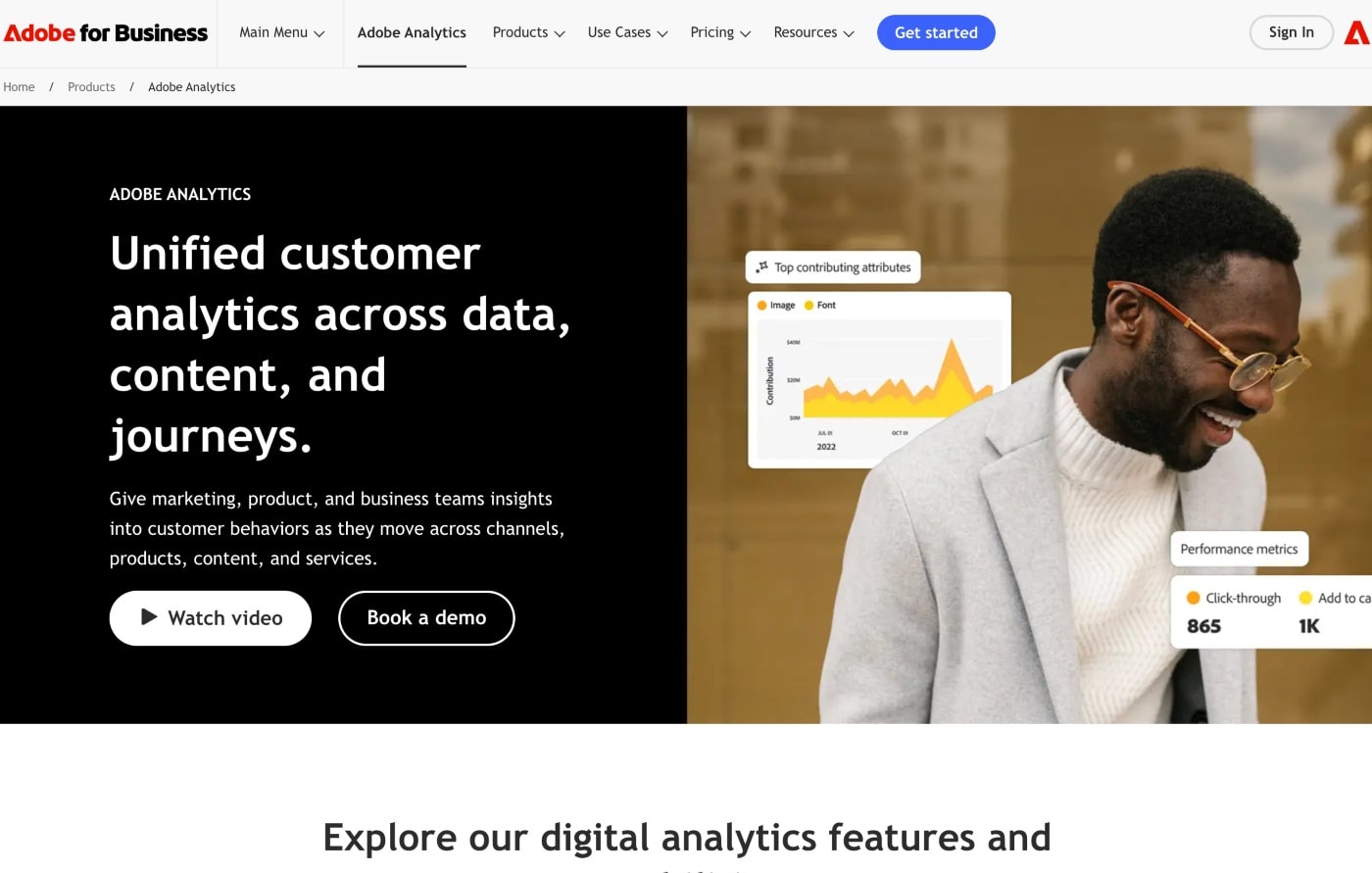
Adobe Analytics is the tool most enterprise-level brands would use if they could afford it. It’s far more powerful (and complicated) than Google Analytics, but if you’re running a large-scale ad campaign and you need every detail about how visitors behave across channels, Adobe delivers.
Adobe’s biggest differentiator is the sheer number of things you can do with it. It seamlessly integrates with the entire Adobe Experience Cloud, which means you can plug your analytics into personalization, audience management, and marketing automation. Not to mention that if you’re running a lot of campaigns or have a full team looking at data from different angles, Adobe gives you the kind of granularity GA4 simply cannot.
That being said, Adobe Analytics has its drawbacks, too. Firstly, it takes a while to set up and often requires having an in-house analytics team. And due to its complexity, many businesses pay for all of these capabilities whilst only using a small percentage of them. So whilst Adobe is great for enterprises, it’s definitely overkill for most performance media buyers.
8. Mixpanel
Mixpanel is one of the most widely used event-based analytics tools for teams that want to understand user behavior. Instead of just looking at vanity metrics like web traffic, Mixpanel helps you spot patterns that help you make informed marketing and product decisions.
You get event tracking (that lets you see what users are doing with your products), retention reports, cohort analysis, and real-time user insights. And all of these are displayed on a user-friendly dashboard that allows everyone on your team to track the metrics that truly matter. Mixpanel works across mobile apps, websites, and SaaS products. So, it’s a good option if you want to measure your product’s performance across every customer touchpoint.
What it doesn’t have that GA4 does is the performance marketing capabilities. You don’t have multi-touch attribution reporting, cross-channel marketing, or deep ecommerce tracking. So, if you truly want to see what channels are performing, you still need a dedicated marketing analytics and attribution tool like RedTrack.
Conclusion – How To Choose The Best Google Analytics Alternative
When you compare all the Google Analytics competitors on this list, one thing becomes obvious: performance media buyers are moving away from Google Analytics because it doesn’t give them the data clarity they need. GA4 is fine for basic website reporting, but if you care about real attribution and accurate numbers for making quick decisions, it’s time to look elsewhere.
So, how do you choose the best Google Analytics alternative?
Start by analyzing the tool’s data collection methods. Get a marketing analytics alternative to GA4 that gives you verifiable, first-party data instead of modelled guesses. Then, look for server-side tracking, API-based conversions, and cross-channel attribution that works across every platform where you set up marketing campaigns.
You should also choose a Google Analytics competitor that gives real-time visibility into site performance. That way, you can adjust budgets quickly and inject more funds into the best-performing channels. And finally, make sure the software supports privacy compliance while still giving you the level of data accuracy you need to scale.
RedTrack meets all of these conditions, making it the best Google Analytics competitor for performance marketers.
RedTrack brings all your channels (like Meta, Google, TikTok, X, YouTube, and affiliate networks) into one clear customer journey. So, if your goal is to scale campaigns without wasting budget, RedTrack is the only analytics software you need.
Start your 14-day free trial of RedTrack today, and see how much revenue you’ve been leaving behind.


