
According to recent industry research, 77% of marketers struggle to prove the ROI of their advertising campaigns. Also, that same research shows that most businesses are making campaign decisions based on vanity metrics that don’t reflect actual business impact.
And when you read similar stats about how marketing budgets are being slashed and CMOs are under pressure to justify every dollar spent, it all points to a paradox of sorts: your campaigns might be getting clicks and impressions, while at the same time failing to drive real business results.
This seems to be a common occurrence nowadays because a lot of agencies, businesses, and organizations are having trouble measuring their advertising campaign effectiveness properly.
If your agency is facing the same problem, you’re in the right place, because we’re taking a closer look at what campaign effectiveness measurement is, why it matters, and how you can implement it to prove your marketing ROI.
What is advertising campaign effectiveness measurement?
The idea behind campaign effectiveness measurement is that every marketing dollar you spend is tracked and evaluated against real business outcomes. In other words, it’s about moving beyond surface-level metrics to understand the true impact of your marketing efforts.
At its core, marketing campaign effectiveness measurement is a systematic process that evaluates how your advertising investments connect to meaningful business results. This approach focuses heavily on accountability and the connection between each dollar spent and measurable outcomes like sales, revenue, lead generation, and brand lift that align with your broader business objectives.
The campaign effectiveness measurement process helps introduce accountability, prevents budget waste, and makes your marketing more strategic and results-driven. Rather than relying on basic output metrics like total impressions or click numbers, effective measurement addresses critical questions: Did the campaign reach the right target audience? Did it influence customer behavior? Which campaign attributes delivered the best results?
It also helps with budget justification and making the most out of your marketing investments. For example, with proper effectiveness measurement in place, you’ll never spend money on campaigns that look good on paper but don’t move the needle for your business.
But that’s just the tip of the iceberg.
Why measuring advertising campaign effectiveness is important
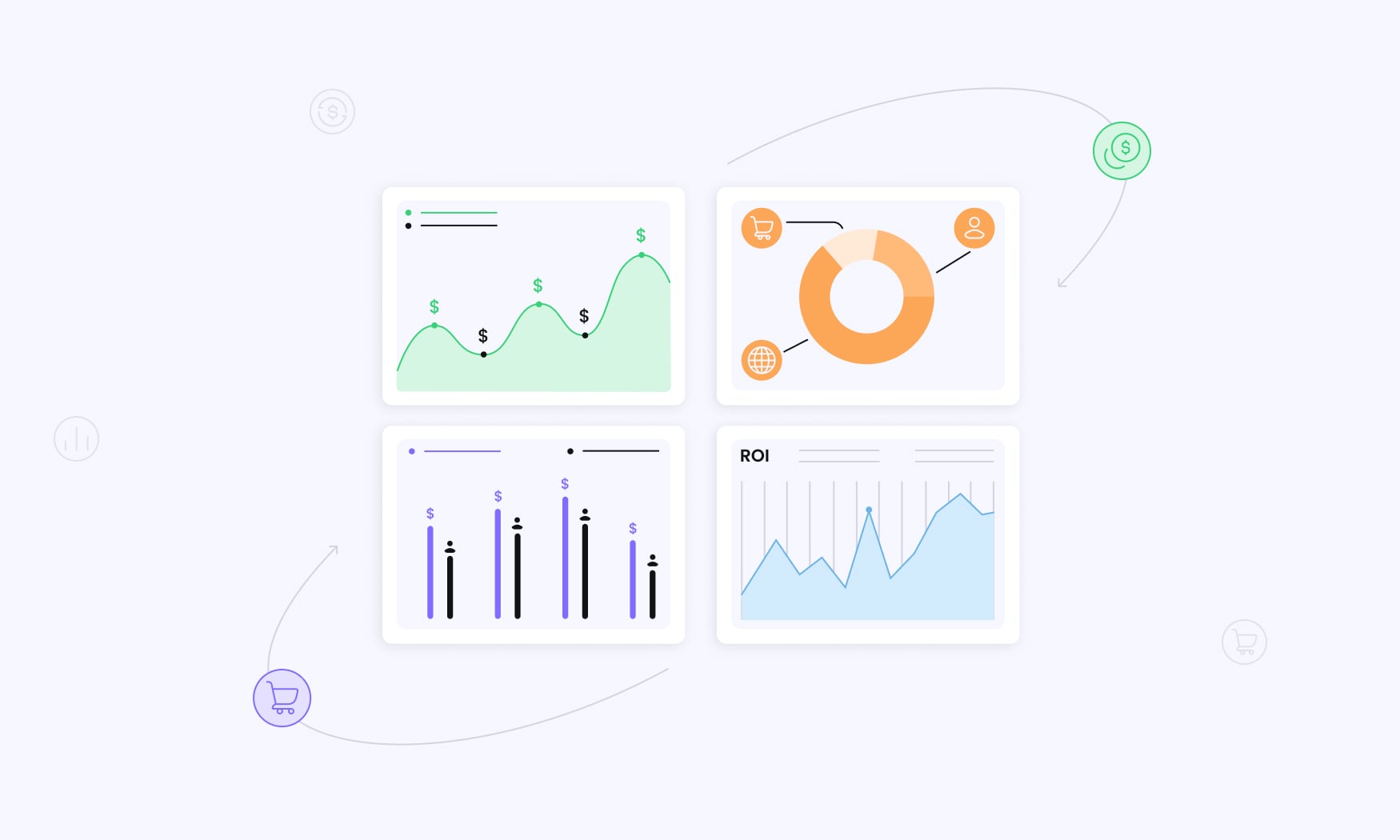
When you are running marketing campaigns, even the slightest misstep in measurement can feel like a seismic impact on your ROI. For example, one poorly measured campaign can waste thousands of dollars and mislead future marketing strategies.
According to research by HubSpot, 64% of marketers say proving ROI is their biggest challenge, with many relying on key metrics that don’t correlate with business growth. This gap between activity and outcomes becomes even more pronounced in today’s complex digital landscape where customer journeys span multiple devices and marketing channels.
When implemented properly, marketing campaign effectiveness measurement can help you keep all the aforementioned at bay. It helps with the following:
- Budget protection and justification: This helps not just marketing teams but also your executives to understand exactly how marketing dollars translate into business results. Giving them concrete return on investment roi data helps secure future marketing investments.
- Eliminates guesswork in optimization: With proper measurement, you can identify which campaign elements actually drive results, allowing you to double down on what works and eliminate what doesn’t.
- Data driven decisions: Instead of relying on gut feelings or vanity metrics, you can make strategic decisions based on actual campaign performance data that ties directly to business objectives.
- Understanding true customer journey impact: One of the main challenges in modern marketing is the complex customer’s journey. Proper measurement helps you see beyond last-click attribution to understand the full impact of your campaigns across multiple touchpoints.
- Proves marketing’s business contribution: When your measurement framework clearly shows how campaigns drive revenue growth, marketing transforms from a cost center to a profit driver in the eyes of leadership.
- Optimizes future campaign investments: With clear effectiveness data, you can allocate marketing budget to the channels, target audiences, and creative approaches that deliver the best returns.
- Improves campaign performance over time: Because effectiveness measurement provides valuable insights into what resonates with your audience, you can continuously refine your approach to achieve better results.
Now, let’s get onto how you should actually go about implementing proper campaign effectiveness measurement in your agency or organization.
How to measure your campaign effectiveness
There are countless ways in which campaign effectiveness measurement can be implemented, but here are the 7 quick steps everyone can implement to start tracking real results:
Set up your measurement framework before launch
Even if your marketing campaign is fairly straightforward, establishing proper measurement can be a complex task which is complicated by things like multiple touchpoints, cross-device customer journeys, as well as the sheer amount of relevant data available.
Setting up your framework means defining clear objectives, choosing the right attribution model, and establishing baseline measurements before your campaign goes live. Yes, it requires upfront planning, but taking the time to build proper measurement infrastructure is worth the effort.
Here are several things you should do to establish your measurement framework:
- Establish clear objectives using SMART criteria (specific, measurable, achievable, relevant, time-bound)
- Choose the right attribution model for your customer journey complexity
- Set up tracking infrastructure across all relevant platforms and touchpoints
- Establish baseline data by analyzing previous campaign periods or similar segments pre-campaign
- Account for external variables like seasonality, competitor activities, and market conditions
Also, don’t forget to identify potential external factors like competitor campaigns, economic shifts, and seasonal trends that might influence your results. Understanding these variables upfront helps you separate your campaign’s true impact from outside influences.
Focus on revenue and ROI metrics that matter
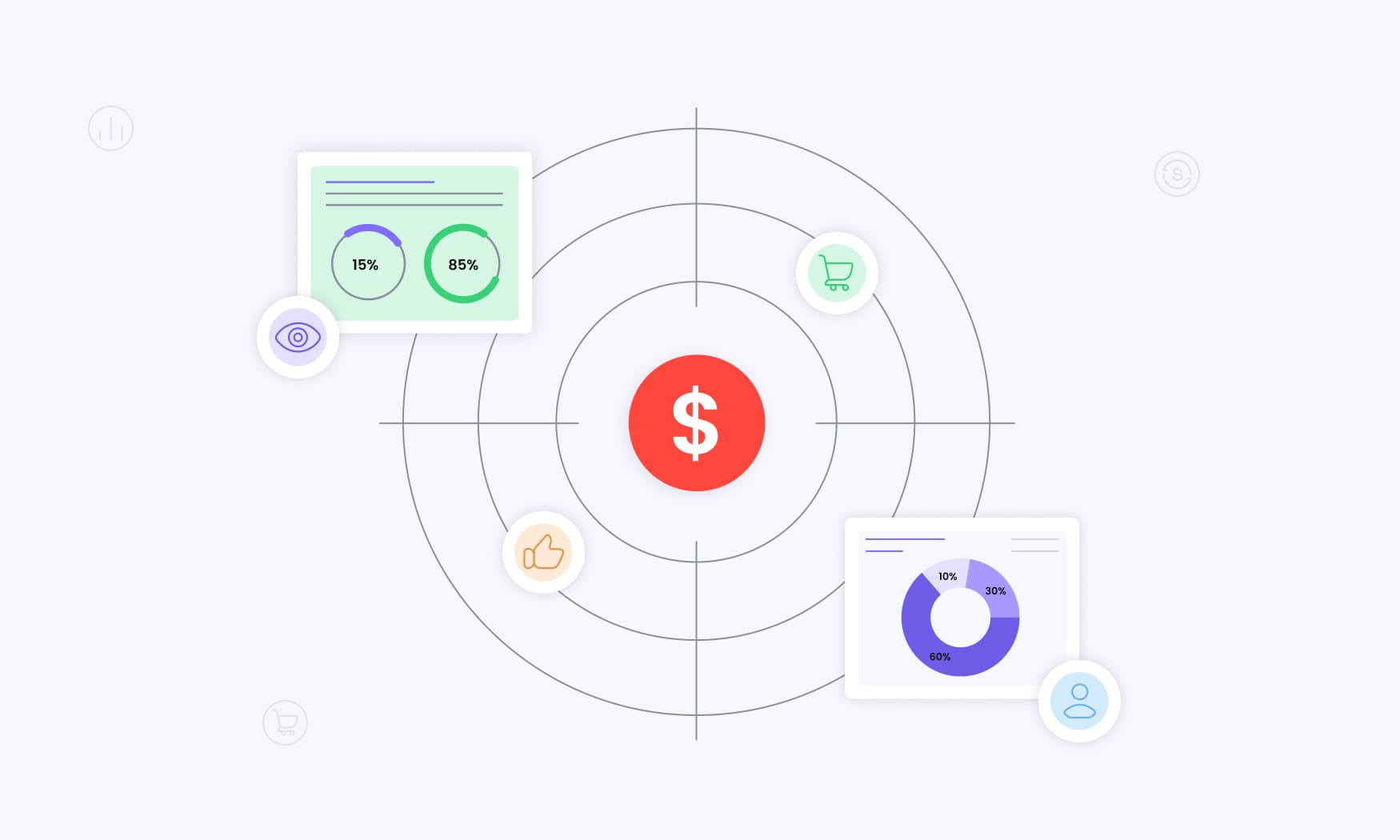
With your framework in place, the next step is to identify the key metrics that directly correlate with business growth. This seems deceptively simple, but you need to resist the temptation to get lost in vanity metrics that don’t reflect actual marketing success.
Now, as far as revenue tracking goes, that requires discipline, but in the context of campaign effectiveness, here are some strategies that have proven essential time and time again:
- Track Return on Investment (ROI): Calculate (Revenue – Campaign Cost) / Campaign Cost × 100 to understand your true campaign profitability. This is your north star metric that executives actually care about.
- Monitor Return on Ad Spend (ROAS): Measure Revenue from Campaign / Ad Spend to optimize your media buying decisions. Different channels and audiences will have different ROAS benchmarks.
- Calculate customer lifetime value impact: Don’t just measure immediate conversions – track how campaign-acquired customers perform over time. Some campaigns might have lower initial ROAS but bring in higher-value long-term customers.
These revenue-focused key performance indicators provide the foundation for proving your marketing campaign’s true business impact. Unlike surface-level metrics such as website traffic or click through rate, these measurements directly connect your marketing efforts to bottom-line results.
Implement proper attribution modeling
The aforementioned metrics depend on accurate attribution, but that’s just one part of the equation. The other is having an attribution model that reflects your actual customer journey, which deserves careful consideration.
We will focus on attribution approaches that can give you accurate campaign effectiveness insights. Consider the following:
Choose first-touch for awareness campaigns
If your campaign goals focus on brand awareness or introducing new target audiences to your brand, first-touch attribution gives you credit where your campaign first made an impression. This helps you understand which marketing channels are best at generating initial interest and can be particularly valuable for measuring the effectiveness of content marketing and paid ads designed to increase brand awareness.
Use last-touch for direct response
For campaigns focused on immediate conversions or direct response, last-touch attribution shows you which final touchpoint drove the conversion. This approach works well when you have short sales cycles and clear conversion paths in your sales funnel.
Implement multi-touch for complex journeys
Some potential customers take weeks or months to convert, interacting with multiple touchpoints across your marketing funnel. Multi-touch attribution models help you understand the full customer journey and give appropriate credit to each campaign element.
- Linear attribution: Gives equal credit to all touchpoints in the customer journey
- Time-decay attribution: Gives more credit to touchpoints closer to conversion
- U-shaped attribution: Emphasizes first and last touchpoints while still crediting middle interactions
To make the most of these models, marketers need a platform that doesn’t just support attribution, but enhances it. RedTrack enables first-touch, last-touch, linear, time-decay, U-shaped, and data-driven attribution within a single interface.
It visualizes the customer journey across all channels, removes reliance on biased platform data, and empowers marketers to make decisions based on truth, not assumptions.
With real-time insights and fully customizable reporting, RedTrack gives you attribution that actually reflects your business reality.
Sign up for a 14 day free trial and see it for yourself!
Consider data-driven attribution
For agencies with sufficient data volume, data-driven attribution uses machine learning to determine the optimal credit distribution based on actual conversion patterns rather than predetermined rules. This approach provides the most accurate picture of how your digital marketing efforts work together to drive results.
Track cost efficiency alongside performance
Truth be told, revenue metrics are crucial, but you also need to understand your cost efficiency to make smart optimization decisions for future campaigns. Monitor these key cost metrics:
- Cost per acquisition (CPA): Track Total Campaign Cost / Number of New Customers to understand your customer acquisition cost efficiency
- Cost Per Lead (CPL): Calculate Campaign Budget / Number of Qualified Leads to optimize your lead generation efforts
- Cost Per Click (CPC): Monitor clicks costs across platforms to identify the most cost-effective traffic sources
Having this cost data enables you to reallocate budget from expensive, low-performing channels to efficient, high-converting ones. These campaign metrics also help you benchmark performance across different marketing channels and identify opportunities to optimize future campaigns for better efficiency.
Understanding the relationship between cost per acquisition and customer lifetime value is particularly crucial. A channel might have higher upfront costs but deliver customers who generate significantly more revenue over time, making it more valuable than cheaper alternatives.
Use campaign measurement tools and technology
If different teams in your agency are using different tools to track campaign performance, or even worse, not tracking properly at all, then it’s time to start thinking about unifying your measurement approach with proper tools.
By having a centralized campaign measurement platform such as RedTrack, you and your teams can track everything from attribution and ROI to customer journey analytics, all in one place.
RedTrack excels at handling this end-to-end.
It not only provides robust conversion tracking, accurate multi-touch attribution, and deep audience insights, but it also integrates with major ad platforms like Meta, Google, TikTok, and others. Whether you’re a performance marketer, affiliate, or agency, RedTrack eliminates data silos and helps you maximize ROAS.
What can you use RedTrack for in campaign measurement? Here are its key capabilities
- Set up conversion tracking: Track all types of conversions – purchases, leads, sign-ups – using server-side tracking that bypasses pixel blockers and ensures no lost data.
- Create custom attribution models: RedTrack offers flexible attribution logic (first-click, last-click, linear, time-decay, data-driven) to reflect the true value of each touchpoint in the customer journey.
- Monitor customer lifetime value: Go beyond the first sale by analyzing repeat conversions and long-term value across campaigns and channels.
- Generate automated reports: Build dashboards that give you real-time insights into ROI, ad spend efficiency, and performance trends across 50+ metrics and dimensions.
- Unified data insights: RedTrack centralizes performance media buying data, giving you a single source of truth for cross-channel campaign analysis and optimization.
With RedTrack, you not only gain powerful measurement capabilities, but you also remove the guesswork from ad spend decisions. Our API integrations, real-time data, and customizable reporting give you the clarity needed to scale what works and cut what doesn’t.
Don’t trust us for the word – book a demo and see it in action!
Enable regular performance reviews and optimization
Once you have everything set up, it’s crucial that you review performance regularly and make data driven decisions. Don’t wait until campaign end to analyze results – modern campaigns require ongoing optimization through continuous measurement efforts.
Instead of monthly reviews, establish weekly or even daily check-ins for actively running campaigns. This includes real-time performance monitoring and quick optimization decisions based on effectiveness data.
The key is identifying underperforming elements quickly and reallocating resources to what’s working. Look for patterns in your data that suggest creative fatigue, audience saturation, or seasonal trends affecting your marketing campaign performance.
Regular reviews should focus on:
- Campaign metrics trending: Are your key performance indicators KPIs moving in the right direction?
- Attribution insights: Which touchpoints are driving the most valuable conversions?
- Cost efficiency changes: Are any channels becoming more or less expensive over time?
- Customer feedback integration: What are customers saying about their experience with your campaign?
This ongoing approach to campaign optimization ensures you can adapt quickly to changing market conditions and user behavior patterns that might affect your digital marketing efforts.
Avoid common measurement mistakes
You want your campaign measurement to be as accurate as possible, and that should go without saying. However, some marketers, eager to show positive results, focus on metrics that look impressive but don’t drive business growth.
This not only leads to budget waste but also creates a vanity metrics trap where teams optimize for clicks and impressions instead of revenue and ROI.
A better approach would be to focus ruthlessly on metrics that correlate with business objectives. Track engagement and reach as supporting metrics, but never lose sight of the revenue and cost efficiency numbers that actually matter.
Common measurement mistakes to avoid include:
- Relying solely on last-click attribution when customers have complex, multi-touch journeys
- Ignoring external factors that might influence campaign performance beyond your control
- Focusing on website traffic volume instead of quality and conversion potential
- Not accounting for customer retention and lifetime value in your measurement framework
- Comparing campaigns across different time periods without adjusting for seasonality
The recommended approach creates a clear hierarchy: revenue and ROI metrics as primary, cost metrics as secondary, and reach/engagement as diagnostic or supporting, not central key performance indicators.
Tools and technology for measuring marketing effectiveness
Successfully measuring marketing campaign effectiveness requires the right combination of tools and platforms. Here’s what modern marketing teams need:
Essential measurement platforms
Google Analytics 4 remains the foundation for most digital marketing measurement, offering robust conversion tracking, attribution models, and integration capabilities. However, comprehensive measurement often requires additional tools:
- Customer data platforms (CDPs) for unified customer journey tracking
- Marketing automation platforms for lead nurturing and lifecycle measurement
- Business intelligence tools for advanced data analysis and reporting
- Survey platforms for brand lift and customer feedback collection
The downside of it however, is that the data is often inaccurate, which makes your advertising campaign effectiveness often misinterpreted
Advanced attribution solutions and analytics – RedTrack
For organizations with complex marketing strategies spanning multiple channels, RedTrack provides more sophisticated measurement capabilities. It can:
- Track cross-device customer journeys more accurately than basic web analytics
- Server to Server (postback) tracking for better accuracy and privacy friendly campaigns
- Integrate offline conversion data with online touchpoint information (?)
- Provide predictive insights for future campaign optimization (?)
- Enable incrementality testing to isolate true campaign impact (?)
The key is choosing tools that integrate well with your existing marketing technology stack and provide the specific insights needed to optimize your campaigns effectively.
Try RedTrack for free and discover how it can be a game changer for optimizing advertising campaign effectiveness!
Conclusion – Make campaign effectiveness measurement work for you
When you implement effective measurement frameworks, you transform marketing from a cost center into a strategic profit driver. Your ability to prove concrete business impact protects marketing budgets during economic uncertainty and positions marketing teams as essential contributors to business growth.
However, measuring campaign effectiveness manually across multiple platforms is something we would advise against, because there are only so many spreadsheets you can manage. Modern attribution platforms and analytics tools usch as RedTrack help you automate most of the heavy lifting while providing the valuable insights needed to optimize future campaigns.
The insights gained from proper measurement enable you to make informed decisions about budget allocation, engage customers more effectively, retain customers through better targeting, and establish clear objectives for boosting sales through data-driven marketing strategies.
Do you want campaigns that drive real ROI? Marketing budgets that are protected and growing? Executives who see marketing as a profit driver? Proper campaign effectiveness measurement is your key to achieving all that!
Start by implementing these measurement fundamentals with RedTrack and automatically track and optimize your campaign effectiveness across all channels! Sign up for a free trial!


