
You may not know it, but if you’re doing paid media in 2026, you’re already using AI. By simply using Meta Advantage+, Google Smart Bidding, and TikTok’s algorithms, your reliance on machine learning to decide who sees your ads and when is made possible by the wonders of AI.
Now, because you’re partly running the show via powerful AI-automations, naturally, you’d think your campaigns would be in tip-top shape. Right? Wrong. Many performance marketers are still seeing a bunch of glitches and errors, leaving them seeing “AI-optimized” campaigns completely missing their targets. So what is going on?
Here’s the truth most marketers miss: AI is only as good as the data you feed it.
Missing, delayed, or duplicated conversion data is something no AI algorithm can fix. But a proper tool and the right setup can.
And that’s what this guide is going to teach you how to do. We explain how AI works in paid ads, and give you some handy tips on how you should be using AI to improve ad performance. So, if you’re a performance marketer, an agency, or an e-commerce brand that wants to make AI your best ad-campaigning ally, keep reading.
What Is AI in Advertising Performance (Beyond the Buzzword)?
First, let’s cover the basics of what AI in advertising actually is:
AI in advertising involves all the machine learning, automation, and generative processes that decide who sees which ad, at what price, on which channel, and when.
It’s basically pattern recognition driven entirely by data – but at scale.
In performance marketing, AI typically shows up in four ways:
- Automated bidding
- Predictive targeting
- Algorithmic creatives
- Continuous optimization loops
And here’s what it looks like in action:
- Machine learning – Handles bids and audiences by analyzing historical performance data to predict conversion likelihood.
- Generative AI – Supports your creative production, generates and tests ad copy, visuals, and video variations so you land with creatives that resonate with your target audience.
- Predictive analytics – Helps you forecast results and guides your budget allocation so you avoid wasted ad spend.
Now imagine an e-commerce brand running Meta Advantage+ and Google Performance Max campaigns. Both platforms depend on conversion data to land buyers and allocate budget. If those data signals come through server-side tracking and conversion APIs, the AI can learn accurately. But if they rely on degraded browser pixels, it’s unlikely you’ll get the accuracy you need to achieve optimization that delivers results.
One more thing to mention here: AI works both inside ad platforms and in external tools like automation, attribution, creative optimization, and analytics software. And when you align all those platforms and tools, that’s when you’ll get the real benefits of AI.
Why AI Alone Won’t Fix Poor Ad Performance (Accurate Data Will)
In performance marketing, AI can’t fix bad advertising strategies. What it can do is:
- Power bidding
- Improve audience targeting
- Optimize ad campaign creative
- Refine campaign performance
Machine learning will predict conversions, generative AI will help out with creative testing, and predictive analysis will work to guide your budget plan allocations so you get the most out of your advertising budgets.
However, once again, all these things will only deliver the results you want if conversion signals are accurate.
And while Meta Advantage+ and Google Performance Max can optimize well with clean server-side data, they struggle to deliver with degraded browser pixels.
What Will Fix Your Ad Performance (RedTrack)
First-party data, server-side tracking, and conversion APIs are what drive effective AI optimization.
Without those three elements, even the best algorithms will lead to poor ROAS. What you need is clean data.
RedTrack is a performance marketing tool (amongst other things) that can deliver that clean data. What it does is consolidate ad spend, clicks, conversions, and revenue into a single source of truth (a dashboard), then sends back this fabulously clean data (deduplicated events) directly back to all your ad platforms via conversion APIs.
As a first-party, cookieless tracking and attribution platform, RedTrack gives all your ad platforms’ AI the accurate, consistent signals they need to optimize campaigns properly.
Get Your Foundations in Order: Fix Tracking and Attribution Before Scaling AI
Before you start playing around with AI tactics, you need to get your foundations in order.
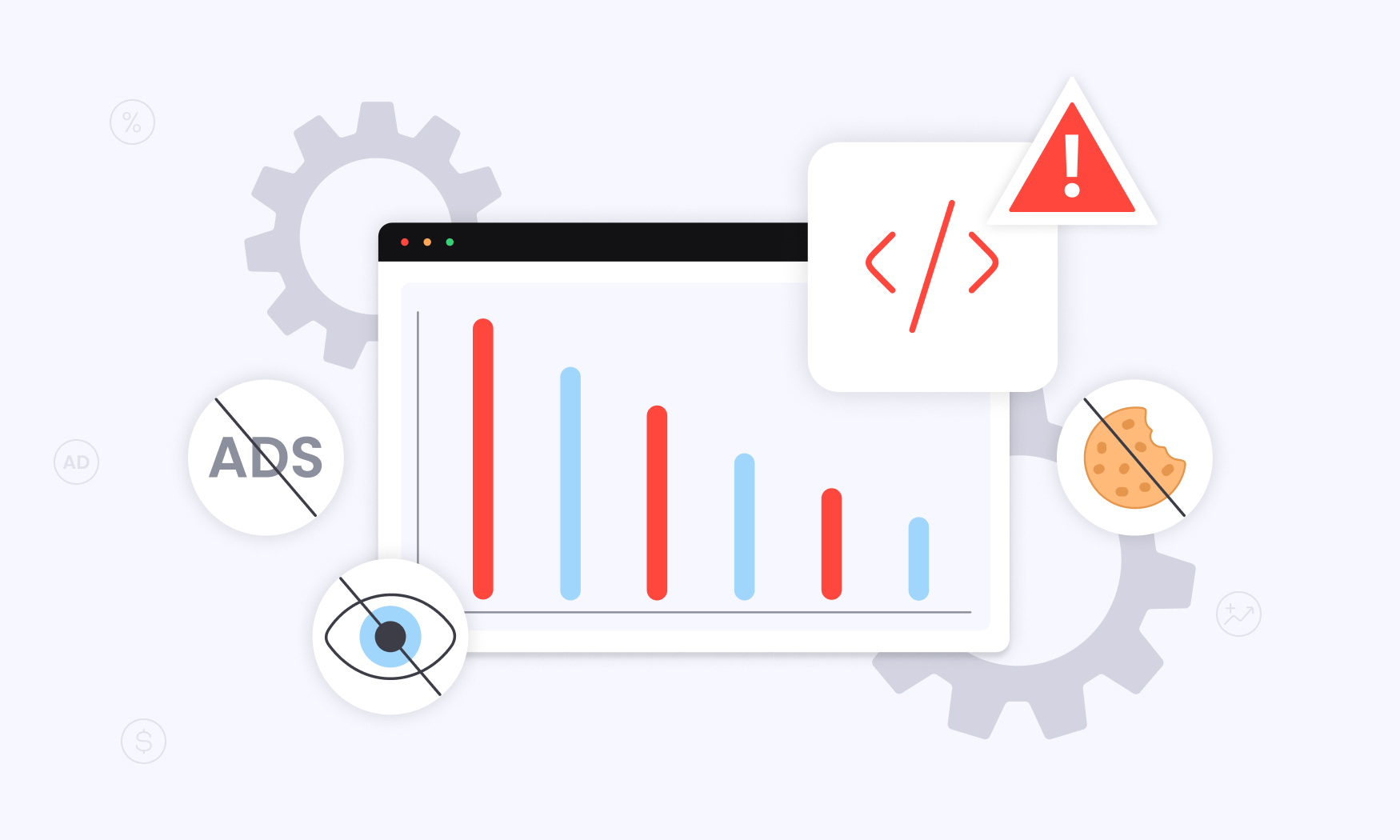
Start by fixing these common tracking issues:
- Missing post-iOS conversions on Meta
- Google Ads vs GA4 discrepancies with mismatched attribution windows and conversion definitions
- Unattributed affiliate sales where conversions get credited to the wrong channel or are lost entirely
- Duplicate events, which happen when pixel and server-side fire together to inflate results
Then, get yourself a first-party, cookie-independent conversion and ad tracking tool like RedTrack. This will be your single, truthful data source for all your ad platforms (Meta, Google, TikTok, native, email, and affiliate traffic).
A tool like Redtrack will serve as the core foundation on which all your AI optimization will run, and it will give you:
- Server-side tracking, which will bypass browser limits
- Cookieless click IDs, which will deliver durable attribution
- Flexible attribution models, which are based on funnel stages
- Event deduplication, which will prevent double-counting conversions
And when you have all that set up, you’ll also have clean attribution, which AI can use to optimize your digital advertising efforts. You can then focus on revenue-driving outcomes, instead of proxy metrics.
5 Ways You Can Use AI to Improve Ad Performance
To get the most out of AI when it comes to improving your ad performance, you need to know how you can use it at different stages of your workflow. It can lend a helping hand for audience research, creative production, campaign setup, bidding, budget allocation, and reporting.
But you also need to know where not to use it.
If you want to reap the benefits of AI, you’ll need to use sound judgment in working out where there is real value in applying AI automations, and where it’s best to use a human mind.
The main thing to remember here is to see the workflow as a connected system.
- Targeting decides who sees your ads.
- Creatives shape what they see
- Bidding controls what you pay
- Landing pages drive conversions
- Reporting shows what worked.
The interconnectedness comes from the fact that each stage depends on accurate data from the last to create the next.
What RedTrack does is bring everything together. It acts as the central hub that unifies performance data on the tool’s dashboard, as well as for ad platforms and external AI tools. It also illustrates true ROAS (by creative and placement), and flags abnormal traffic (before it impacts your results).
1. Use AI to Refine Your Audience Segments & Targeting
You’ll notice most ad platforms target a broader audience, and they rely on AI to spot key converters within large pools of people. This is how Meta Advantage+ audiences, Google Performance Max, and TikTok’s automated targeting work.
Also, many AI-powered audience tools generally include lookalike audiences. These are built from customer data, in-market segments, which are based on:
- Active research behavior, and
- Predictive audiences that are scored by conversion likelihood
Remarketing lists are then refreshed in real time via conversion APIs.
However, with RedTrack, you can go a step further. The tool lets you create your very own high-intent segments based on real behavior, instead of surface-level pageviews.
Think about all the users who clicked several times but didn’t purchase, high-AOV buyers, or even repeat trial users who never upgraded. With RedTrack, all these segments can sync directly to ad platforms for better prospecting and retargeting.
What predictive segmentation then does is it clusters users by purchase probability. This lets you increase bids where returns are likely and reduce wasted ad spend.
2. Use Generative AI for Faster, Data-Informed Creatives
ChatGPT, Gemini, and image or video generators are all generative AI tools that can quickly produce dozens of ad variations. But the hard part isn’t creation – it’s knowing which variations will convert. And for that, you need reliable performance data.
Here’s what a good creative optimization workflow might look like with RedTrack:
- Grab winning angle data from RedTrack (hooks, messages, and creatives with the highest ROAS)
- Feed those insights into the generative AI tools of your choice to create new ad creative variations
- Test your creatives at scale across all your platforms (Meta, Google, and TikTok)
- Measure the results in RedTrack to see which are ROAS winners
- Repeat
This method will work across multiple ad formats like Reels, TikTok Spark Ads, responsive search ads, and native placements. AI will adapt winning creatives for each platform, but keep the core message intact.
3. Do AI-Driven Bidding and Budget Optimization
There are different AI bidding options you can use to optimize your budgets across platforms. The major ones include:
- Google Ads: Target ROAS, Target CPA, Maximize Conversions, Maximize Conversion Value
(Best for mature campaigns with steady conversion volume) - Meta Ads: Advantage+ bidding, Cost Cap, Bid Cap, ROAS goals
(Ideal for scaling after creative testing) - TikTok: Smart Optimization, Minimum ROAS bidding
(Works best with broad targeting and strong creatives) - Programmatic DSPs: Auto-bidding, outcome-based bidding
(Suited to awareness and mid-funnel efforts)
But these systems deliver the best results when you feed them rich, server-side data through tools like RedTrack.
If you want to improve your AI bidding outcomes, try these hacks:
- Aim for 50+ conversions per campaign weekly
- Give budgets enough room and time to show you they’re working
- Keep conversion goals consistent, and don’t change them up too often
- Avoid frequent bid changes
4. Create AI-Assisted Landing Pages, Offers, and Funnels
Another handy way you can use AI to improve your ad campaigns is by getting it to assist when creating landing page.
There are many tools out there that can suggest layouts, headlines, and CTAs. The way these tools work is by using past performance data to work out which creatives deliver the best results. AI helps pinpoint key creative charactaristics that seem to be winning tactics as a result of user behavior.
But again, because those recommendations are dependant on the data the tools use, the level of success you see will only be as good as the data the tool has to work with. So if you want to take advantage of these tools, you first need to make sure you have a tool like RedTrack which will provide clean data.
You can also use dynamic personalization to adapt elements like testimonials, pricing, or promos based on:
- User segment
- Device
- Geographic location
- Traffic source ID (passed via RedTrack)
5. Take advantage of AI-Powered Reporting, Insights, and Forecasting
AI is super helpful in uncoveing patterns humans miss when doing reporting and analytics. It’s pick up on everthing from optimal dayparting and geo-device combinations to the unfortunate creative fatigue and affiliate traffic anomalies.
It’s almost impossible for humans to catch all these insights, and even if they could, it would demand more time than they have to dedicate to analyzing thousands of data points at scale.
With RedTrack’s clean data, its consolidated dataset AI dashboards, and business intelligence tools you can be sure your reporting will provide deep, overarching and comprehensive insights you can use to improve your advertising strategies.
Some of the ways you can us AI to assist with reporting and insights includes:
- Forecasging weekly revenue and ROAS (by channel)
- Modeling performance (during special campaigns or promotions)
- Identifying optimal spend levels (before diminishing returns)
Another thing you can do is use AI-driven anomaly detection to flag tracking breaks or suspicious affiliate activity before it causes an issue. Teams that use RedTrack can see if drops come from tracking errors, platform issues, or actual market shifts.
And if you’re an agency, RedTrack’s AI features can turn ad data into clear performance summaries you can share with your clients. That way you can avoid the manual labor of sifting through data and campaign results.
How RedTrack Turns AI Into Measurable Ad Performance Gains
Even though RedTrack isn’t an AI tool itself. But RedTrack is the infrastructure that feeds AI systems the accurate data they need to deliver effective advertising strategies.
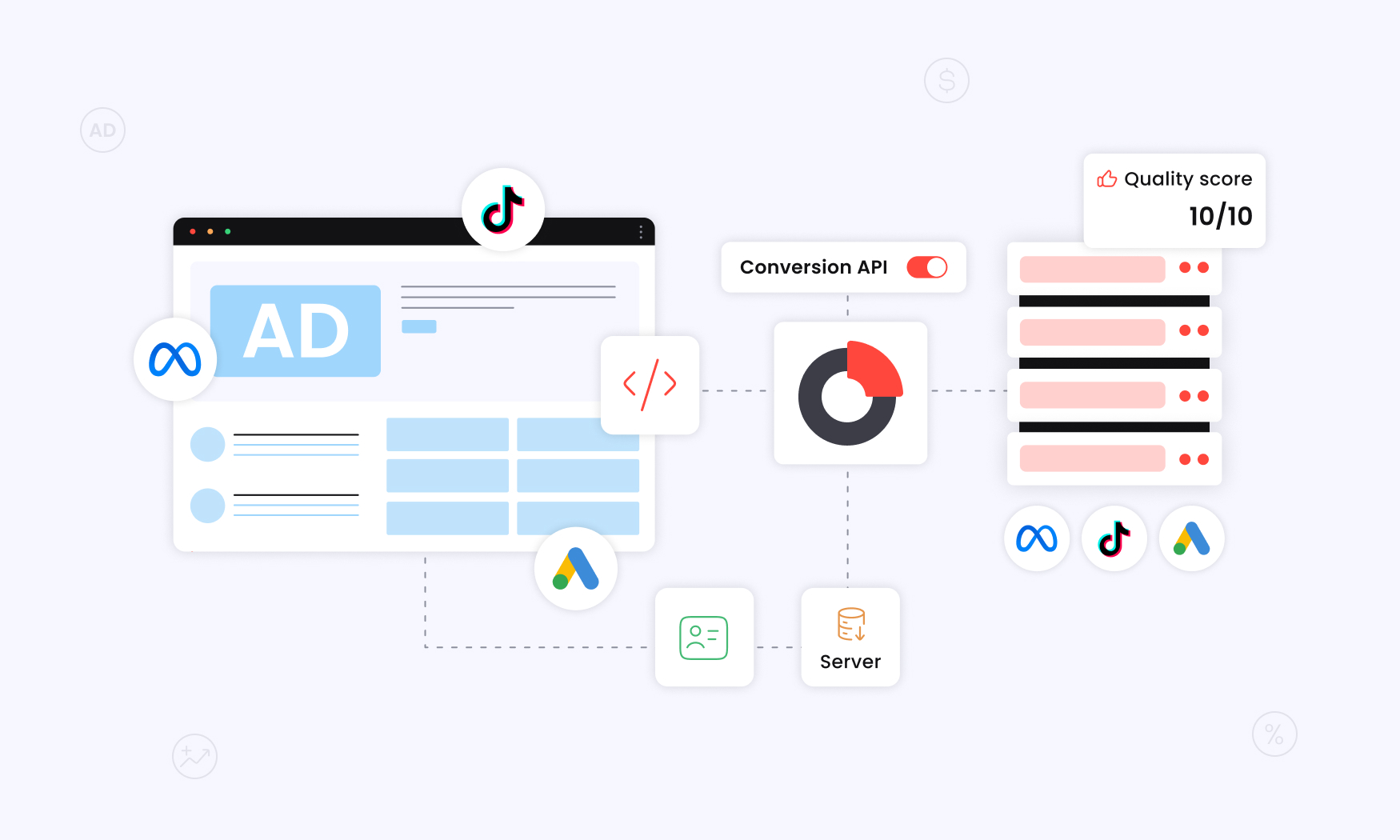
It’s a tool that tracks everything from clicks and conversions to revenue across Meta, Google, TikTok, native ads, email, and affiliate networks. And it does this even in cookieless environments, where browser pixels fail.
With its first-party tracking method, RedTrack consolidates performance data, giving you a single source of truth. It then sends all that nice, clean deduplicated conversion event data back to all your ad platforms via conversion APIs.
This is how it directly improves the performance of various AI-powered platforms.
When RedTrack sends accurate conversion data via Meta CAPI, Advantage+ campaigns can optimize more effectively.
And, when Google Enhanced Conversions receives complete purchase and revenue signals, Smart Bidding will be able to make better decisions. The algorithms they work on don’t change; data quality does, and that’s what will drive your results and ROAS.
When RedTrack gives you the solid foundation you can count on, your results will compound. Your unified data from Google, Meta, TikTok, native networks, and affiliate sources will all sit inside RedTrack, and they’ll be running the show, directly feeding all your channels with consistent conversion signals.
If you’re an advertiser, media buyer, performance marketer, or an e-commerce brand that wants to make sure your AI isn’t running on unstable data, it might be time to look into RedTrack.
Book a demo to find out how the platform can streamline and tighten your performance marketing and paid ads efforts. And if you’re ready to give us a test run, sign up for our 14-day free trial.


