
Your ecommerce site has exactly 50 milliseconds to make a first impression that could determine whether a visitor becomes a customer or clicks away forever. In that split second, users form judgments about your brand’s credibility, product quality, and whether your online store deserves their time and money.
The difference between ecommerce sites that thrive and those that struggle often comes down to following proven best practices that optimize every aspect of the customer experience.
From the moment someone lands on your homepage to the final confirmation of their purchase, each interaction either builds trust and moves them closer to buying, or creates friction that sends them to a competitor.
So that’s exactly why we made this guide which covers the essential best practices for ecommerce sites that successful online stores use to maximize conversions, build customer satisfaction, and create lasting relationships with their target audience.
Whether you’re launching a new ecommerce website or optimizing an existing one, these strategies will most certainly help you create an online store that not only looks professional but drives real business results!
Homepage Design and Navigation
We admit it, it’s super obvious, but hear us out!
As you probably already know, your homepage serves as the digital storefront for your ecommerce website, making it one of the most critical pages for establishing brand identity and guiding customers toward products they want to buy. The key is to immediately communicate the core of your offerings while maintaining a clean, navigable design that doesn’t overwhelm visitors.
Make sure to feature at least 40% of your product types on the homepage to give customers an immediate understanding of what your online store offers.
This approach is particularly effective for new visitors who are evaluating whether your ecommerce site meets their needs in the first place.
When potential customers can quickly see the variety and quality of products available, they’re more likely to browse deeper and eventually make a purchase.
Avoid auto-rotating carousels on mobile devices as they often create navigation issues and reduce user engagement – Instead of cycling through different promotional images, use static, high-quality visuals or ai posters with clear calls-to-action like “Shop Now” or “View Collection”.
These stationary visuals allow users to absorb information at their own pace and interact with content more effectively on mobile devices.
Make your search bar prominent by using bold borders, contrasting colors, and placing it in the site header where customers expect to find it. A well-designed search function can significantly improve how customers find products and navigate your ecommerce platform.
Position the “Account” dropdown in the upper right corner, as this follows established patterns that users have learned from major ecommerce websites.
Keep your top-level navigation to 10 or fewer categories to prevent decision fatigue. When you overwhelm visitors with too many choices, they often become paralyzed and leave without making a purchase.
This principle of limiting options helps customers quickly understand your product categories and makes the shopping journey more intuitive.
The visual hierarchy of your homepage should draw attention to key elements through strategic use of white space, brand colors, and typography. Background colors should complement your brand while ensuring that important elements like product titles and call-to-action buttons stand out clearly.
Product Discovery and Search Optimization
In most cases, your customers don’t exactly know what they want.
Therefore, a powerful search function is essential for helping customers find exactly what they’re looking for on your ecommerce site.
Modern shoppers expect search capabilities that go far beyond simple keyword matching, and investing in advanced search functionality can dramatically improve conversions.
Display exact search matches at the top of search results to streamline the customer experience. When someone searches for a particular product, they want to see relevant results immediately without having to scroll through less relevant items.
This approach reduces frustration and helps customers move quickly from discovery to purchase.
Support synonyms, abbreviations, and multi-word queries to accommodate how real people actually search for products.
Your search function should understand that “sneakers” and “tennis shoes” refer to similar products, and that someone typing “lg tv” is looking for LG televisions.
This natural language processing capability ensures that customers find products even when they don’t use your exact product terminology.
Enable feature searches by product attributes such as size, color, material, and price range. Customers often think about products in terms of specific characteristics they need, so your search functionality should allow them to filter results based on these product attributes.
This approach is particularly important for ecommerce stores with large, varied catalogs.
Implement auto-complete functionality with error correction to guide users toward successful searches. When customers start typing, show them popular search terms and product suggestions that help them refine their query.
If they make a typo, automatically suggest the correct spelling rather than showing zero results.
One rule’s importance we cannot emphasize enough is to never show “No results found” pages without offering alternatives!
Instead, display related products, trending items, or suggestions that keep customers engaged with your site.
This approach prevents dead ends in the shopping journey and gives customers multiple paths to find products they might want to purchase.
Natural language processing technology is becoming increasingly important as more customers use conversational queries and voice search.
Your ecommerce platform should be able to understand intent behind searches like “comfortable shoes for walking” and return relevant results even when the exact words don’t match your product descriptions.
Product Page Design Excellence
If your product page has a weak conversion rate, you’re basically flushing money down the drain.
Product pages are where browsing customers make their final purchase decisions, making these pages crucial for converting interest into sales. Every element on a product detail page should work together to provide comprehensive information while building confidence in the purchase decision!
Here’s what you can do about it:
Include 3-5 high quality images showing different angles and details of each product. Visual content is often the most important factor in online purchasing decisions, especially since customers can’t physically examine items before buying.
Use images that zoom when clicked and show products from multiple perspectives to give shoppers a complete understanding of what they’re purchasing.
Use video to showcase products that static images cannot fully convey, particularly for items with functional or tactile dimensions. Video content can increase engagement and conversion rates significantly, with studies showing that up to 84% of consumers report being convinced to purchase after watching a brand video.
This is especially effective for apparel, electronics, and products with moving parts or complex features.
Make the primary “Add to Cart” button visually distinct and prominent by using contrasting colors and strategic placement near price information. This button should stand out from other page elements and be easy to find when customers are ready to make a purchase.
The visual hierarchy should naturally guide eyes toward this key conversion element!
But how will they trust you? Display user ratings average and star ratings prominently below product titles to leverage social proof. Customer reviews and ratings are among the strongest trust signals you can provide, with higher numbers of positive reviews directly correlating with increased conversion rates.
Make these ratings visible and easy to understand at a glance.
Use vertically collapsed sections for detailed product information to balance comprehensive details with clean page design. Include sections for size charts, materials, warranty information, and technical specifications that customers can expand when they need more details.
This approach prevents information overload while ensuring that detailed shoppers can find everything they need.
Show related and recommended products to encourage cross-selling and increase average order value. These suggestions should be based on customer behavior, complementary items, or products frequently bought together.
Strategic product recommendations can significantly boost sales per customer visit!
Provide clear return policies that are easy to read and understand. Transparent shipping and return policies reduce purchase anxiety and can be the deciding factor for customers who are hesitant about buying online.
Make these policies easily accessible from product pages and write them in plain language that customers can quickly comprehend.
Category Navigation and Filtering
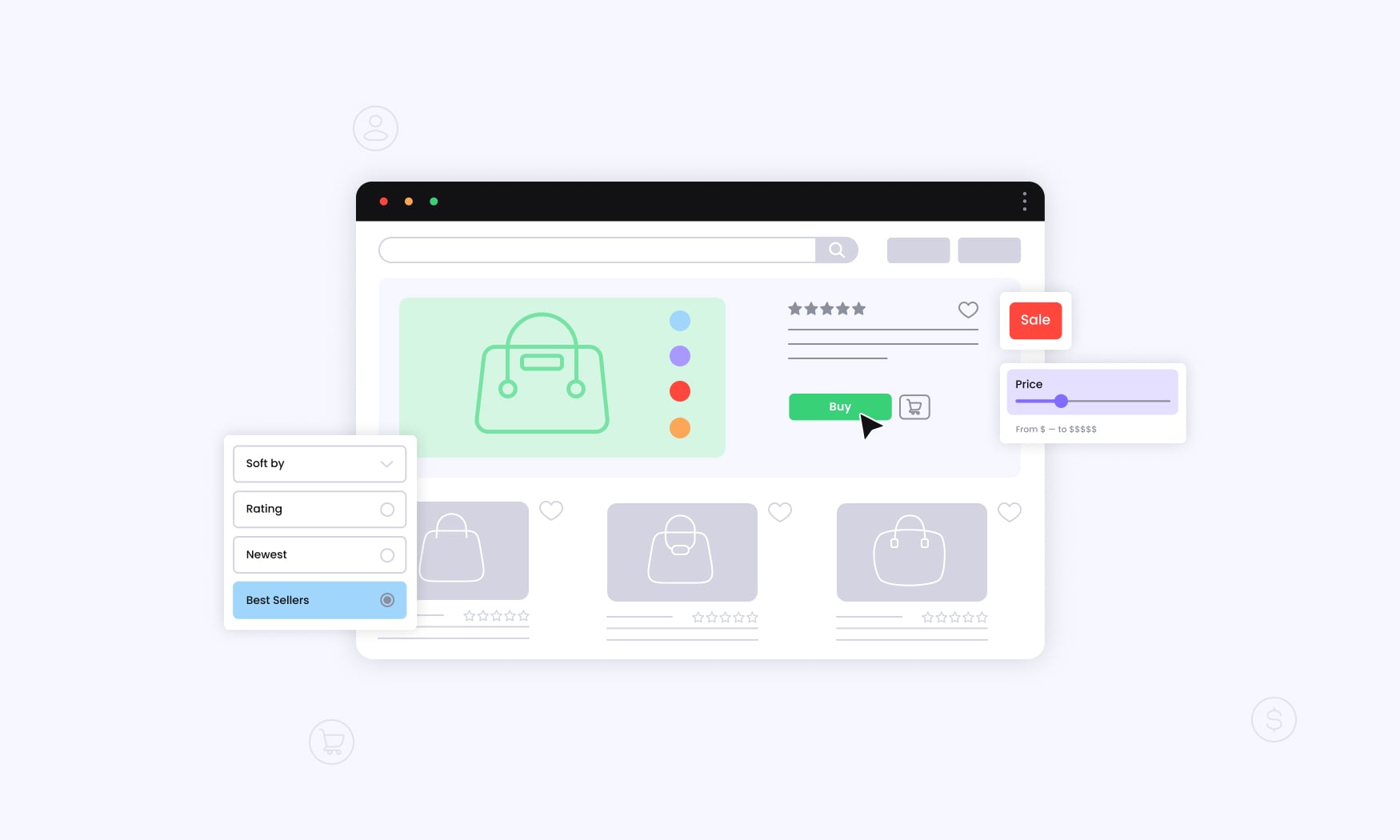
Well-organized product categories help customers efficiently browse your online store and discover products they might not have found through search. The goal is to create intuitive pathways that match how customers naturally think about your products while avoiding confusion or overwhelming choices.
Divide categories into manageable chunks with about 10 subcategories maximum to prevent decision paralysis. When categories become too granular or numerous, customers often struggle to determine where specific products might be located. This organizational principle helps maintain clarity while providing enough specificity for effective browsing.
Avoid redundant and overlapping categories that might confuse users about where to find specific products. Each product should have a clear, logical home within your category structure. Overlapping categories can lead to frustration when customers can’t determine the best place to look for items they want.
Make parent category headers selectable parts of the product hierarchy to improve navigation flow and help with search engine optimization. Clickable category headers provide additional browsing options and create clear breadcrumb trails that help customers understand where they are within your site structure.
Include “Accessories” subcategories within relevant main categories and provide “Best sellers” categories for new users and younger brands. These curated collections help orient first-time visitors and provide social proof for businesses that may not yet have extensive brand recognition.
Use checkboxes for filter options with clear visual indicators rather than dropdown menus or radio buttons. Checkbox interfaces provide immediate visual feedback and allow customers to select multiple options simultaneously, making the filtering process more intuitive and efficient.
Include “Sales” or “Deals” filters prominently in your main filter interface, as these are particularly effective for value-conscious shoppers. Many customers specifically look for discounted items, and making these easy to find can capture price-sensitive segments of your target audience.
Allow sorting by price, user rating, best selling, and newest options to give customers control over how they view search results. Different customers have different priorities when browsing, and providing multiple sorting options accommodates various shopping preferences and decision-making styles.
Trust Building and Social Proof
Building credibility is essential for ecommerce success, particularly for newer brands or businesses selling high-value items. Customers need multiple signals that your online store is legitimate, reliable, and worthy of their trust before they’ll share payment information and make purchases.
Display business overview and clear store policies prominently to establish credibility and set proper expectations. Include information about your company, shipping and return policies, and customer service options in easily accessible locations. This transparency helps customers feel confident about doing business with your ecommerce site.
Include customer reviews and star ratings throughout the site, not just on individual product pages. Social proof from other users significantly influences purchasing decisions, with conversion rates increasing by up to 270% when higher numbers of reviews are present. Make positive reviews visible and encourage satisfied customers to share their experiences.
Show user-generated content and fan photos when possible to create authentic connections with potential customers. Real photos from actual customers using your products provide more relatable and trustworthy social proof than professional product photography alone. This type of content helps assure shoppers that real people are satisfied with their purchases.
Feature press mentions and endorsements from credible sources to leverage authority bias. When recognized publications or industry experts endorse your products or business, it provides third-party validation that can significantly influence customer perceptions and purchase decisions.
List relevant certifications such as USDA Organic, B Corporation, or Fair Trade designations to appeal to values-driven shoppers. These credentials add credibility and can be important differentiators for customers who prioritize ethical or sustainable business practices.
Include secure payment badges and SSL certificates visibly throughout the checkout process and on pages where sensitive information is collected. With over 70% of consumers reporting they will abandon checkout if security signals are missing, these trust indicators are essential for completing sales.
Provide easy access to customer service through multiple communication channels including phone, email, and live chat options. Clear contact information and responsive customer support demonstrate that you stand behind your products and are available to help resolve any issues that might arise.
Mobile Optimization and Performance
Mobile commerce is rapidly expanding, with mobile devices expected to comprise 72.9% of total ecommerce sales by 2025. Your ecommerce website must provide an excellent experience across all devices, with particular attention to mobile usability and performance optimization.
Ensure responsive design across all devices with a mobile-first approach that prioritizes touch-friendly navigation and one-handed use. Design elements should adapt seamlessly to different screen sizes and orientations while maintaining functionality and visual appeal on smaller screens.
Test your checkout process thoroughly on mobile devices to prevent errors that cause cart abandonment. Mobile checkout experiences often have higher abandonment rates due to usability issues, so regular testing on actual devices is crucial for identifying and resolving problems before they impact sales.
Optimize images for fast loading without sacrificing quality through techniques like lazy loading, next-generation formats, and content delivery networks. If a mobile page takes longer than 3 seconds to load, up to 53% of users will abandon the session, making image optimization critical for maintaining engagement.
Use text links alongside thumbnails on mobile to improve product variety perception on small screens. When screen real estate is limited, combining visual and text elements helps customers understand product options more clearly than images alone.
Avoid automatic live chat pop ups that block mobile content or interfere with navigation. While customer service accessibility is important, intrusive elements can cover critical interface components on mobile devices and frustrate users who are trying to browse or make purchases.
Make your cart link prominent in the upper right corner with item count visible at all times. This positioning follows established user expectations and provides easy access to the shopping cart throughout the mobile browsing experience.
Technical Performance Optimization
Site speed and technical performance directly impact both user experience and search engine rankings. Even small improvements in loading times can result in significant increases in conversions and customer satisfaction.
Monitor site speed and core web vitals regularly to identify performance issues before they impact customers. Each additional second of delay in load time can reduce conversions by approximately 7%, making ongoing performance monitoring essential for maintaining competitive advantage.
Implement lazy loading for images and non-critical content to enable faster initial page loads. This technique loads images only when they’re about to become visible to users, reducing initial bandwidth requirements and improving perceived performance.
Use content delivery networks (CDNs) to serve images and other static assets from servers closer to your customers’ geographic locations. CDNs reduce latency and improve loading times, particularly for international customers accessing your ecommerce site from distant locations.
Optimize server response times and database queries to eliminate backend bottlenecks that can slow down page generation. Database optimization and efficient server configuration are foundational elements that support fast, reliable performance even during traffic spikes.
Minimize HTTP requests by consolidating CSS and JavaScript files, compressing assets, and eliminating unnecessary elements that don’t contribute to user experience or conversion goals.
Checkout Process and Account Management
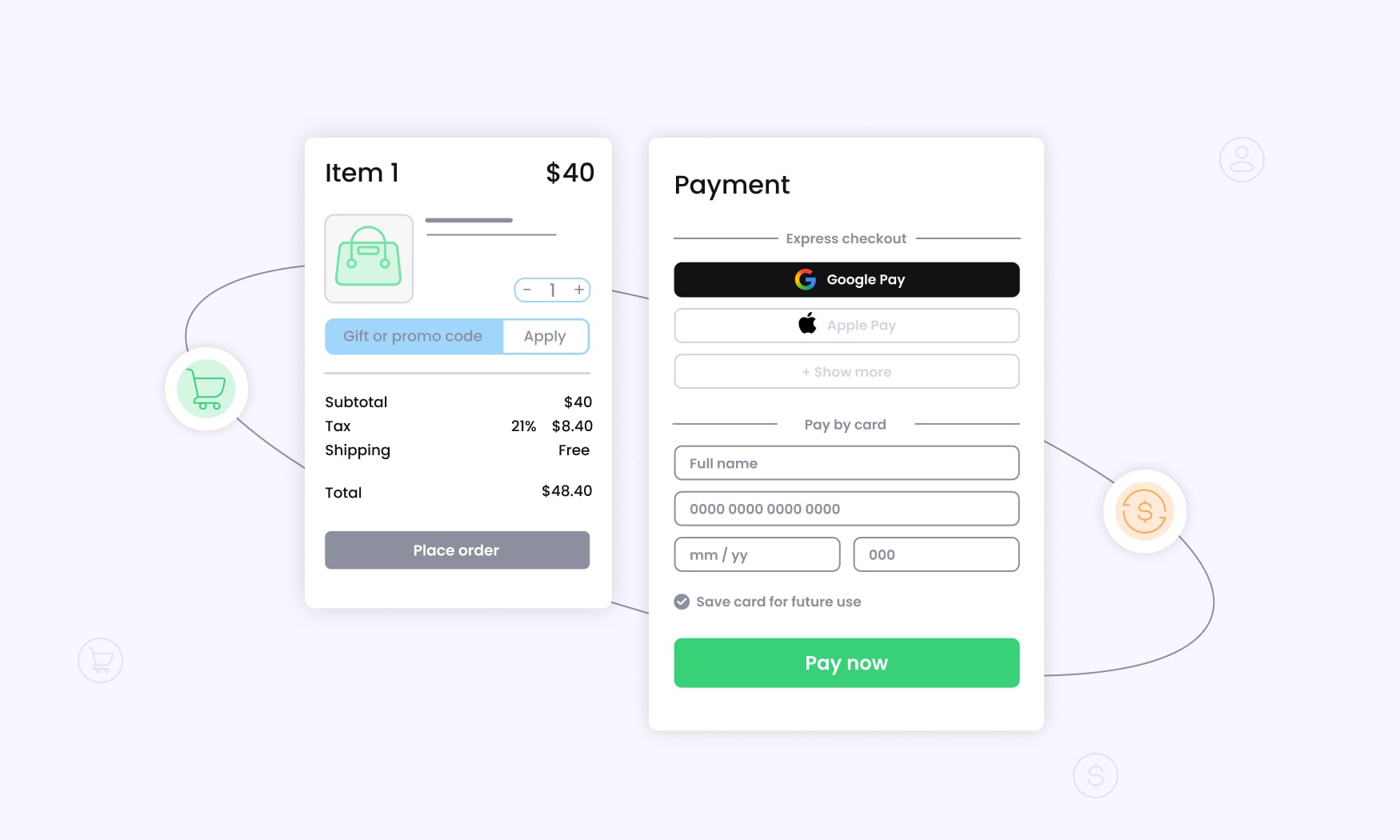
Checkout abandonment remains one of the biggest challenges for ecommerce sites, with rates often exceeding 60%. Streamlining this critical process while providing flexibility and transparency can significantly improve conversion rates and customer satisfaction.
Simplify checkout with minimal steps and clear progress indicators that show customers how much of the process remains. Linear checkout flows with obvious next steps reduce confusion and help customers complete purchases without getting lost or frustrated.
Offer multiple payment options including credit cards, digital wallets like Apple Pay and Google Pay, and Buy Now Pay Later services. Diverse payment methods accommodate different customer preferences and can expand your addressable market by removing payment-related barriers to purchase.
Provide guest checkout options alongside account creation to reduce friction for first-time customers. Requiring account creation before purchase can cause up to a 35% drop in conversions, so always offer guest checkout while encouraging account creation through post-purchase follow-up.
Display order totals, taxes, and shipping costs clearly before final confirmation to eliminate surprises that cause last-minute abandonment. Unexpected fees are a major cause of checkout abandonment, so transparency about all costs helps customers make informed decisions and complete purchases.
Highlight recent orders prominently in account dashboards and provide clear order status tracking with key milestones and timelines. Customers expect to easily access information about their purchases and track shipments without having to contact customer service.
Provide “Apply” buttons for account data changes to prevent accidental loss of updated information. Clear save functionality helps customers maintain accurate account information and reduces frustration when making profile updates.
Enable easy printing and emailing of shipping labels for returns to simplify the return process and encourage future purchases. Streamlined returns processing demonstrates commitment to customer satisfaction and can influence repeat purchase decisions.
Brand Expression and Visual Design
Consistent branding and thoughtful visual design build credibility while creating emotional connections that encourage customer loyalty. Every design element should reinforce your brand identity while supporting the functional goals of your ecommerce platform.
Maintain consistent branding across all pages and touchpoints including fonts, colors, imagery style, and tone of voice. Consistency builds recognition and trust while creating a professional appearance that assures shoppers of your business’s legitimacy and attention to detail.
Use high quality lifestyle images that resonate with your target audience and help customers visualize themselves using your products. Lifestyle photography should align with customer aspirations and demonstrate products in realistic, appealing contexts that encourage purchase decisions.
Keep design simple to reduce distractions from primary conversion goals. Clean, uncluttered layouts with generous white space help customers focus on products and important information without being overwhelmed by competing visual elements or unnecessary pop ups.
Apply clear visual hierarchy with distinct fonts, spacing, and color usage that guides attention toward the most important elements on each page. Strategic use of brand colors for functional cues helps customers understand navigation and calls-to-action more intuitively.
Include brand storytelling elements that connect with customers on an emotional level and differentiate your business from competitors. Authentic brand narratives about company origins, values, or product development can create deeper relationships that extend beyond individual transactions.
Balance aesthetics with functionality to create an online store that looks professional while supporting efficient shopping experiences. Beautiful design should enhance usability rather than interfering with customers’ ability to find products, compare options, and complete purchases.
The most successful ecommerce websites seamlessly integrate visual appeal with practical functionality, creating experiences that customers enjoy while effectively driving business results. Every design decision should support both brand expression and conversion optimization to maximize the return on your ecommerce investment.
Conclusion – RedTrack as Part of Healthy Practices For Ecommerce Sites
Implementing these best practices for ecommerce sites requires a systematic approach that prioritizes customer experience while supporting your business goals. The most successful online stores don’t just follow these guidelines – they continuously test and refine their implementation based on customer behavior and performance data.
Start by auditing your current ecommerce website against these best practices and identify the areas that could have the biggest impact on customer satisfaction and conversions. Focus on foundational elements like mobile optimization and site performance first, then enhance product discovery, trust signals, and brand expression to create a comprehensive optimization strategy.
Remember that customers expect seamless, intuitive experiences that make shopping enjoyable rather than frustrating.
By following these proven best practices and adapting them to your specific target audience and business context, you’ll create an ecommerce site that not only looks professional but consistently converts visitors into satisfied customers who return for future purchases.
Besides those, if you’re running paid campaigns across multiple ad networks to get more traction, definitely make sure to check out our solution in order to maximize conversion and prevent data (and money) loss!
Regardless of your budget and how big of an strategy you have, when it comes to paid campaigns on social networks, RedTrack is a game changer and therefore a practice you should most certainly keep in mind!
Don’t take our word for it – try it for yourself or book a demo and let us show you how it works!


