
Each year, an average of 4.7 million new businesses pop up. And that’s in the United States alone. This means that irrespective of your industry, there are tons of other small businesses fighting for market share. If you want to beat the competition, you’ve got to promote your business in places where potential buyers are already hanging out.
And you don’t even need a Fortune 500 budget to boost your online visibility. The trick is choosing the best online advertising platforms that deliver high returns on your ad spend. With the right tools, every dollar stretches further, and your ads drive real results toward your business goals (like more sales, repeat customers, and steady growth).
We’ll walk you through 12 of the best advertising platforms for small businesses, breaking down where each one excels, who it’s best suited for, and why it’s worth a shot.
1. Omnisend (Email & SMS)
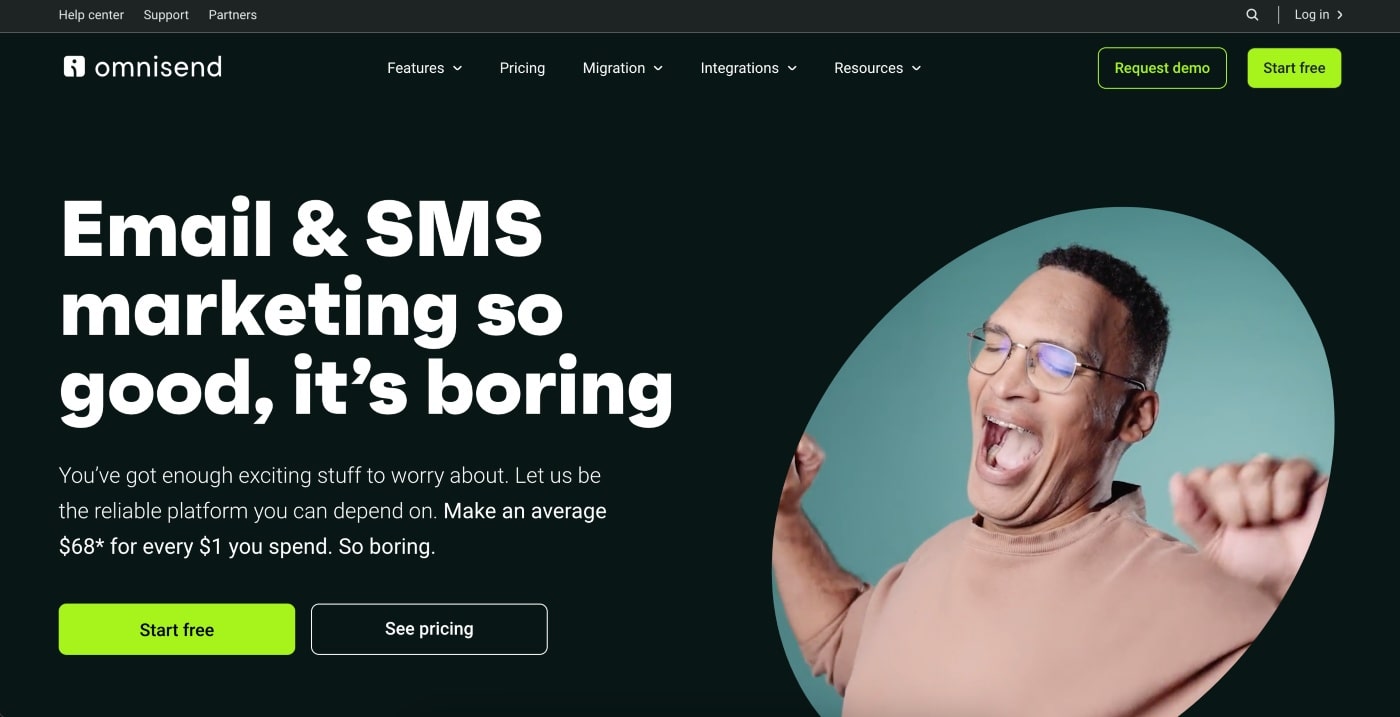
What’s awesome about Omnisend is how it brings SMS and email marketing into one uncluttered dashboard. It helps you tailor messages quickly (from order updates and product launch announcements to discount offers and cart reminders) and set them on autopilot, all without requiring a tech team.
If you’re on Shopify, WooCommerce, Wix, or BigCommerce and want something plug-and-play but still powerful, Omnisend fits the bill. It gives you automation without the steep learning curve, which makes it the best advertising platform for small businesses on a budget. On top of that, it offers a free plan, which gives you access to premium features for an entire month.
Here’s a stat that sounds almost too good to be true: Some Omnisend merchants see a $68 return for every $1 spent on email campaigns. Not to mention, users report email open rates of up to 45%, while SMS often gets a whopping 98%. This kind of engagement is what speeds up business growth.
2. Google Ads
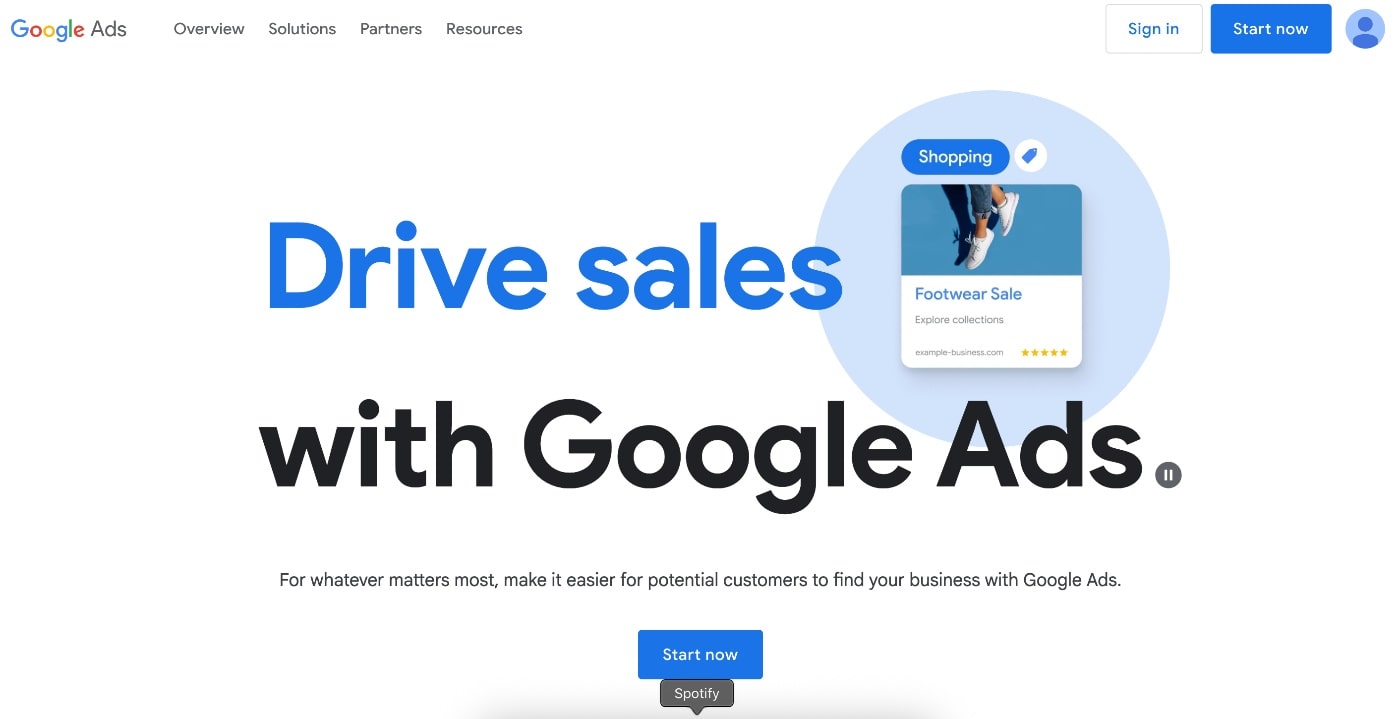
With Google ads, you’re tapping into a channel where ideal buyers are actively looking for what you sell. Whether you run a local café, a custom gift store, or even a pet grooming service, Google puts your small business in front of high-intent buyers. You set your budget, target keywords, and then only pay when someone clicks through to your pre-landing page, so every dollar counts.
This one’s a no-brainer if you have a service or product people search for locally. If you want to capture nearby customers searching for “best handyman near me,” “top restaurant NY,” or whatever keywords make sense to your business, Google displays your ad right at the top of the SERPs.
A recent report reveals that 86% of consumers use Google to find a local business, and 63% click on ads. Add this to the fact that advertisers often make about $2 for every $1 they spend, and you’ll see why Google Ads is among the best small business advertising platforms.
3. Meta Retargeting (Facebook & Instagram)
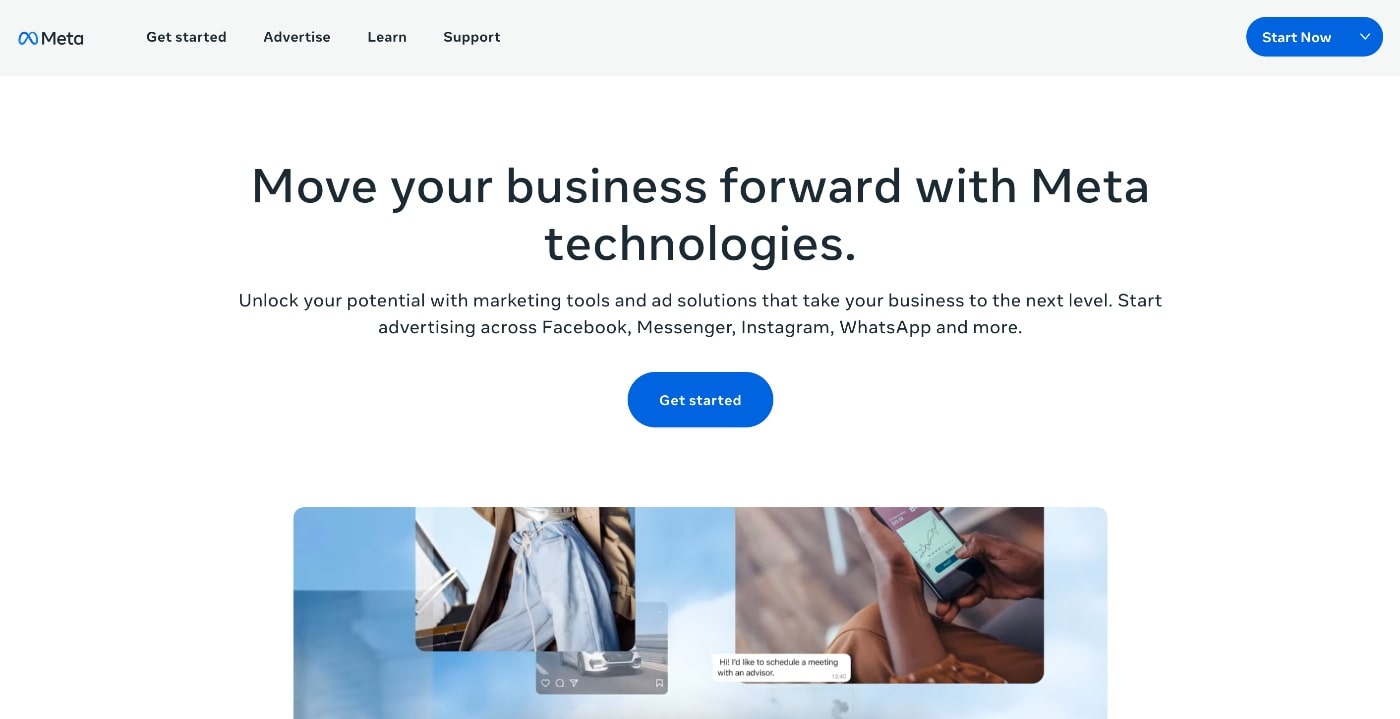
Meta retargeting is a gentle nudge to a warm audience (people who’ve already dropped by your site or engaged with your ads). Retargeting ads are usually successful because they’re based on a simple logic that if someone showed interest in your product or service, they’re more likely to convert. This tactic keeps your brand top of mind without wasting ad spend on cold strangers.
If you’re seeing some website traffic but not enough buyers coming back, Meta retargeting is gold. These Facebook and Instagram ads are perfect for small shops with limited budgets but need to re-engage window shoppers, especially those aged 18–34.
Right now, 77% of marketers run retargeting campaigns to bring back lost leads. And one study from Meta found that U.S. businesses are seeing an average of $3.71 ROAS. That’s a 12% bump from just two years ago.
4. Pinterest Ads
Pinterest is basically an online mood (or inspiration) board, and that makes it a useful marketing tool for small businesses that sell visually appealing products. People come to Pinterest for inspiration, so if you can naturally slip in your ads as part of their planning process, that’s a win. Instead of feeling pushy, your product shows up right when someone’s thinking about what to buy next.
The crowd here leans heavily toward women (70.3%), especially millennials and GenZers who use Pinterest to shop for ideas for home decor, fashion, food, cosmetics, and crafts before making a purchase. So, if your target customers are women and your product looks good on camera, consider adding Pinterest to your marketing strategy.
Interestingly, 85% of weekly Pinners have made a purchase after seeing a Pin from a brand. Also, 55% of these users see the platform as a place to shop, not just to find inspiration. So, as a small business owner, it’s time to start treating Pinterest as your digital storefront.
5. TikTok Ads
TikTok is one of the best social media platforms for businesses to connect with an engaged audience. The short, snappy video format makes it easy to show your product in action, and because content blends seamlessly with ads here, users won’t even feel like they’re being sold to. TikTok lets you capture attention with video ads without needing a big production budget.
The majority of TikTok users are Gen Z and younger millennials who enjoy making impulse purchases based on what’s trending. If you’re marketing a fun, creative product that fits TikTok’s playful vibe, you’ve found a the best advertisement platform for your small business.
The best thing about TikTok is, it nudges people to shop on the spot, even when they weren’t planning to—67% of users admit this. For a small business, that’s powerful because you won’t need a massive budget to improve conversion rates.
6. Microsoft Advertising
You probably wouldn’t think of Microsoft (formerly Bing Ads) when considering the best advertising platforms for your small business. And, some of your competitors wouldn’t either, which actually works in your favor—you’ll face less competition than Google ads and a lower cost per click (CPC). Microsoft displays search ads on Bing, Yahoo, and partner sites, which still pull in millions of daily searches.
The audience here is a bit older (between 35 and 54 years) and more professional, with higher incomes. That makes Microsoft ads ideal for small businesses in industries like finance and travel. You can also advertise professional services (like IT consulting, executive coaching, and legal services) that thrive on high-value customers.
Microsoft might not pull a crowd as large as Google’s, but you’ll reach millions of people who are ready to spend. Consider Bing as an example. One out of three users has a household income of over $100,000, so they spend 35% more online when shopping from their desktop compared to the average online searcher. For small business owners, this means every click on your ad has a high chance of becoming a profitable sale.
7. YouTube Ads
YouTube is where people go to watch videos, learn, and be entertained. And your ads can slide in naturally as short clips before, during, or after a video. Your ads also show up on users’ Home feeds, blending in with organic videos. Because YouTube currently ranks as the world’s second-largest search engine, users are here for new ideas, inspiration, and solutions, so they’re generally more open to learning about your product.
Now, what kind of small business is YouTube advertising best for? If your customers are aged 18–49, and your business has something visual to show off, like a bakery, fitness studio, fashion store, or anything else that could use a demo, YouTube connects you with potential buyers. Also, if you’re targeting “how-to” searchers, your ads can pop right there in search results where they’re most engaged.
YouTube is one of the best places to advertise your small business, and some really impressive stats confirm this. Over 70% of viewers say they discover new brands on YouTube, and they’re two times more likely to buy something they saw there. That’s the kind of exposure your brand awareness campaign needs.
8. RTB House
Sure, RTB House isn’t as mainstream as Google or Meta, but it’s the perfect ad network for small businesses that want to retarget warm audiences. It uses Deep Learning AI algorithms behind the scenes to show your ads to people who’ve previously interacted with your website. This way, your ads appeal to people who need that extra nudge to finish what they started.
RTB House works best for small business advertising if your customers explore various options before making a purchase. So, if you’re running a fashion boutique, niche ecommerce store, or even local services with booking options, this platform is worth exploring for shopping ads.
In one case, an online gift shop reported a 300% increase in orders and a 30% higher average order value (AOV) compared to its previous retargeting provider. That’s proof that RTB House is a reliable growth partner if you rely on repeat buyers and higher-value sales.
9. Reddit
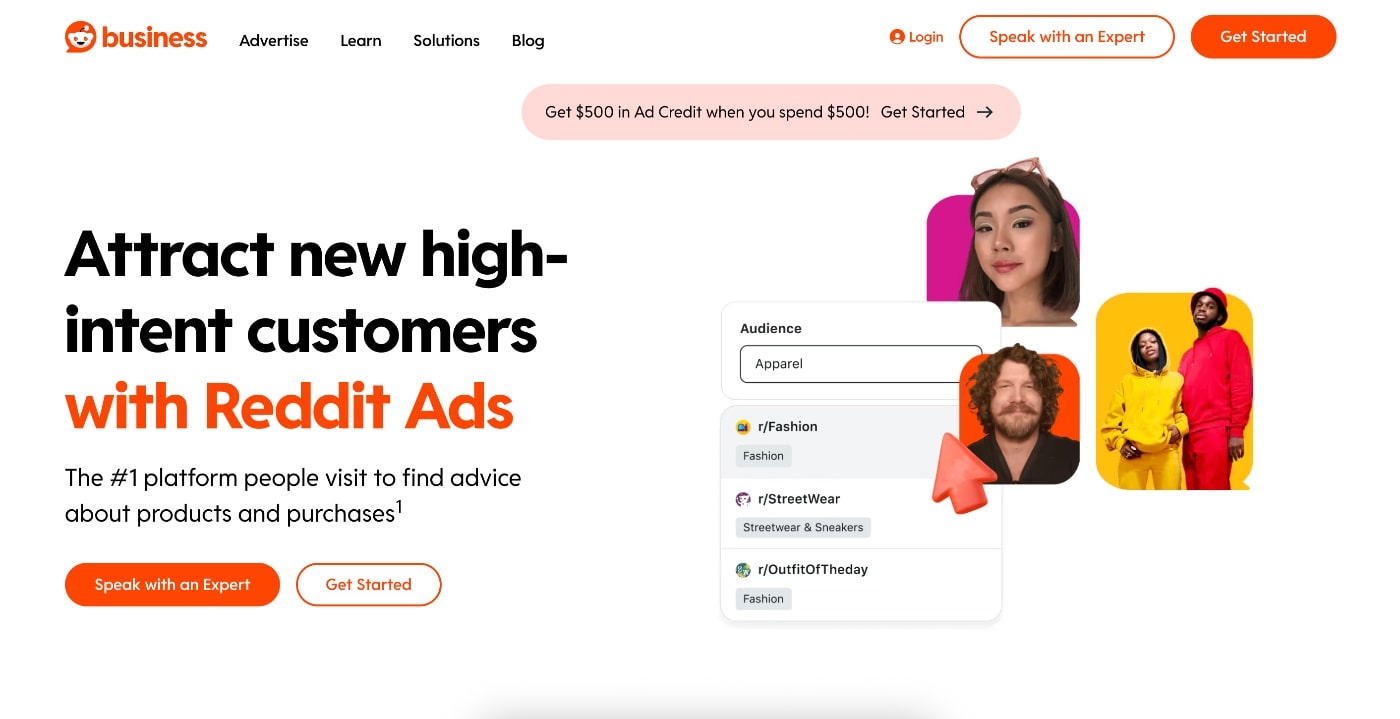
Reddit is most popular as a discussion forum, but it’s also a goldmine if your small business serves a niche audience. The platform is broken into thousands of communities (called Subreddits) around specific topics, from pet grooming and hobbies to virtually anything. Ads on Reddit let you tap into a conversation where potential customers already are.
Reddit leans toward younger, tech-savvy audiences (mostly 18–34 years old). But the real value is in niches. For instance, if you own a fitness gear brand, you can chime in on a Subreddit like r/workout, where you’ll find lots of fitness enthusiasts. On the other hand, a coffee shop might steer toward a Subreddit like r/coffee. Whatever niche your business caters to, Reddit puts you right in the middle of the right audience.
The numbers are pretty convincing, too. Reddit reports that users spend around 30 minutes per day on the platform, and advertisers can reach over 110 million daily active users. Also, ads often cost less than you’d pay on Meta platforms or Google, which is a win when you’re on a tight budget.
10. Snapchat Ads
Snapchat isn’t just a youthful social media platform with memes and goofy filters. It’s actually one of the best advertising platforms if your small business is visual, playful, or trend-savvy. Ads here come alive as Stories, Snapchat Ads, or AR Lenses that feel like part of the feed.
Snapchat is an excellent small business advertising platform if your target audience is Gen Z or younger millennials, say 15–35. These folks scroll fast and love interactive, spontaneous content. So if your product is eye-catching, like those in the cosmetics or fashion industry, Snapchat ads come in handy.
Now, here’s the juicy part: Snapchatters are 34% more likely to buy something they see advertised on the app compared to other ad platforms. Also, users are 60% more likely to make impulse buys on this app. So even with a small budget, you can spark quick decisions and earn big returns.
11. LinkedIn Ads
LinkedIn might feel like it’s only for job search and networking, but hear me out: if you’re a small business selling professional services or B2B products, LinkedIn is a great platform for digital advertising. Ads here feel more intentional and let you speak directly to professionals who actually need what you’re selling. Besides the regular Sponsored Content and carousel ads that show up on newsfeeds, you can also deliver personalized InMails, straight into a user’s inbox.
LinkedIn ads work best if you’re targeting key decision makers, corporate teams, or high-income pros. For instance, if you’re offering bespoke consultancy, career training, or productivity tools, you’ve got an edge because your audience is already on LinkedIn.
Just a heads up, though: LinkedIn ads tend to be pricey, with a higher CPC and CPM than Facebook or Google. But when your ads convert, it’s quality over quantity. This explains why businesses have seen a 20–30% year-over-year improvement in ROI when running ads on LinkedIn.
12. AppLovin
AppLovin is big in mobile gaming, but it’s quietly becoming a hotspot for small business advertising, too. This ad network uses Axon 2 (its AI engine) to place your ads in front of your ideal customers across apps and games. Your ad might pop up between game levels or in popular apps, catching attention where users are most active.
So, if your business is mobile-first or your audience spends time gaming, running ads on AppLovin is your power move for more visibility. Ad formats here are full-screen, engaging, and aren’t as cluttered as social feed.
AppLovin has a 42% share of the mobile gaming ad market and just hit a $100 billion valuation. And, did we mention that the platform is backed by advanced AI that optimizes ads in real time? This momentum means small businesses can ride the AI wave even with a limited budget.
How To Monitor Performance Accurately Through All Channels
Running an advertising campaign for your small business can feel challenging. Budgets are tight, so every dollar you spend must yield real results. That’s why spreading ads across a few platforms is usually the smarter move. The truth about ads is, customers don’t hang out in just one place, so setting up advertising campaigns on multiple platforms extends your reach.
For instance, you may need to use a mix of Snapchat, TikTok, and Facebook ads to reach specific audiences at different stages of the customer journey. Somebody might see your ad on TikTok, get reminded on Snapchat, and finally click through on Facebook. Ad tracking software like RedTrack helps you follow those touchpoints, so you know what’s really driving results.
RedTrack helps you connect the dots between all your campaigns. It shows you where sales actually come from by combining marketing attribution and conversion tracking in one unified dashboard. No more guessing if that sale came from Google Ads, TikTok, or Facebook. With RedTrack, you can see the full path your customers take, from first click to final purchase.
Even better, RedTrack lets you measure your ROAS across devices and platforms. This means you can discontinue low-performing ads and double down on what’s working. For a small business, that kind of clarity is just what you need to optimize ad performance.
Ready to run smarter ad campaigns? Try RedTrack free for 14 days and let your ads work harder for you.


