
Every performance marketer knows the pain of checking yesterday’s reports while today’s budget is already gone. ETL-based analytics tools like Northbeam, LeadsRX, or SegMetrics can aggregate data from multiple sources, but they were built for reporting, not optimization. Once conversion signals are lost due to browser restrictions or API limits, ETL can’t bring them back.
RedTrack takes a different approach. Instead of only aggregating data, it generates first-party conversion events via server-to-server tracking and Conversion API integrations. That means even if a pixel fails, your conversions are captured and sent straight to Meta, Google, TikTok, and more.
The difference? ETL tells you what happened yesterday. RedTrack gives you the insights – and automation – to optimize campaigns today.
What Are ETL Platforms?
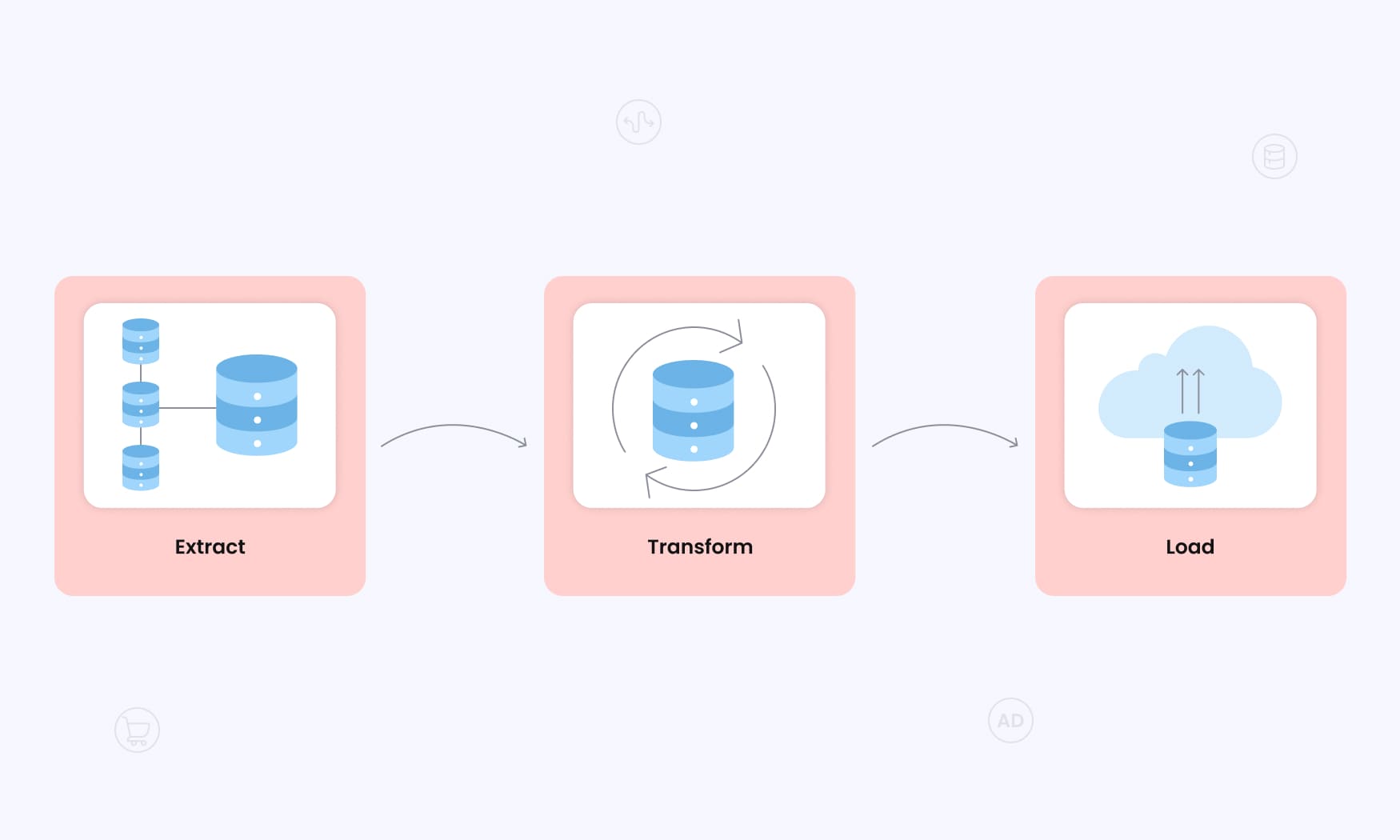
Let’s break it down simply. ETL stands for Extract, Transform, Load:
- Extract – the tool pulls raw data from different platforms (Google Ads, Shopify, CRM, email, etc.).
- Transform – it cleans and standardizes the data so it “fits” together.
- Load – it pushes everything into a central warehouse or dashboard where you can analyze it.
Platforms like Northbeam, LeadsRX, or SegMetrics use ETL pipelines behind the scenes. Their goal is to bring siloed marketing data into one place, so you can see how ad spend, sales, and customer touchpoints connect across channels.
And to be fair, there are clear benefits:
- You get consolidated dashboards that give leadership a big-picture view.
- You can run long-term attribution models to see trends over months or years.
- You can align marketing data with finance, operations, or product teams – creating a true “business-wide analytics” picture.
Sounds great, right?
It is… if you’re the CFO or the data team.
Here’s the catch for performance marketers: ETL platforms don’t actually generate new data. They only aggregate what’s available from your ad platforms, CRMs, and sales systems. That means if a conversion signal is lost because of iOS updates, browser tracking restrictions, or API throttling, it never makes it into your ETL dashboard.
And because ETL pipelines usually update once or twice a day, you’re looking at delayed data. By the time you notice a drop in ROAS, that ad set might have already burned through your budget.
So while ETL platforms are fantastic for business-wide reporting, they fall short where you need speed and precision most: real-time campaign optimization.
The limits of ETL for Performance Marketers
ETL platforms can be great for the boardroom, but when you’re in the trenches buying ads, they create more problems than they solve. Here’s why.
1. Data delays kill optimization
Most ETL pipelines refresh once or twice a day. Some even weekly.
That means you’re making today’s decisions on yesterday’s data.
For a media buyer running Facebook, Google, or TikTok campaigns, that just might be nothing but a nightmare. An ad set can burn through thousands of dollars in hours.
If you don’t see performance shifts in real time, you’re reacting too late.
The worst part? You can’t optimize what you can’t see in time.
2. Signal loss is permanent
Post-iOS 14, browser restrictions, and API throttling mean one thing: not every conversion makes it through.
ETL tools can’t regenerate missing signals.
They only aggregate what the ad platforms decide to share.
If Meta never receives the sale, or if a browser blocks the tracking pixel, your ETL dashboard will never show it. That leads to underreported conversions and misleading ROAS numbers, which makes scaling campaigns a guessing game.
3. Aggregates hide the truth
ETL platforms focus on business-wide reports. That means they often stop at the campaign or channel level.
But as a performance marketer, you need granularity: which placement, which ad, which creative drove the conversion? Without click-level insights, you can’t spot patterns, test properly, or cut waste efficiently.
In simple analogy, ETL gives you the 10,000-foot view, but hides the details that make or break profitability.
4. No feedback loop with ad platforms
Ad platforms like Meta and Google Ads thrive on feedback. Their algorithms get smarter when you feed them accurate, timely conversion data.
But ETL tools don’t push data back into the platforms.
They’re designed for reporting, not optimization. So while you’re staring at dashboards, your campaigns are running blind, without the signals they need to improve targeting and bidding.
5. Complexity without ROI
Finally, ETL tools are expensive and complex.
They’re built for data engineers, not media buyers. Setting up pipelines, managing schemas, and troubleshooting integrations isn’t just costly, but a distraction from running profitable campaigns.
In the end, you’re paying more for a tool that gives you less of what you actually need: actionable, real-time insights.
What Ad Tracking Brings to the Table (RedTrack’s Role)
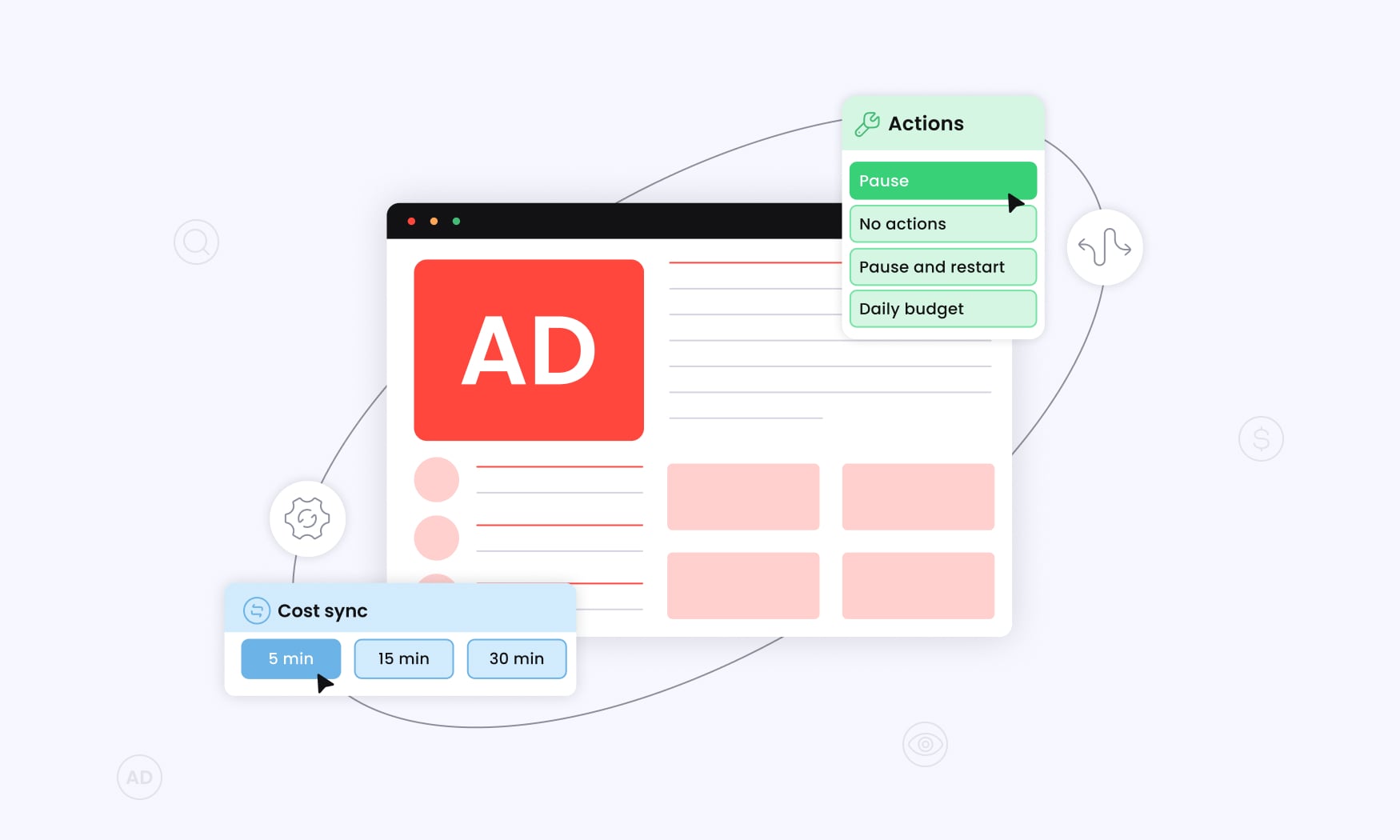
If ETL platforms are designed for reporting, dedicated ad tracking is built for performance.
Instead of just pulling numbers from different sources, an ad tracker like RedTrack actively captures, verifies, and pushes conversion data in real time, closing the gap between what really happened and what your dashboards (and algorithms) see.
RedTrack generates conversion events, not just aggregates
Here’s the difference that changes everything: RedTrack doesn’t just wait for ad platforms or CRMs to provide data.
It creates first-party conversion events through two methods:
- Server-to-Server (S2S) tracking: RedTrack logs every click, lead, and sale directly on the server, bypassing browser restrictions and pixel failures.
- Conversion API (CAPI) integrations: Pre-built connections with Meta, Google, TikTok, Bing, and more ensure that even if a pixel is blocked, your conversions are still reported – and synced back into the ad platforms to fuel smarter bidding.
This means no lost signals, no undercounting, no blind spots.
First-party reliability in a privacy-first world
With iOS updates, GDPR, CCPA, and the decline of third-party cookies, reliable tracking has become non-negotiable. RedTrack uses first-party data collection to ensure that your conversions are always captured and always compliant. Unlike ETL systems that rely on whatever scraps of data they can pull, RedTrack ensures your event pipeline never breaks, even in a privacy-restricted environment.
Real-time granularity
Marketers don’t need to know “what happened yesterday.” They need to know what’s happening right now. RedTrack provides:
- 5-minute cost updates across 20+ ad networks.
- Click/ad-level breakdowns with up to five levels of drill-down.
- Consolidated reports that let you track performance across campaigns, creatives, and funnels instantly.
This is the level of detail you need to spot winning placements – and cut losers before they drain your budget.
Automation & optimization built in
Reporting is just the start. With RedTrack, you can set up automation rules that act on real-time data:
- Pause ads that hit a loss threshold.
- Scale up campaigns that exceed ROAS targets.
- Get alerts the moment performance shifts.
Instead of staring at dashboards, you’re letting data work for you – saving time and boosting ROI.
Privacy-ready by design
Finally, RedTrack is fully compliant with GDPR, CCPA, and other global privacy regulations. That means you can trust the data you’re using, and so can your clients or compliance teams.
ETL vs. RedTrack: Side-by-Side Comparison
At this point, the differences are clear, but let’s make them tangible. ETL platforms like Northbeam, LeadsRX, or SegMetrics were built for reporting. RedTrack was built for real-time performance marketing. Here’s how they stack up:
| Feature | ETL Platforms (Northbeam, LeadsRX, SegMetrics) | RedTrack (Ad Tracker) |
| Data freshness | Daily/weekly sync cycles | Real-time with 5-minute updates |
| Event generation | Aggregates only | Generates first-party events (S2S + CAPI) |
| Attribution depth | Campaign/channel level | Full conversion path, click/ad-level granularity |
| Optimization | Reporting only | Automation rules (pause, scale, notify) |
| Integration scope | Manual, often limited | 200+ one-click integrations with ad networks & CRMs |
| Signal resilience | Dependent on API/browser | Privacy-compliant, bypasses browser/API loss |
| Best for | Finance teams, long-term reporting | Media buyers, eCom brands, agencies |
The difference is more than technical. We already said it, but it proves to be the point again: ETL shows you what happened once data finally lands in the dashboard. RedTrack shows you what’s happening right now, and gives you the tools to act on it.
For media buyers, affiliates, and eCommerce marketers, that distinction translates directly into ROI. Faster signals mean smarter bidding. Granular insights mean less wasted spend. Automation means campaigns keep working even when you’re offline.
Practical Scenarios: ETL vs. RedTrack in Action
It’s one thing to compare features. It’s another to see how they play out in the real world.
Let’s look at how different types of marketers experience ETL vs. RedTrack in action.
1. Ecom/Shopify brand: smarter bidding with real-time signals
Imagine you’re running a Shopify store scaling ads across Meta and Google.
With an ETL tool, you’ll see sales per channel, but only after the data refreshes, often the next day. That means yesterday’s poor-performing campaign could chew through today’s budget before you even notice.
With RedTrack, every purchase event is captured server-side and sent back to Meta and Google via Conversion API. That means algorithms get smarter in real time. Campaigns optimize mid-flight.
Instead of reacting to lost ROAS tomorrow, you’re scaling winners today.
2. Affiliate marketer: pinpointing profitable placements instantly
Affiliates need to know not just where conversions come from, but whether they’re actually profitable. ETL dashboards stop at revenue reporting.
RedTrack goes deeper by syncing cost data in near real time and letting you drill down to placement, creative, or even click level. Combined with automation rules, you can cut unprofitable placements instantly and redirect budget to winners, without waiting for a daily refresh.
3. Lead gen agency: feeding quality back into ad networks
Agencies often struggle to prove the value of the leads they deliver.
ETL will happily show you “X leads per channel,” but it won’t connect those leads back to revenue or campaign decisions.
RedTrack tracks the full customer journey and pushes lead quality signals back to ad networks.
That way, algorithms stop chasing cheap form fills and start targeting prospects more likely to convert into paying customers. Clients see better ROI, and agencies prove their value with data that goes beyond volume.
When ETL Still Makes Sense
To be fair, ETL platforms aren’t useless – far from it.
If you’re in finance, operations, or executive leadership, having a consolidated, cross-department view of revenue, costs, and customer journeys is invaluable.
ETL pipelines shine at creating big-picture analytics: aligning marketing data with accounting, forecasting, or product KPIs. For long-term trend analysis and boardroom presentations, they can be the right tool.
But here’s the line that matters: ETL is built for reporting, not for optimization.
It tells you what happened after the fact, often with missing signals you can’t recover. For campaign managers, media buyers, and agencies fighting for ROAS every day, that’s not enough.
Real-time tracking, automation, and accurate event generation aren’t “nice-to-haves” – they’re what keep your ads profitable. That’s where RedTrack steps in. ETL can help you report the story of your campaigns. RedTrack helps you write a better one while it’s still unfolding.
Conclusion – Ad Tracker > ETL, in Majority of Marketing-Related Scenarios
ETL platforms and ad trackers may sound similar on the surface – both deal with marketing data, both create dashboards, both promise clarity. But their purpose couldn’t be more different.
ETL is built for reporting. It consolidates information, aligns teams, and helps executives see the big picture. Useful for strategy meetings and financial models? Absolutely. Useful for optimizing campaigns in the moment? Not so much.
RedTrack is built for performance.
It generates conversion events, feeds them back to ad networks, and keeps your campaigns running on accurate, real-time signals. It gives you the granularity to know which creative or placement is actually driving profit. And it automates decisions so you spend less time staring at spreadsheets and more time scaling what works.
For ROI-driven marketers – media buyers, affiliates, eCom brands, and agencies – the choice is simple. Yesterday’s data won’t protect today’s budget. If you want to maximize ROAS, you need a partner that tracks, syncs, and optimizes in real time.
The difference between knowing your ROI and actually improving it – is real-time tracking.


