
In 2025, every media buyer faces the same headache: data collection is broken. Between iOS updates, cookie deprecation, and ad blockers, pixels miss conversions and platforms inflate their own numbers. Without accurate data, scaling campaigns feels like guesswork.
That’s why two different approaches have emerged to fix the problem. On one side, there’s server-side Google Tag Manager (sGTM) – a technical setup that routes events through your own server before sending them to ad platforms. On the other, there are dedicated ad trackers like RedTrack, which go beyond raw event forwarding to give you attribution, reporting, and automation in one place.
Both aim to reduce signal loss. But one is an infrastructure tool for engineers, while the other is a growth engine for marketers. This article will help you understand the difference and choose the right fit for your campaigns.
Why Do Marketers Need a Tracking Solution in 2025?
If you’re buying traffic in 2025, you already know the struggle: tracking is broken.
Privacy regulations, iOS updates, ad blockers, and cookie loss have made it nearly impossible to rely on the old ways of measuring performance. Pixels miss conversions. Platforms over-attribute to themselves. And when you’re juggling multiple traffic sources, the picture gets even messier.
The result? Fragmented data that doesn’t tell the truth.
Affiliates can’t clearly see which offers or placements are profitable.
Agencies waste time compiling client reports from six different dashboards.
Ecommerce marketers on Shopify or WooCommerce struggle to match ad spend with actual sales.
Without a reliable source of truth, it’s almost impossible to scale confidently.
And that’s exactly why new solutions have emerged. On one side, you have server-side Google Tag Manager (sGTM) setups, often managed through services like Stape or Tracklution. They help fix the “signal loss” problem by collecting conversion events server-side and sending them to ad platforms.
On the other side, you have dedicated ad trackers like RedTrack. Instead of just passing events, ad trackers combine server-side tracking with analytics, attribution, reporting, and even automation – all in one place.
Both sGTM and ad trackers aim to solve the same challenge: making sure your conversions are captured accurately. But the way they do it, and who they’re built for, couldn’t be more different.
That being said, let us dwell more into details…
What Is sGTM?
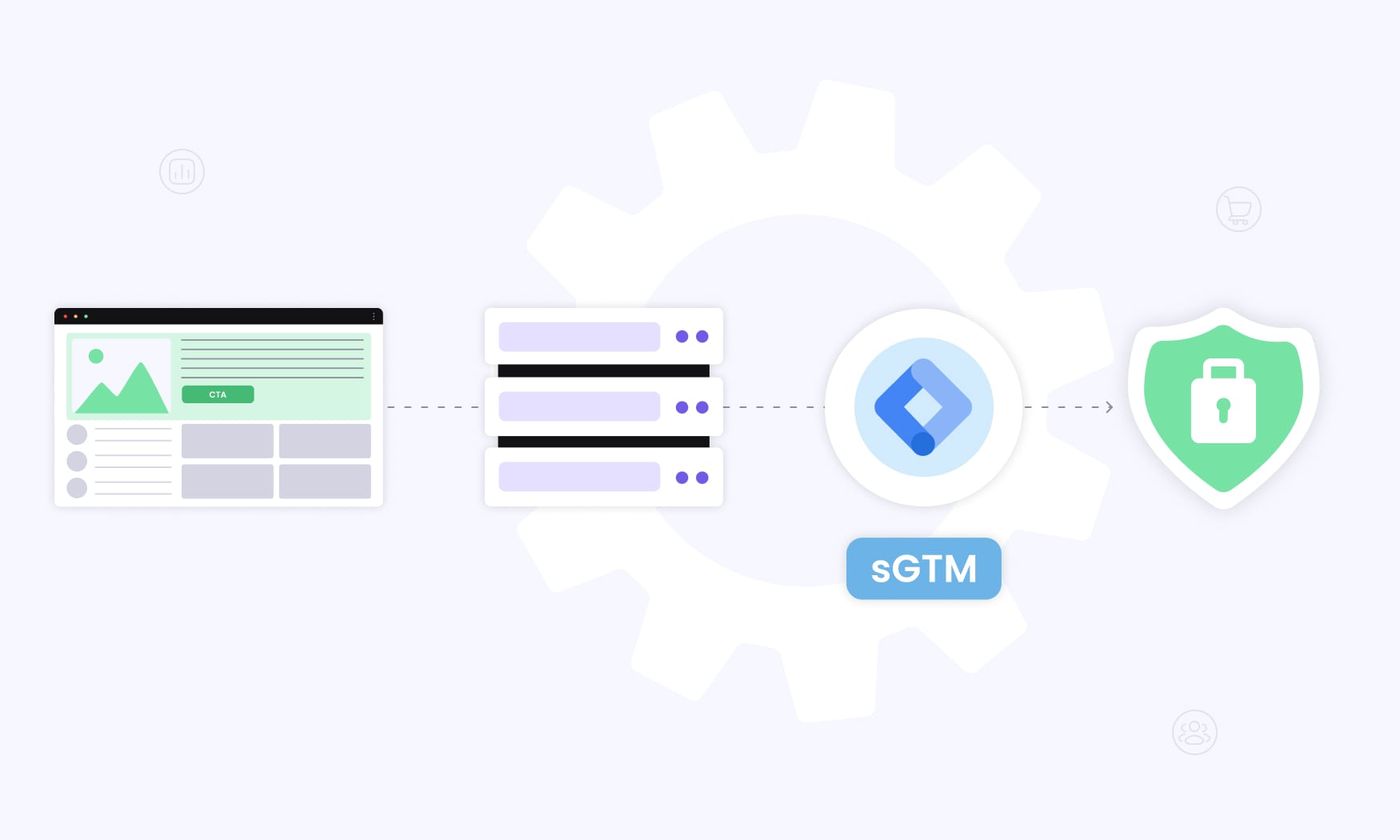
Server-side Google Tag Manager (sGTM) is Google’s answer to the growing problem of data loss in digital advertising.
Think of it as a container that lives on your server instead of in your user’s browser.
Instead of relying on fragile client-side pixels, it collects events (like purchases, sign-ups, or leads) directly from your server and then passes them on to platforms like Meta via Conversion API, Google Analytics 4, or even custom endpoints.
In practice, the flow looks like this:
user action → event captured server-side → processed in sGTM → sent securely to the platform of your choice.
On paper, this sounds perfect, and it does solve an important piece of the puzzle: ensuring events get through despite ad blockers, browser restrictions, or privacy changes.
The challenge? sGTM isn’t plug-and-play.
Setting it up requires a cloud server (usually Google Cloud), technical knowledge of event mapping, and ongoing maintenance. That’s why specialized providers like Stape, Tracklution, and Taggrs exist – they host and manage the container for you, so you don’t have to spin up your own infrastructure.
Even with those tools, though, sGTM is just a data pipe.
It forwards signals but doesn’t analyze them. There’s no attribution model, no reporting dashboard, no campaign-level insights. You’ll still need to connect the dots elsewhere. And if you want to maintain or scale your setup, you’ll likely need developer support.
That makes sGTM a great fit for analytics teams and enterprises with engineers on staff who want complete control over their data pipeline.
But for media buyers, affiliates, and eCom marketers who need quick insights, easy reporting, and campaign optimization, sGTM alone often feels like building a custom tracking system from scratch.
What Is an Ad Tracker?
If sGTM is the “data pipe,” then an ad tracker is the command center for media buyers.
Instead of just sending signals back to ad platforms, ad trackers are purpose-built for marketers to actually understand and optimize performance.
Take RedTrack as the example.
At its core, RedTrack combines accurate server-to-server tracking (including direct Conversion APIintegrations with Meta, Google, TikTok, Bing, and more) with a powerful attribution engine. That means you not only capture every conversion, but you also see exactly which channel, campaign, or even ad generated it.
Where sGTM requires engineers to configure event mapping, RedTrack comes with 200+ ready-to-use integrations across ad networks, affiliate programs, and eCom platforms like Shopify and WooCommerce.
Setup is low-code and marketer-friendly – you can be up and running the same day, without touching Google Cloud or writing custom scripts.
But tracking is only the beginning. With RedTrack, you also get:
- Multi-channel attribution models to see the real customer journey.
- Granular real-time reporting across 50+ data points with multiple breakdowns.
- Automation rules and cost sync so you can scale winners, cut waste, and save time on manual campaign management.
The bottom line? An ad tracker doesn’t just deliver signals – it turns them into actionable insights and gives you the tools to act on them. For performance media buyers, that’s the difference between fighting blind with incomplete data and confidently scaling campaigns with a single source of truth.
That’s why ad trackers like RedTrack are the go-to solution for affiliates, agencies, and eCom performance marketers who need accuracy, speed, and automation without a technical overhead.
Ad Tracker vs sGTM – Key Differences
At first glance, both ad trackers and sGTM aim to solve the same problem: making sure your conversions don’t disappear into thin air.
But once you look closer, the differences are huge.
Here’s how they compare across the areas that matter most to performance marketers.
Ease of Setup
sGTM: Getting started with sGTM isn’t a weekend project. You’ll need a Google Cloud account, a server container, and a developer to configure event mapping. Even with managed providers like Stape or Tracklution, you’re still responsible for understanding how events are defined, tested, and maintained.
Ad tracker: Platforms like RedTrack are built for speed. With pre-built integrations and step-by-step onboarding, you can start tracking campaigns the same day. No Google Cloud setup, no server management, no coding required. For busy media buyers, that speed to deploy is often the deciding factor.
Attribution & Reporting
sGTM moves data. That’s what it does. It takes events from your server and passes them along to Meta CAPI, GA4, wherever they need to go. No analysis, no reporting, no attribution. It’s a relay system and nothing more.
Which is fine until you actually need to understand what’s working. Because sGTM won’t tell you which campaigns drive revenue. It won’t map how a customer bounced between three platforms before buying. For any of that, you’re stacking additional tools on top and stitching things together yourself.
But here’s where it gets really messy.
Say someone clicks your Meta ad – they land on your site, click identifier in the URL, and first-party cookie gets dropped in the browser.
They poke around, fill out a lead form maybe, and leave. Regular, normal, every day stuff.
Then a week passes. They get an email, click through, buy something. Sounds great, but of course, there’s catch!
That cookie from the first visit is dead. Safari basically nukes these in three days and Firefox isn’t much better so the browser hands out a fresh ID like nothing ever happened.
Now sGTM fires both events server-side to Meta. Landing page view – browser ID A. Purchase – browser ID B. Two different IDs.
Meta looks at this and goes “hey that’s two different people”.
Doesn’t matter that the email’s there, that the browser details look clean in Events Manager because the platform simply cannot connect the purchase back to the original ad click – the link between them expired in a cookie jar somewhere three days ago.
This trips up more advertisers than you’d think.
The conversions are all there in the dashboard, the data looks right, but attribution is a mess and nobody can figure out why. And sGTM can’t solve it because sGTM was never built to solve it.
RedTrack doesn’t forward events. It stores them.
When someone hits your site with a click identifier, RedTrack grabs it.
They enter an email? RedTrack ties it to the click. It’s building a profile the entire time – connecting ad clicks with every identifiable action on your site.
RedTrack still knows who the person is that made the purchase even though cookie is long gone, and browser session was not the same initially.
It bascailly packages everything, from click ID, through email, to purchase value, into one clean server-side event and sends it to Meta or Google or TikTok. The platform sees the click identifier, recognizes it instantly, attributes correctly.
Done.
No duplication.
No phantom users.
No conversion floating around unattributed because two browser IDs didn’t match.
And then there’s reporting.
Because RedTrack actually holds onto this data, you get things sGTM was never designed to offer nor it can ever give you.
You’re not just confirming that conversions happened. You’re seeing how they happened.
And frankly, that’s the difference between guessing and actually knowing what to scale.
Automation & Optimization
sGTM: Think of it as a signal courier. It doesn’t care what happens after the event is sent. No campaign optimization, no alerts, no automation.
Ad tracker: This is where RedTrack shines. With smart rules, you can automatically pause underperforming ads, reallocate budgets, or scale winners – all based on real-time data. Cost sync down to the ad level ensures you’re never flying blind on spend. It’s like having a co-pilot that makes sure you don’t waste money while you scale.
Integration Scope
sGTM: Out of the box, it’s most commonly used for GA4 and Meta. Anything beyond that – TikTok, Bing, Taboola, affiliate networks – requires custom configuration, and often additional engineering time.
Ad tracker: RedTrack integrates with 200+ platforms – from major ad networks to affiliate programs and eCommerce systems like Shopify and WooCommerce. You don’t need to build connections yourself. That wide integration scope means your tracking covers the full ecosystem, not just a single platform.
Maintenance & Costs
sGTM: Even with hosted providers, you’re looking at ongoing costs: cloud hosting, container management, and developer hours. For small teams, the total cost of ownership can climb quickly.
Ad tracker: With RedTrack, it’s all-in-one SaaS. Your subscription covers tracking, attribution, reporting, and automation – no hidden infrastructure bills, no maintenance overhead. You spend less time fixing tracking and more time optimizing campaigns.
Data Ownership
sGTM: Events are processed through Google’s infrastructure. While you configure what gets passed where, you’re still partially dependent on Google’s ecosystem.
Ad tracker: With RedTrack, you own your data. Every click, conversion, and cost update is logged independently and exportable at any time. That independence matters if you don’t want platforms marking their own homework when it comes to attribution.
| Feature | sGTM (Server-side GTM) | Ad Tracker (RedTrack) |
| Setup | Technical setup in Google Cloud. Requires developers. | Low-code, ready-to-use. Pre-built integrations for ads, affiliates, and eCom platforms. |
| Speed to Deploy | Weeks of configuration and testing. | Same-day deployment with guided onboarding. |
| Attribution | None. Forwards events only. | Multi-channel attribution, customer journey reports, ROI insights. |
| Reporting | No reporting layer. | Real-time, unsampled reports with 50+ data points and 5+ breakdowns. |
| Automation | None. Manual optimization required. | Smart rules, cost sync, auto-pause losers, scale winners automatically. |
| Integrations | GA4, Meta CAPI, custom builds. Limited without dev resources. | 200+ one-click integrations with ad networks, affiliate programs, and eCom platforms. |
| Maintenance | Ongoing hosting + dev time. | Managed SaaS. No infrastructure costs or upkeep. |
| Data Ownership | Runs inside Google infrastructure. Partial dependency. | Independent. You own all click, conversion, and cost logs. |
| Best For | Enterprises, analytics teams with engineers. | Affiliates, agencies, and eCom performance marketers who need actionable insights fast. |
The bottom line?
sGTM is a great technical solution for teams who want to build their own data infrastructure.
Ad trackers like RedTrack are for marketers who need fast, accurate, and actionable insights – with automation baked in.
Who Should Choose sGTM vs Ad Tracker?
The truth is, both solutions work – but not for the same type of user. Your choice depends on your resources, priorities, and what you actually need from your tracking setup.
sGTM is for you if:
- You’re a large company with an in-house data or analytics team.
- You want full control over your data infrastructure and have developers to configure and maintain it.
- Your priority is building a custom pipeline to send events into systems like GA4, BigQuery, or internal BI dashboards.
In short, sGTM is a good fit if you already have the technical expertise and budget to maintain an engineering-heavy setup. It gives you flexibility, but it comes at the cost of speed and simplicity.
Ad trackers are for you if:

- You’re an affiliate, agency, or eCommerce performance marketer running campaigns across multiple traffic sources.
- You need a fast, low-code solution that delivers accurate conversion tracking without developer overhead.
- You care about analytics, attribution, and automation – not just sending events, but turning them into insights and actions.
For media buyers, time is money. An ad tracker like RedTrack helps you see what’s working, cut what’s wasting spend, and scale profitable campaigns – all without needing to maintain servers or write custom event mapping.
Conclusion – Ad Tracker as Tailored Solution
Both sGTM and ad trackers tackle the same challenge: solving signal loss in a privacy-first world. But the way they do it – and who they’re built for – couldn’t be more different.
sGTM is infrastructure. It’s a framework for engineers and data teams to build custom tracking pipelines. Powerful, yes, but technical, time-consuming, and resource-heavy.
Ad trackers like RedTrack are growth engines for marketers. They combine server-side tracking with attribution, analytics, reporting, and automation – everything a performance buyer needs to run profitable campaigns without waiting on developers.
So ask yourself: do you want to build a tracking system, or do you want to scale campaigns?
If your goal is scaling profitable ads while saving time and budget, RedTrack is the smarter choice. Fast to deploy, easy to use, and designed for affiliates, agencies, and eCom brands – it gives you the clarity and automation you need to grow.
Try RedTrack today and turn your tracking into a competitive advantage!


