
The advertising industry is entering one of the most disruptive decades in its history. By the end of 2025, global digital ad spend is projected to hit nearly $1 trillion, which is 4.9% growth compared just to last year.
But this isn’t just a story about bigger budgets moving online – it’s about a complete redefinition of how brands reach, influence, and convert their audiences.
Artificial intelligence, stricter privacy regulations, and emerging technologies are converging to reshape every layer of advertising. Programmatic buying is no longer just about efficiency – it’s becoming fully automated and predictive. Voice and AI-driven search are changing how customers discover products.
Meanwhile, shifting privacy laws and the death of third-party cookies are forcing advertisers to rethink tracking, attribution, and personalization from the ground up.
The most urgent truth? What’s unfolding today will set the competitive digital landscape for the next five years. For brands, ad agencies, and media buyers, adapting to this future of advertising isn’t optional. It’s the difference between scaling in a data-driven future or getting left behind.
What We’re Seeing in 2025-2026
Before talking about future of advertising, what does the present look like?
Digital advertising has reached a tipping point where traditional and digital are no longer separate worlds – they’re one.
By 2029, digital formats are projected to account for 80% of all ad spend, reflecting where consumer attention already lives: on mobile apps, streaming platforms, and social feeds. Even legacy brands that once poured most of their budget into TV or print are being forced to rethink strategy in order to stay relevant.
The backbone of this transformation is AI-driven automation. Today, over 30% of sales-related tasks are handled by AI, from predictive targeting to real-time bidding. Ad publishers are using machine learning to allocate inventory more intelligently, while advertisers gain instant insights into audience behavior that once required teams of analysts. For performance marketers and media buyers, this shift isn’t just about efficiency – it’s about making decisions at a speed and scale no human team could match.
Programmatic ad buying illustrates this perfectly. By 2028, 85% of digital ad revenue will come through programmatic channels, where automation doesn’t stop at ad placement. It covers the entire workflow – audience segmentation, creative testing, budget shifts, and conversion optimization – creating a self-learning ecosystem that adapts in real time.
Perhaps the most exciting trend is democratization.
In the past, marketers needed a patchwork of expensive tools to track conversions, attribute them accurately, and build meaningful reports. Now, platforms like RedTrack unite all of this in one solution (while democratizing pricing) so smaller ecommerce brands, agencies, and independent media buyers can compete on the same playing field as big advertisers.
In this new landscape, agility and smart execution matter far more than budget size.
AI and Machine Learning Revolution in Advertising

AI has moved from hype to daily horsepower for modern advertising. Predictive analytics now forecasts behavior in real time, so plans shift from reactive to proactive. Here’s the thing: campaigns can anticipate needs, not chase them.
The phase-out of third-party cookies in 2025 makes first-party data the new gold standard. Brands are leaning on AI to mine historical interactions for patterns and segments, which demands better collection, consent, and governance. Done right, this not only strengthens measurement but also fuels the AI models that drive smarter targeting and reporting.
Generative AI is reshaping creative production and testing. Platforms can produce on‑brand copy and visuals at scale, which reduces production costs and accelerates experiments. Human teams stay focused on strategy and story, while AI handles execution volume.
Machine learning now optimizes ad campaigns across channels in real time. It adjusts bids, placements, targeting, and creative based on live feedback. The result is higher ROAS, lower CPA, and faster budget reallocation when conditions change.
By 2027, experts expect AI to handle most routine ad tasks. Think segmentation, pacing, and reporting with minimal manual lift. People still own positioning, strategy, and creative judgment because those require context and nuance.
At the same time, fraud detection powered by AI is catching invalid traffic and click fraud faster than legacy rules, protecting budgets and rewarding quality publishers.
Here’s the shift: the propagation of AI moves media buying from “accuracy hunting” to true ownership of first-party data. Digital platforms without AI baked into their value proposition will fade. Solutions like RedTrack, built on first-party data and AI-driven reporting, are what will define the future of advertising.
Programmatic Advertising and Automation Advances
Programmatic advertising has evolved into a fast-moving marketplace where algorithms make split-second bidding decisions across hundreds of audience signals. This precision enables advertisers to reach the right person at the right moment, without relying on outdated tracking methods.
A big shift is happening with supply path optimization (SPO). By cutting out inefficient middlemen, SPO ensures ad spend flows through the most effective routes, reducing fees and boosting returns. Advertisers see stronger ROAS, while publishers benefit from fairer revenue share.
Platforms are also leaning heavily into AI-driven insights. Demand- and supply-side platforms now analyze cross-channel behavioral data to build smarter customer profiles, allowing accurate targeting while staying privacy-compliant.
Still, automation is where the biggest gains show up.
Marketers who adopt automation see productivity lift by as much as 20%. Beyond scheduling, today’s systems dynamically allocate budgets, optimize creatives, and even trigger rule-based campaign adjustments in real time. For agencies juggling multiple accounts, this means less manual work and faster scaling.
Data sources are expanding too. Voice search, mobile usage, and even smart speaker interactions now enrich audience profiles. Add to that programmatic’s integration with retail media networks, and brands can reach shoppers right at the point of purchase which is most certainly a huge advantage for eCommerce.
In a nutshell, programmatic and automation aren’t just making campaigns more efficient. They’re redefining how advertisers connect with audiences across every stage of the customer journey.
Emerging Advertising Formats and Channels
Digital advertising is expanding beyond banners and feeds. New formats are reshaping how brands connect with customers, and the results speak for themselves.
Short-form video is leading the charge. With engagement rates 2.5x higher than long-form content, it delivers the strongest ROI across platforms. Audiences prefer quick, snackable videos that match today’s faster consumption habits, and advertisers are doubling down to meet that demand.
At the same time, interactive ads are transforming static impressions into active engagement. These formats adjust in real time based on user behavior, creating personalized experiences that feel more like entertainment than ads. The payoff? Engagement rates up to 3x higher than standard formats. By blending mechanics from gaming and social platforms, they keep users hooked while driving measurable results.
Another big shift is happening with voice-driven experiences. Smart speakers and virtual assistants are no longer just tools – they’re becoming digital marketing channels as we speak. Brands can now engage customers through conversational content, offering value in the form of tips, answers, and ongoing dialogue. Done well, this builds trust and loyalty in a way traditional ads can’t.
But here’s the challenge: as these new digital channels multiply, so does the complexity of measurement. Marketers need a way to see how each format contributes to the overall customer journey.
That’s why third-party ad trackers like RedTrack are becoming essential – stitching together every touchpoint into a single path and delivering clear attribution for each channel’s role in performance.
Social Commerce and User-Generated Content
Social commerce is completely reshaping the way people shop online, and honestly, the numbers speak for themselves.
By 2025, we’re looking at a market that’s projected to exceed $2 trillion, and that growth is being driven largely by TikTok and Instagram’s seamless shopping features. The path from product discovery to purchase has never been shorter or smoother, which is exactly what consumers want.
Now, here’s where it gets interesting. At the core of this explosive growth is trust. And when we say trust, we mean it – a staggering 92% of consumers trust user-generated content (UGC) more than brand-created ads. This shift is forcing marketers to completely rethink their strategies, because let’s face it, audiences don’t want those polished campaigns anymore. They want authentic customer stories that feel real.
Shoppable posts and visual search take this a step further, and they’re game-changers. They let people buy products directly from the content they’re already engaging with. No annoying clicks away, no friction – just instant checkout inside their favorite apps. It’s that simple, and it works.
Meanwhile, influencer marketing is absolutely booming, set to jump from $23.59 billion in 2025 to 70.86 billion by 2032. What’s the winning formula here? It’s all about pairing influencer-created content with paid ads to create narratives that flow naturally instead of feeling forced. And trust us, your audience can spot forced content from a mile away.
Brands like GoPro and ASOS are perfect examples of how powerful UGC can be when you do it right. By encouraging customers to share their experiences, they’ve built massive libraries of authentic content, and the results? Boosted trust, scaled reach, and tight-knit communities around their products. It’s a win-win situation.
Here’s the thing: social media posts built around real customer experiences consistently outperform traditional ads, and there’s a good reason for that.
They don’t just promote a product – they provide social proof, address real-world concerns, and build lasting credibility with your audience. For modern marketers, UGC isn’t just a nice-to-have anymore. It’s becoming the foundation of every effective digital strategy, and if you’re not using it yet, you’re missing out.
Privacy and Regulatory Changes Reshaping the Industry
We cannot talk about future of advertising without talking about the #1 thing related to it – the privacy.
The digital ad industry is being reshaped by stricter privacy rules and shifting user behavior – and the changes go far beyond box-checking compliance. GDPR and similar regulations are reducing the sheer volume of audience data while improving its quality, forcing advertisers to be smarter and more strategic about how they collect and use audience insights.
At the same time, 33% internet users now relies on ad blockers. This is pushing advertisers to focus on delivering experiences that feel valuable instead of intrusive. Relevance, transparency, and respect for user choice are becoming the real differentiators.
Emerging solutions are filling the gap. Blockchain technology promises greater transparency with tamper-proof records of ad delivery and engagement, cutting down fraud and waste while rebuilding trust between advertisers, publishers, and consumers.
In Europe, the Digital Services Act (DSA) and Digital Markets Act (DMA) are tightening restrictions on traditional practices but also opening the door to new, user-centric channels. For forward-thinking marketers, compliance is becoming a competitive advantage. Companies that embrace transparent data practices are not only meeting regulations but also building stronger customer relationships.
Here’s the bigger picture: at the core of this shift is still accurate conversion tracking.
Server-side tracking technology existed long before pixels started failing, but adoption lagged due to infrastructure and education gaps. Privacy regulations simply accelerated the transition to more efficient methods. The benefits go beyond compliance – faster page loads, ad algorithms fed with more accurate data, and ultimately smarter campaign optimization.
Far from slowing things down, privacy-first advertising is pushing the advertising industry toward better tech, sharper measurement, and more customer-centric strategies.
Omnichannel Integration & Consumer Behavior and Experience
In today’s digital advertising industry, your customers’ attention is scattered everywhere – across platforms, devices, and touchpoints, and honestly, it’s a lot to keep up with, which is why the future of advertising looks a bit different…
The winning brands aren’t just showing up everywhere (because let’s face it, that’s exhausting and expensive), they’re delivering consistent, omnichannel experiences that actually adapt to what each channel does best. And here’s the thing: companies with integrated strategies are keeping way more customers than those trying to manage channels like they’re completely separate entities.
Technology is really accelerating this whole shift, and it’s pretty exciting when you think about it. The rollout of 5G networks is unlocking these incredibly rich formats – we’re talking 8K video, 3D models, and immersive ads that basically rival your favorite Netflix show in quality.
At the same time, the rise of IoT and smart devices means that by 2026 (which is closer than you think), your connected car, your smartwatch, and even your smart fridge will become new advertising touchpoints. Talk about contextual opportunities for engagement, right?
Leaders such as Disney and Starbucks are already showing us what’s possible when you nail seamless integration across digital, physical, and media environments. Their success is basically proof that when every single interaction feels unified and connected, customer loyalty and revenue naturally follow. It’s like magic, but it’s actually just really good strategy.
But here’s where it gets tricky (and this is the part that keeps most marketers up at night): managing omnichannel strategies at scale is nearly impossible without the right ad tech.
You’ve got data fragmentation, inconsistent attribution, and manual campaign adjustments that prevent most teams from reaching anything close to true efficiency.
It’s frustrating, but that’s not the shift we’re seeing.
This is: attribution modeling isn’t just a nice-to-have anymore, but a necessity.
Ad channels don’t work in isolation; they amplify each other, creating an ecosystem where even small changes in one element impact the whole system.
Attribution, once just a toy for ad analysts, has now become the referee that shows whether each channel’s contribution truly matches the investment put into it.
This is exactly where RedTrack becomes indispensable (and we mean that in the best possible way).
Think of it as your single source of truth – RedTrack unifies performance data across 200+ ad networks, ecommerce platforms, and traffic sources.
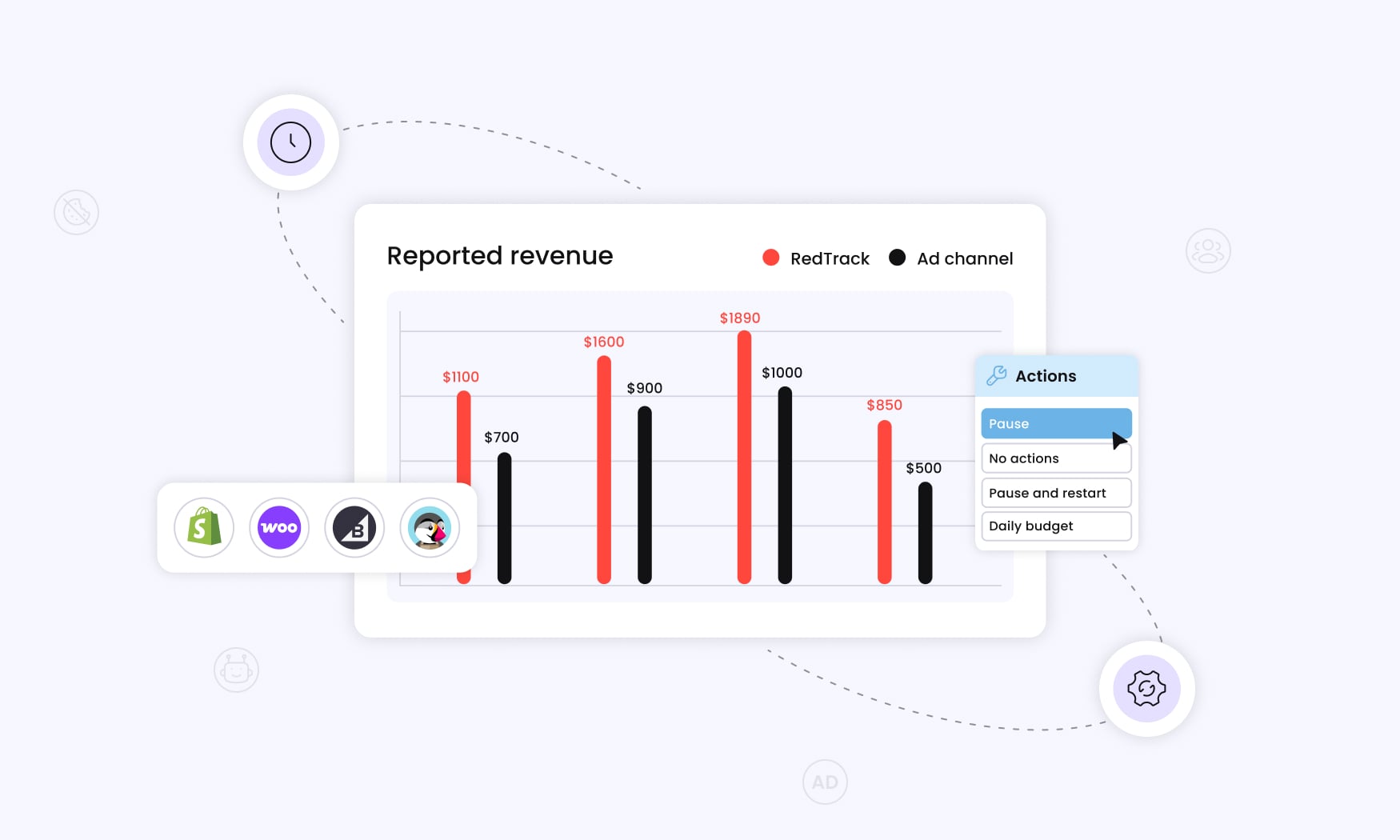
With real-time attribution, server-to-server tracking, and automation rules, it ensures your campaigns stay optimized across every single channel without you having to babysit them.
Instead of chasing scattered reports and trying to piece together the puzzle manually, you get a clear view of the customer journey and can actually personalize at scale.
Working smarter > working harder
With consumer journeys spanning countless touchpoints, omnichannel success isn’t just about reach – it’s about precision, timing, and seamless execution. That’s why in the fast-evolving digital advertising industry, RedTrack isn’t just another tool. It’s the ad tech backbone enabling brands to unify data, automate decisions, and create customer experiences that feel effortless across every channel.
Advertising Market Challenges and Economic Factors
The advertising industry is under pressure. Premium ad space keeps getting more expensive as brands compete for the same high-performing channels. With limited inventory, advertisers are being forced to think harder about where every dollar goes and how to stretch budgets further.
Global campaigns are also becoming trickier. As the internet splinters into regional ecosystems – each with its own platforms, rules, and culture – success depends on smarter localization and a deeper understanding of consumer behavior in each market. Global campaigns are also becoming trickier. As the internet splinters into regional ecosystems – each with its own platforms, rules, and culture – success depends on effective localization services and a deeper understanding of consumer behavior in each market.
Then there’s the economy.
When downturns hit, ad budgets are usually the first to shrink. That makes it critical for marketers to prove ROI and show exactly how digital advertising spend ties back to business results. The ones who can do this are far more likely to keep their campaigns running, even when the market slows.
Yet there’s also opportunity. More than half the world is still offline, leaving massive untapped potential in emerging markets. As digital infrastructure expands, new audiences will shape the future of advertising in ways that could look very different from today.
Of course, complexity is only increasing. Smaller players struggle to keep up, while larger brands that invest in advanced ad tech and expertise are pulling ahead. Add in currency shifts and trade tensions, and running global campaigns has become as much about financial planning as it is about creativity.
For advertisers, thriving in this environment means staying agile – cutting waste, embracing innovation, and preparing for the unexpected.
Where We’re Heading in Digital Advertising? Key Predictions for 2026-2027
The future of advertising is already unfolding, and it’s moving faster than most teams expect. By 2027, more than 70% of consumers will expect real-time, AI-powered personalization.
This won’t be a premium feature anymore.
It’ll be the baseline.
If your ad campaigns can’t deliver, someone else’s will.
AI is set to become the backbone of daily media buying operations.
By 2027, it won’t just optimize bids or placements, but it will run entire workflows.
From segmentation and pacing to creative testing, fraud detection, and real-time budget shifts, AI will handle routine decisions with precision and speed. Human teams will stay focused on strategy and storytelling, while AI takes care of the mechanics.
At the same time, synthetic media will introduce new risks. Deepfake detection and content authenticity verification will become essential to protect brand trust and meet growing regulatory standards. Advertisers will need technology partners that can adapt quickly as these challenges evolve.
But here’s the core shift: to thrive in this multichannel, privacy-first landscape, it’s not enough to use AI – you need to feed it the right data.
That means collecting and owning conversion data independently, attributing it accurately across digital channels in real time, and letting AI transform that clarity into action. Without this foundation, even the most advanced AI is just guessing.
This is where RedTrack sets itself apart.
It brings conversion tracking, real-time attribution, automation, and AI-driven reporting into one platform. Instead of juggling disconnected tools or losing money to bad data, media buyers gain a single source of truth for every channel.
The result? Faster decisions, less waste, and a clear path to scaling profitable campaigns.
The future of advertising won’t reward those who wait. It will reward those who prepare now – with the right ad tech at the center of their strategy.
Be a part of the future: Let us show you how RedTrack works


