
Choosing an ad tracker that’s right for your business in 2026 is more than just a technical call – it’s a crucial strategic decision that can directly influence how much profit you can generate.
To be honest, self-hosted ad trackers and cloud-based ones may look pretty similar to start with, but when you peel back the surface, they’re worlds apart in terms of how they tick and operate.
Each approach has its good sides, and hidden costs.
What it all boils down to in the end is accuracy, reliability and being able to move fast in a world where ad platforms can change the rules overnight without warning.
Whether you’re a performance media buyer, a marketing agency or an ecommerce team trying to get ahead, your tracking setup can literally make or break how clearly you can see what’s going on with your data – and how confidently you can tweak your strategy for maximum returns.
So in this article, we’re going to break down how both models work, what separates them, and how to choose the option that supports smooth scaling and predictable campaign performance.
What Self-Hosted and Cloud-Based Trackers Actually Are
Before we compare the two, it’s important to get clear on what each model really means.
A self-hosted ad tracker is a tracking system you install, run, and maintain on your own server.
Basically, you’re responsible for everything: the setup, the infrastructure, the storage, the updates, the security patches, and the performance. In simple terms, you own the “engine” that processes all your clicks, conversions, and reports. This gives you full control, but it also means every piece of upkeep falls on your shoulders, or on your tech team’s.
A cloud-based ad tracker operates very differently.
Instead of hosting anything yourself, you use a platform that manages the entire tracking infrastructure for you. The tracking engine, the servers, the data pipelines, the integrations, the updates, the monitoring – all of it runs in a fully managed environment. You simply log in, connect your traffic sources, and start tracking. No servers, no installations, no maintenance.
When we talk about cost, structure is the ones that almost entirely defines it.
Self-hosted tools easily look cheaper but that’s only in the beginning – real cost appears a bit later, delivered as server fees, scaling requirements, developer’s hourly fee, and general ongoing maintenance.
For the cloud based solution, things are much more smooth: you pay a predictable subscription and that’s pretty much it.
So at their core, the distinction is simple.
Self-hosted gives you ownership with technical responsibility.
Cloud-based gives you speed, convenience, and reliability without the backend workload.
Both can work, but they serve very different types of media buyers and very different stages of growth.
The Core Difference Between The Two: Control vs. Agility
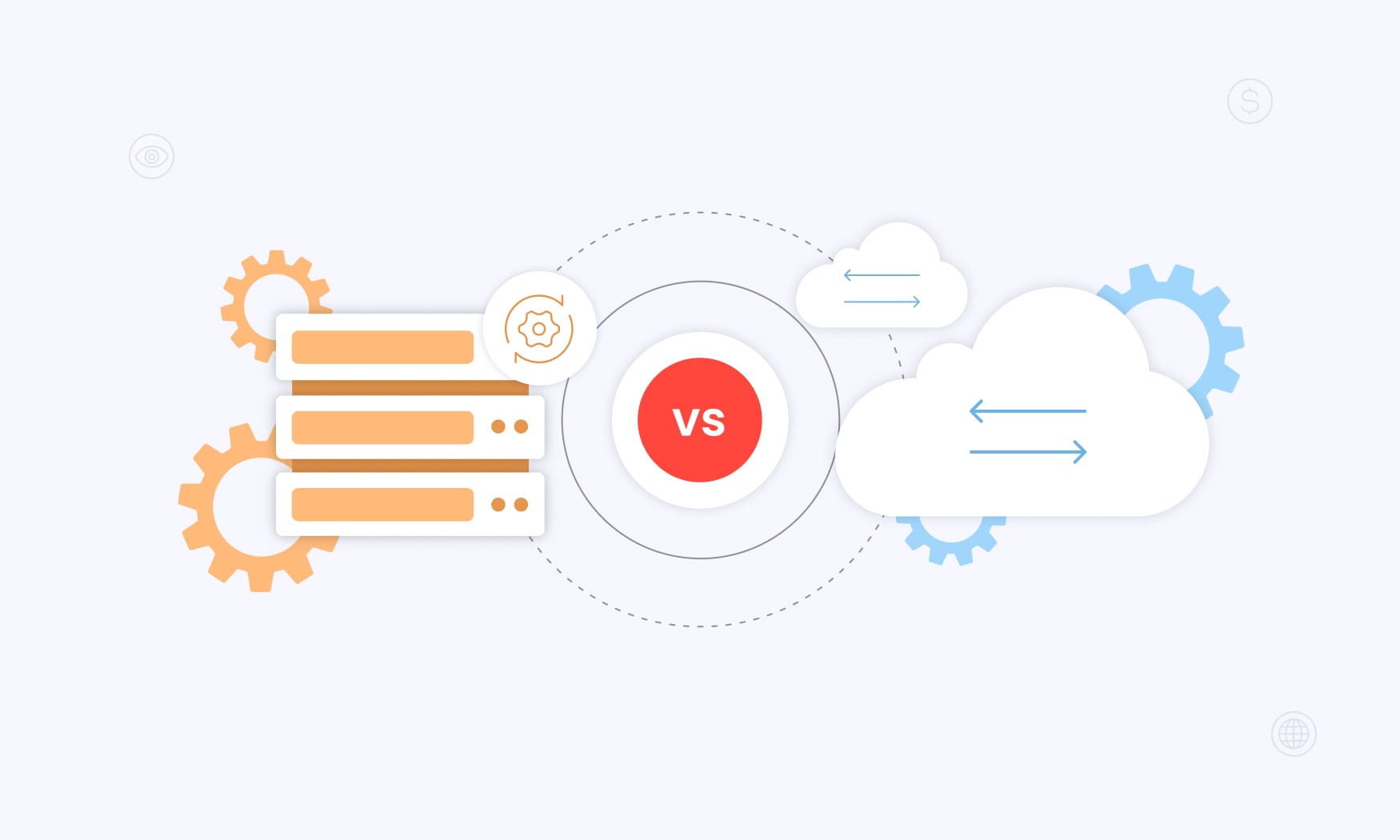
When you strip everything back, the real difference between self-hosted and cloud-based trackers comes down to one thing: control versus agility.
Understanding this distinction is essential, because it basically shapes the way you work, the way you move, and ultimately how much money can you make.
As previously mentioned, self-hosted tracker gives you full ownership of the infrastructure behind your tracking.
You’re running the server, storing and managing the data, working with the updates, and keeping performance top-notch. On paper, this level of control sounds appealing because you basically decide how everything operates.
But in practice, it also means you’re responsible for every slowdown, outage, security patch, and unexpected spike in traffic.
You carry the weight of the entire system.
A cloud-based tracker works the opposite way where you don’t worry about infrastructure, and you focus only on tracking. What you gain here is agility – ability to adapt quickly, test faster, and scale without worrying if the systems can keep up.
And this difference matters more than most media buyers realize, because operationally, a tracking slowdown doesn’t just create a technical issue but it affects how fast you can optimize. A server overload disrupts both reporting and revenue. So the question becomes less about “control” and more about whether maintaining that control is worth the friction it brings.
In most real-world workflows, agility wins, but let’s dig deeper.
What Media Buyers Really Care About
To understand which tracking model actually supports profitable media buying, we need to look at the criteria that matter in day-to-day work of performance media buyers.
Not the theoretical benefits or technical jargon, but the practical realities that determine how accurately you track, how fast you optimize, and how confidently you scale.
Breakdown would look like this
Accuracy and Signal Resilience
Self-hosted: Highly dependent on your server setup, page speed, and ability to keep up with constant privacy changes. It can struggle with already-painful iOS restrictions, consent mode, and browser-level blocking unless continuously maintained.
Cloud-based: Uses built-in dedicated infrastructure to bypass signal loss with server-side tracking, CAPI integrations, and cookieless methods. Accuracy remains stable because the platform updates automatically.
Setup Time and Technical Maintenance
Self-hosted: Requires installation, server configuration, SSL setup, load balancing, and regular ongoing updates. Every single change that needs to be applied, means more work, which means more time, and time is money, especially if you’re not the one working with it.
Cloud-based: No servers, no installation, no patches. You log in and start tracking within minutes.
Speed, Reliability and Scalability
Self-hosted: Performance depends on your server capacity. Traffic spikes can slow down reporting or break tracking entirely.
Cloud-based: Automatically scales with traffic. Designed to maintain speed and uptime during heavy loads.
Cost Structure and Hidden Expenses
Self-hosted: Lower upfront cost, but higher ongoing expenses: servers, developer time, scaling, security, backups, and troubleshooting.
Cloud-based: Predictable subscription. No surprise infrastructure costs.
Integrations With Major Ad Platforms
Self-hosted: Very limited CAPI support unless manually configured and maintained.
Cloud-based: Pre-built, constantly updated integrations with Meta, Google, TikTok, Bing, Taboola, Outbrain, and more.
Attribution Depth and Data Modeling
Self-hosted: The success of attribution really depends on how well you set it up yourself, but the truth is, you’re probably not going to be able to build something as solid as what we’ve developed in the cloud – just because we’ve got teams dedicated to perfecting it for years now.
Cloud-based: You get rich, multi-touch attribution and conversion path reporting without having to lift a finger.
Security & Compliance
Self-hosted: You’re on the hook for dealing with GDPR, CCPA, data storage policies and security updates – all of which can be a real headache.
Cloud-based: Compliance and security handled at the infrastructure level, including consent mode and privacy-safe tracking.
Automation & Optimization Capabilities
Self-hosted: Usually none. Any automation requires custom development.
Cloud-based: Built-in optimization rules, automated cost updates, and cross-channel management tools.
Reporting Flexibility
Self-hosted: Reporting depth depends on your server performance and how much you customize. This can be quite time consuming to create.
Cloud-based: Fast, granular, real-time reporting with multiple breakdowns and filters designed for scaling decisions.
What this all reveals is simple: while self-hosted tools offer control, they place the operational burden entirely on the user.
Cloud-based tools, on the other hand, remove the technical friction so teams can focus on what actually drives performance – optimizing campaigns, increasing ROAS, and scaling revenue.
Myths vs. Reality: What People Think About Self-Hosted Solutions
There are a few ideas that keep getting thrown around when it comes to self-hosted trackers – ideas that sound pretty appealing in theory but hardly ever hold up in real-world situations when you’re actually trying to perform
These assumptions end up shaping how teams set up their tracking systems, so it’s pretty important to dig into what actually works out in practice.
Myth 1: “Self-hosted gives me more accurate tracking”
It’s easy to see why people think this is true – if you’re in charge of the whole show, then it stands to reason the data has to be more accurate right?
But the problem is, accuracy today is NOT determined by who owns the server.
Accuracy is actually about how well your server-side integrations are working, how fast you’re updating your tracking and how resilient you are to iOS restrictions and browser-level blocking.
And on all those fronts cloud platforms have got you beat.
They’re maintained regularly, they’re optimized and they’re updated all the time – self-hosted setups just can’t compete because the accuracy plummets the moment something isn’t patched or configured right.
Myth 2: “Self-hosted is cheaper in the long run.”
Okay, so, this is one of the most popular misconceptions.
While the software license may cost less upfront, the real expenses are visible later on: server hosting, scaling, storage, security, developer time, downtime risk, ongoing maintenance… Easy to go on and on!
For most media buyers and agencies, the hidden operational cost ends up far higher than a predictable cloud subscription – not to mention the time cost of having to fix things manually.
Myth 3: “Self-hosted gives me more data ownership.”
Owning the server doesn’t automatically mean owning your data.
Modern cloud-based trackers offer full exportability, long-term storage, and private environments without requiring you to manage any infrastructure. Data ownership is about access and control – not about who maintains the hardware.
What these myths have in common is the assumption that more responsibility equals more benefits.
But in day-to-day media buying, accuracy, speed, and stability come from consistent upkeep – and that’s where cloud-based solutions have a clear advantage.
Industry Shifts That Change Equation
The tracking landscape has changed so dramatically over the last few years that many of the old assumptions about self-hosted tools no longer apply. What used to be a pretty simple choice (control or convenience) has not got a whole lot more complicated
Platforms like Meta, TikTok, and Google have started insisting on far stricter, faster, and more demanding server-side conversion APIs. These APIs are always changing and need a super stable, super low latency environment to send out clean signals.
Meanwhile, cloud-based platforms such as RedTrack adapt automatically, whereas self-hosted setups rely on users to manually keep them up to date and constantly monitor their performance.
At the same time, the traditional redirect tracking scene has seen a pretty sharp decline.
Browser restrictions, iOS limitations and all those consent requirements are all pushing advertisers towards events-based, server-side tracking and that shift is playing right into the hands of cloud systems that are already built the right way for modern signal processing.
We’ve also got the deprecation of third party cookies and stricter privacy policies adding to the complexity. Now you need to think about compliance, data storage, encryption and handling data standards – that’s way more than a basic server can handle and it demands constant upkeep. For self-hosted users that upkeep just gets more and more burdensome.
And let’s not forget the cost.
Running a fast, super reliable tracking setup that’s available all around the world is pretty expensive. Server fees, scaling needs and all the technical overhead add up in no time. Cloud platforms can just take that all in their stride and keep the performance going internally.
What ties all these shifts together is the increasing importance of speed and resilience.
Accurate attribution now depends on infrastructure that can process and deliver data instantly – something managed cloud systems are simply better equipped to handle.
In 2026, cloud-based tracking will not just be easier, but aligned with how modern advertising actually works.
Which Model Fits Which Type of Media Buyer?
When you look at the self-hosted vs. cloud-based debate through the lens of day-to-day work, it becomes clear that not every media buyer operates under the same pressures.
Different teams need different levels of speed, stability, and depth – and the tracking model they choose either supports that workflow or complicates it.
So let’s look at how each group typically works, and which setup naturally aligns with their needs.
Performance Media Buyers (affiliates, arbitrage, lead gen)
Performance buyers are always on the move.
They test fast and furious, shift their budgets often, and rely on instant feedback to decide whether to go big or go home. What they crave is agility: fast and trustworthy reporting, dependable integrations, and automation that makes life easier and processes smoother.
Cloud-based tracking fits this gap naturally. It removes the technical headache, keeps everything running smoothly in the background, and frees up buyers to focus on the real stuff that drives profit.
Agencies
Agencies, on the other hand, have a reputation to uphold as multiple clients are counting on them.
So when things go down or get held up, it’s not just painful, but potentially catastrophic for the relationship. Keeping several self-hosted solutions running, scaling servers, or troubleshooting a gazillion issues for all those client accounts can quickly become a nightmare of a job to manage.
A cloud-based platform has already got it all sorted: stable, scalable and centrally managed infrastructure where you don’t have to lift a finger.
Agencies can onboard clients faster, maintain consistent performance, and avoid the hidden costs of maintaining multiple environments.
On the other hand, we have to mention enterprise agencies with 200+ employees and hundreds of clients. At that point, they usually start making everything in house, from project management solution to tracking solution, as it increases the price of business + savings are quite significant over time. It’s not even rare to see they productize the solution they make for themselves.
So in a nutshell: if you’re a small or mid size agency, cloud based solution is definitely a go to solution that prevents headaches. If you’re enterprise size, both solutions might work.
Ecommerce Teams (especially Shopify stores)
Ecommerce marketers depend heavily on clean, enriched data feeding back into Meta, TikTok, and Google. Their ability to improve ROAS hinges on real-time attribution, strong CAPI integrations, and clear visibility into how each touchpoint contributes to revenue.
Cloud tracking just makes all that a whole lot easy. With server-side events firing off straight away, and data pipelines that never go down, and instant updates… it gives ecommerce teams the speed and accuracy they need to be confident in their campaign decisions – all while letting someone else handle the tech side of things for them.
When to Choose Self-Hosted and When to Choose Cloud
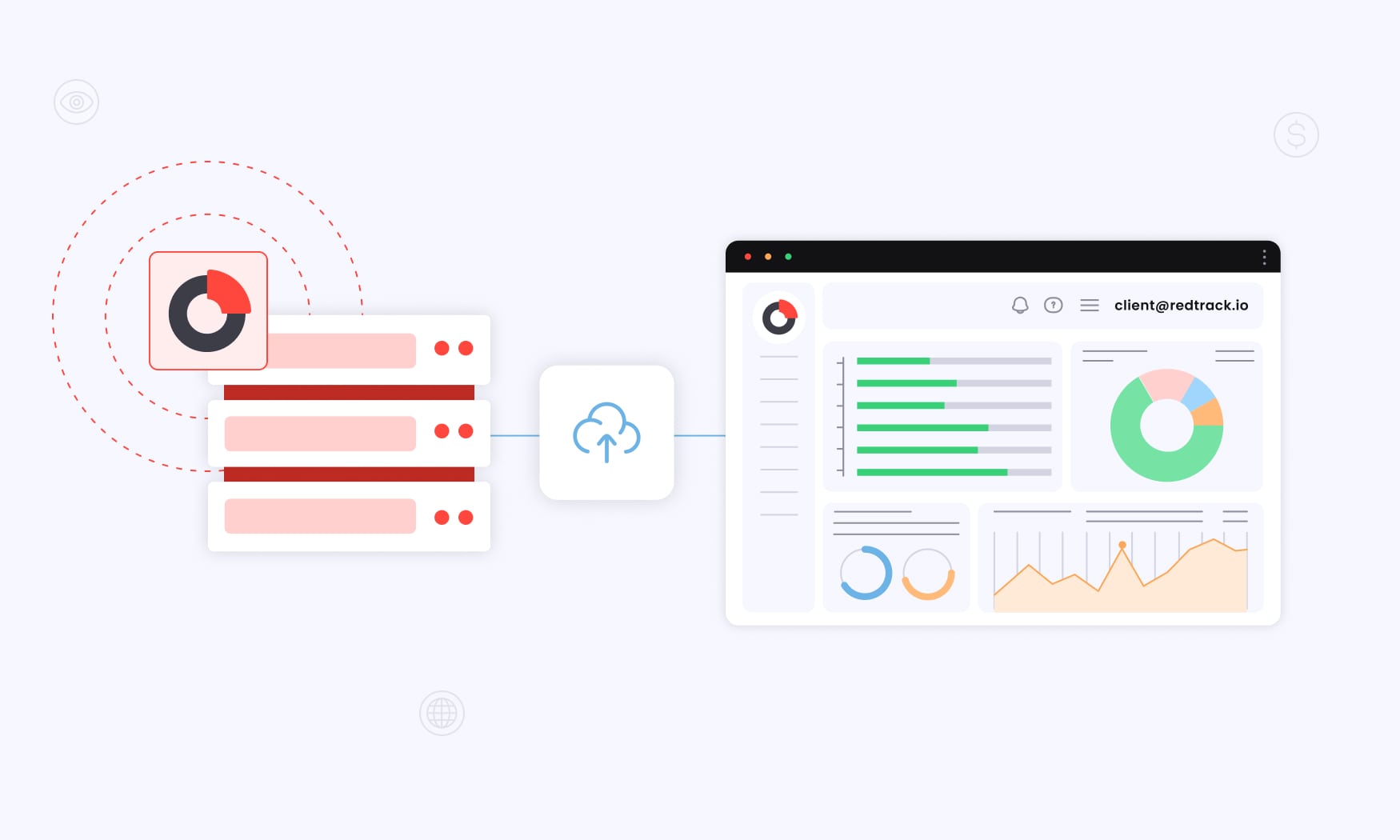
At this point, the distinction between the two models becomes less about which one is “better,” and more about which one truly supports the way you operate.
Every team has its own constraints, its own pace, and its own level of technical capacity.
So the question you’re really trying to answer is: what setup allows us to deliver consistently, without unnecessary strain?
There are a few scenarios where a self-hosted tracker might actually make sense.
If you have a dedicated in-house DevOps team, or a strict rules around where and how your hosting is done, or a highly customized workflow that requires deep engineering control, a self-hosted environment might just tick all the boxes.
In those cases, the infrastructure becomes just another key part of the tech stack you’re already getting used to managing. But, it’s worth remembering – this route doesn’t just make the work disappear.
You’re going to have to keep an eye on your servers, make sure integrations are kept up to date and tweak performance all the time. You’re choosing to have control, but at the same time you’re also choosing to take on all the hassle that comes with it.
For the vast majority of companies that buy into performance tracking, agencies and ecommerce operations, a cloud-based tracker will be a much more sensible option.
It takes the weight off your shoulders, automatically adapts to whatever changes your platform throws up and stays resilient in a world that’s constantly shifting. It gives you speed, accuracy, stability and freedom from the day-to-day grind. And in a world where the data you provide is relied on by algorithms, that stability can make a massive difference.
This is where a tool like RedTrack comes into its own. It combines modern server-side tracking with the best integrations, gives you real-time reports and automation capabilities – all wrapped up in a fully managed infrastructure.
No servers to maintain, no patches to install – just a reliable tracking engine designed to support fast-moving media buyers.
So the rule of thumb is simple: choose self-hosted only if you’re equipped to run it.
Otherwise, choose cloud – and let RedTrack handle the heavy lifting so you can focus on scaling.


