
Winning new customers is hard and expensive work. If you take HBR’s word for it, acquiring a new customer can cost anywhere between 5 and 25 times more than retaining an existing one. That’s a whole lot of cash that may have been better invested in other strategic campaigns. Like, say, existing customer retention campaigns.
But why would you do that? Well, because research also says companies that prioritize and focus on customer retention strategies boost their profits. Even a minor 5% increase in customer retention can lift revenue anywhere between 25%-95%. Now that’s a pretty enticing stat. In fact, it’s so enticing you’ll probably want to do something about it – like set up some customer retention strategies for your business.
To help get you started, we’re giving you 15 data-driven customer retention strategies the best companies use to keep their customers happy, engaged, and buying more. But we won’t leave it at that. We’ll also bring your attention to the most common customer retention mistakes businesses make, so you can avoid them!
15 Proven Strategies to Increase Customer Retention
Before you jump into launching all of the below customer retention strategies, take a moment to consider:
- Which 3-5 align best with your business model and customer base (these are the ones you should focus on)
- The time it will take to implement and see measurable ROI (don’t expect to see any results in less than within 3-6 months)
1. Get Customer Onboarding Right
The first strategy is getting your customer onboarding into spick and span order. This a foundational strategy, on which all long-term retention is based. So if you don’t have this set up properly, all of the following strategies will be useless.
The key to mastering customer onboarding:
Make sure customers can quickly realize (see, feel, and understand) the value of your product or service. Why must they have you?
How to Implement Fail-Proof Customer Onboarding
- Give it structure: Set structured onboarding sequences spanning 30-60-90 days. For each sequence, create specific milestones and success metrics.
- Don’t overwhelm the customer: Go for a progressive profiling system where you gather customer preferences gradually, rather than give customers a lengthy form right at the start of your relationship with them.
- Have a dedicated onboarding team: A huge part of customer onboarding is initiating and building relationships, and the only way to do that is by having a dedicated team of onboarding specialists. If you have the resources, you might want to focus on having a senior onboarding specialist take care of high-value accounts (customers spending $10,000+ annually).
- Develop onboarding materials & support: Make sure you have a collection of interactive product tours and tutorial videos for self-service onboarding as well as one-on-one support for high-value customers.
- Don’t sign and forget: Don’t forget to keep in touch and put a real effort into understanding customer expectations. Create an automated check-in schedule 7, 30, and 60 days after onboarding to keep customers engaged and prevent churn issues before they arise.
2. Implement Predictive Churn Detection
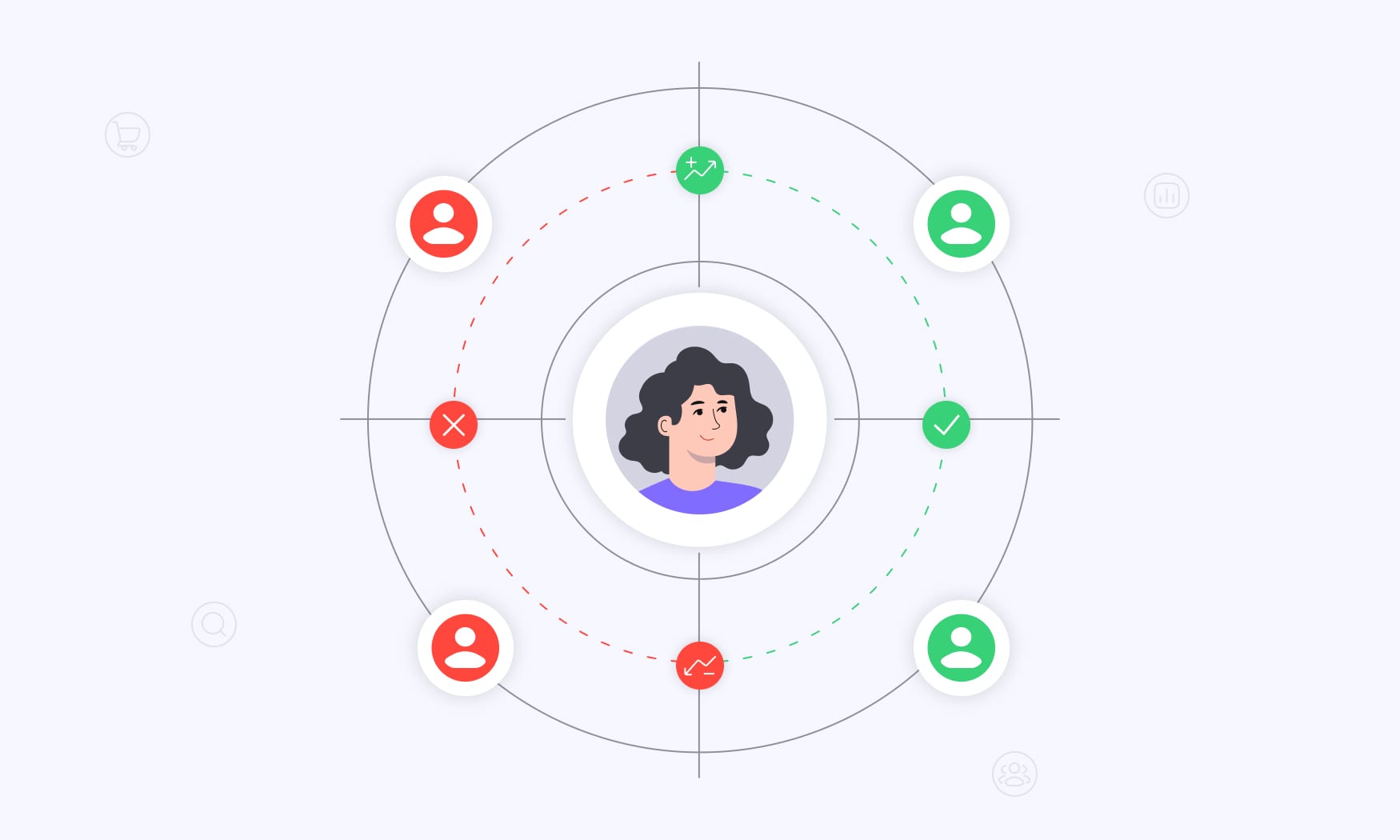
The second is vital if you want to build a loyal customer base and prevent them from churning. Predictive churn detection is a customer retention strategy that uses customer behavior data to spot at-risk customers before they decide to leave.
This is a super effective and targeted strategy that can recover and retain 15-25% of customers.
The key to implementing successful predictive churn detection:
Make sure you have accurate data and react at the right time so you reach the customer before they actually say goodbye to your product or service.
How to Implement a Rock-Solid Predictive Churn Detection Campaign
- Monitor product engagement metrics: Look at customers’ login frequency and session duration, feature use (and depth).
- Keep an eye on support requests: View the number of support tickets sent from customers, NPS scores (if available), sentiment, and overall communication frequency. If they’re reaching out for help daily, they are having problems and represent a high churn risk.
- Check in on billing: Your customers’ billing habits can uncover potential churn candidates. If they are late with payments, this is another potential churn risk sign.
- Set up a churn risk scoring system: Group customers into churn probability categories where you have high-risk (>70%), medium risk (40-70%), and low risk (<40%), so you know exactly which customers you need to work on to improve customer retention.
- Automated alerts: If you can, it’s a good idea to take advantage of tools that let you set up automated alerts for customers with say, three or more risk indicators, and trigger personalized reach-out campaigns.
3. Personalize Customer Communications
The third customer retention strategy is all about making your customers feel special by personalizing your communications.
According to McKinsey, 76% of customers get frustrated when companies don’t deliver personalized interactions. So, retaining customers can be as simple as moving to a more personalized form of communication. In doing so, you’ll improve customer engagement and make way for more fruitful customer relationships.
The key to personalizing customer communications:
Make sure you get the right balance between AI automation and human touch. Personalization at scale is almost impossible without the help of AI and automation tools, but if you want your communication to be genuine and authentic, it needs to sound and feel human.
How to Implement Personalized Campaigns at Scale
- Use purchase history: Use dynamic content that automatically adjusts based on past purchases and preferences.
- Segment your audience and define personas: Create detailed customer segments based on demographics, behavior, interests, and lifecycle stage.
- Prioritize by impact: Start by focusing your personalization campaigns on segments that offer the highest measurable value, like abandoned carts or high-value customers.
- Celebrate special moments: Use birthday and anniversary messaging with exclusive offers to create the emotional connections customers appreciate.
4. Provide Omnichannel Customer Support
The fourth is streamlining customer support by using an omnichannel approach. This will make sure customers receive a consistent, high-quality experience no matter how they choose to communicate with you.
The key to a successful omnichannel customer support:
Make sure all your communications channels are interconnected. You don’t want channels operating in silos.
How to Integrate Your Channels and Make Omnichannel Support Work
- Link every channel: Provide multiple support options via phone, email, live chat, and social media that feed into a unified history for your support team.
- Focus on immediate resolution: Train your support teams to resolve 80% of issues on first contact, so customers don’t have to wait and have multiple touchpoints before their pain points get fixed.
- Don’t underestimate self-service: Some customers genuinely appreciate and value self-service resources, so make sure you develop comprehensive knowledge bases with searchable FAQs and video tutorials that solve the main customer pain points.
5. Launch Tiered Loyalty Programs
Number five is a little more advanced, but it’s great for building customer advocacy. Having customer loyalty programs creates formal incentives that reward customers, all while you collect valuable data that will make personalization possible.
The key to a successful omnichannel customer support:
The best customer loyalty programs use tiered structures that motivate customers to increase their engagement and move to the next level.
Example three-tier system:
How to Create a Three-Tier Loyalty Program for an E-Commerce Business
- Set tier categories: Define the dollar amounts and benefits for each tier.
- Bronze (0-$500 total spent): Customers get 2 points and free shipping on orders over $50
- Silver ($500-$2,000 total spent): Customers get points and free shipping on all orders, as well as early access to sales
- Gold ($2,000+ total spent): Customers get 4 points, free shipping and returns, a dedicated customer service line, and exclusive products.
- Gamify the experience: You can go a step further by including progress bars that show customers how close they are to the next tier, or reward them with achievement badges for specific behaviors.
6. Build Customer Communities
The sixth customer retention strategy is customer communities. Now, even though this can be a great way to elevate customer relationships and get them to move past the transactional mode, it’s not the simplest of methods to implement and maintain.
The key to building a successful customer community:
Make sure you have a dedicated community manager to facilitate introductions and lead conversations, as well as an active brand representative connecting with members regularly. Without these two key people, activity and interactions will slowly die down.
How to Maintain a Vibing Customer Community
- Run forums: Launch online forums where customers share tips and provide support on trending industry topics and key challenges.
- Host webinars: Host monthly webinars with subject matter experts, weave in product updates and customer success stories, and then hold a Q&A to promote collaboration and ignite more conversations.
- Organize networking events: Build deeper and more meaningful community relationships by organizing networking events and conferences. Balance dedicated learning and speaker time with more informal social and spontaneous conversation time.
7. Launch Proactive Customer Success
Number seven on our list is launching a proactive customer success initiative. This is a customer retention strategy that’s particularly useful if you want to position yourself as a partner to customers, not just a service or product provider.
The key to launching a proactive customer success program:
Make sure you know what your customers’ definition of success looks like. This is what will dictate all aspects of your proactive customer success program.
How to Launch a Proactive Customer Success Program
- Define & map: Define what customer success looks like and map out the customer journey, focusing on the tangible results your customers want to achieve.
- Land a “health score”: Track key customer retention metrics such as product adoption rates, use frequency, and support ticket volume to establish a health score boundary that will trigger proactive action from your team.
- Get that ‘aha’ moment: When an intervention is triggered, work with the customer to give them an ‘aha’ moment. This is the moment where they see the true value of your product and genuinely appreciate its existence.
- Automate triggers & interventions: When you’ve set up the first three points, you can then scale your process by implementing tools and processes to automate triggers and customer retention interventions.
8. Design Win-Back Campaigns
The eighth customer retention strategy on our list is the win-back campaign. This is a highly target, highly effective approach. According to HBR, when done right, win-back campaigns can recover 26% of churned customers, which is a solid figure.
The key to designing a successful win-back campaign:
Make sure you know and understand why a customer churned in the first place and address those pain points in the personalized communication for the campaign.
How to Schedule a Progressive Win-Back of Communication
- Email 1 (30 days after the customer’s last purchase/churn): Send a friendly check-in with a 10% discount offer
- Email 2 (45 days after the customer’s last purchase/churn): Send a value proposition reminder with customer testimonials and a 20% discount offer
- Email 3 (60 days after the customer’s last purchase/churn): Send a final win-back offer for free shipping or new product announcements with discount offers
Tip: One of the best ways to understand why your customers churn is to have exit churn chats. These are conversations where you identify their reasons for leaving and potentially find some opportunities and ways to improve your product offering. These interviews are incredibly valuable feedback sessions, which often reveal existing service gaps or product limitations that you might not even be aware of.
9. Make Return, Refund & Cancellation Processes Easy
The ninth customer retention strategy may sound counterproductive, but it works to reduce customer churn.
When you set up a hassle-free return and cancellation process, you actually increase customer satisfaction by reducing purchase anxiety and confirming you have confidence in your products.
The key to making returns and cancellations easy:
Make sure your return and cancellation policies are simple and transparent, and make the process centered around the customer. Make it quick and easy, so you encourage customers to trust you, come back, and remain loyal.
How to go about returns and cancellations
- Return/cancellation windows: Give customers 30-60-day return windows with free return shipping or a cooling-off period.
- Automation & speed: If you can, do one-click return requests with automatically generated prepaid return labels. This takes out a lot of the work for the customer, who will appreciate it.
- Speedy refunds: Avoid lagging and long refunds by sticking to a “money back in your account within 3-5 business days (maximum!)
10. Create Educational Content Programs
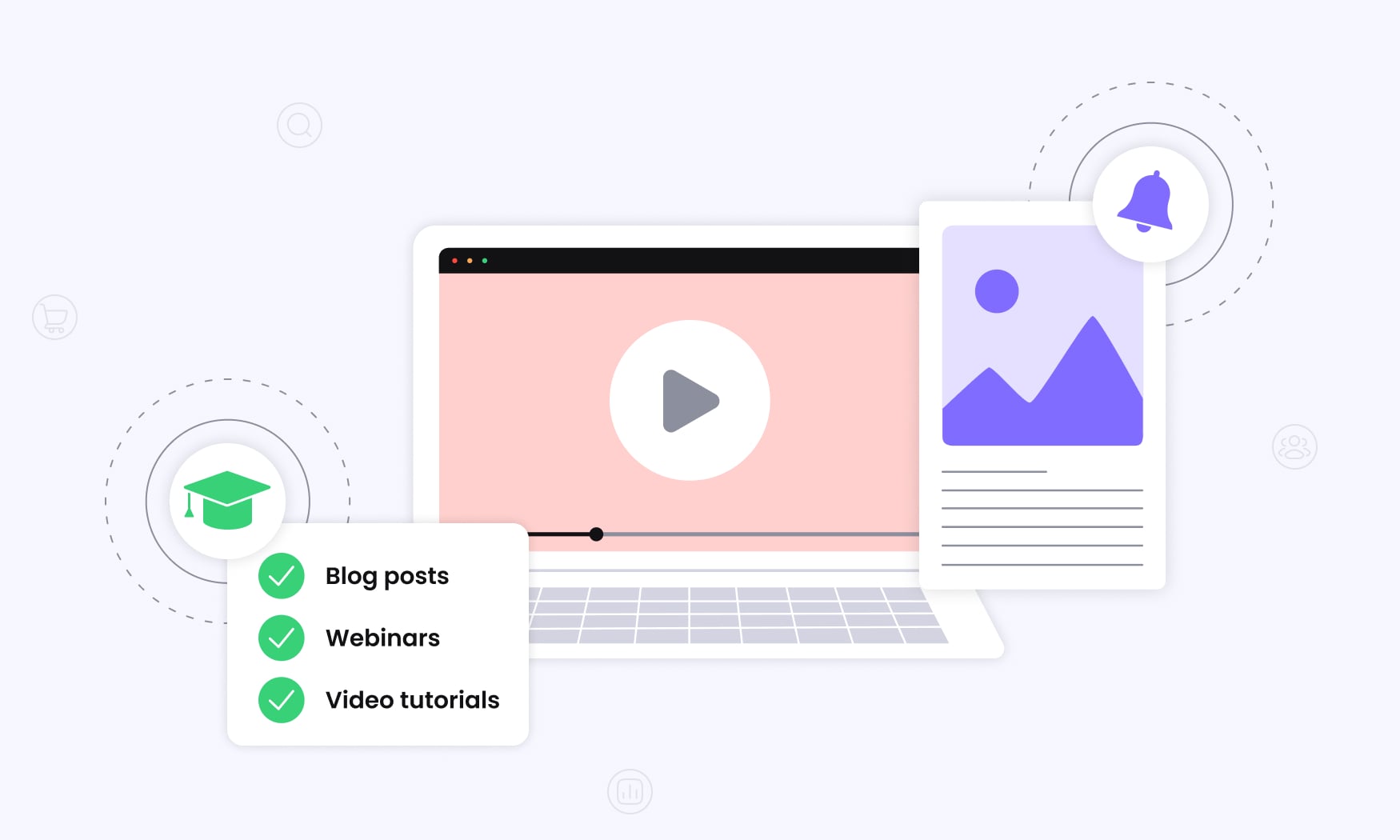
The tenth customer retention strategy, which is particularly effective for B2B SaaS products, is educational content programs. These target existing customers by providing useful learning resources to help them achieve better business results or improve their operations.
Marketing content is a form of customer retention program that positions your brand as a valuable resource that goes beyond your primary product offer. It also keeps your brand top of mind, so they remember you at some point when they do end up needing your product or service.
The key to quality educational content marketing programs:
Make sure your content focuses on your customers’ needs and challenges – not your product. References to your product should be subtle and only included when they truly help the customer overcome a problem.
How to approach content programs and what they include
- Blog posts: A huge number of customers solve many of their product and problem by getting information from blog articles.
- Webinars: Webinars do take time and resources to put together, but if you can manage it, you can provide a lot of value by featuring industry experts and thought leaders who share valuable insights
- Video tutorials: Invest in creating detailed video tutorials that focus on how to make the best use of your product, particularly for complex tasks. These can also be used a customer support materials for onboarding.
11. Implement Referral Incentives
The eleventh customer retention strategy is referral programs. Your aim here is to use your most satisfied customers to drive new customer acquisition.
Taking this approach also strengthens relationships with your existing customers.
The key to a great customer referral program:
Make sure you include the customers who have had such a great experience with you that they want to share it with other people.
How to Implement an Effective Referral Program
- Double-sided rewards: Make it irresistible for the referrer (receives $25 account credit) and the referee (gets 15% off their first order or subscription)
- Simplicity & transparency: Be crystal clear on what each party gets and make the process simple for both users.
- Attribution: Make shareable referral links with tracking for easy attribution so you know exactly who your top referrers and customer advocates are.
- Recognize your customers: Set up automated thank-you messages and put an effort into driving social recognition when referrals convert.
12. Monitor & Respond to Online Reviews
The final customer retention strategy is proactive online reputation management. This is super important because it demonstrates to the whole world your unwavering commitment to customer satisfaction.
Remember, your review response strategy doesn’t just impact the original reviewer. It also shows potential customers what they can expect and how much you appreciate honest feedback.
The key to successful online reputation management:
Make sure you cover the three P’s: promptness, professionalism, and personalization. Treat every review (positive and negative) as an opportunity to demonstrate your commitment to the customer and as a way to build trust.
How to approach online reviews
- Automate alerts: Set up Google Alerts for brand mentions and automated review notifications from your main review platforms.
- Respond ASAP: Try to respond to all reviews within 24 hours with personalized, helpful replies. If this isn’t possible, then ASAP.
- Generate new reviews: Find a way to identify recently satisfied customers and set up review generation campaigns. Most loyal customers will be more than happy to leave a review.
- Don’t forget the negatives: Make sure you don’t sideline negative review feedback. Instead, use it to identify and address product or service issues that need fixing.
Industry-Specific Customer Retention Benchmarks
Every industry is different, so you need to make sure your target retention rates are realistic. To help you out in getting started, we have some key industry benchmarks you can use as a reference.
| Industry | Annual Retention Rate | Average CAC | Key Factors |
| SaaS | 85-90% | $200-500 | Contract length, switching costs |
| E-commerce | 20-30% | $50-200 | Product category, repeat purchase cycle |
| Banking | 75-85% | $300-800 | Regulatory switching barriers |
| Media/Entertainment | 80-90% | $30-100 | Content quality, platform convenience |
| Telecommunications | 85-95% | $400-1000 | Contract terms, service quality |
| Insurance | 85-90% | $500-1200 | Claim experience, price sensitivity |
There are many factors that can influence retention rates. These include:
- Contract length – Longer contracts typically show higher retention
- Switching costs – Higher switching costs increase retention
- Competitive density – More competitors typically decrease retention
- Customer Lifetime Value (CLV) – Higher CLV customers often show higher retention rates
Common Customer Retention Mistakes to Watch Out For
- Focusing on acquisition & ignoring retention KPIs: Many businesses track new customer acquisition and pay little attention to churn rates, CLV, or retention rates. This creates a scenario where marketing efforts are undermined by poor retention.
- Generic retention strategies minus customer segmentation: One-size-fits-all retention approaches don’t work. They ignore the reality that different customer segments have different needs. High-value customers look for a certain type of treatment. And low-value customers, and new customers need a different level of attention than long-term loyal customer advocates.
- Over-communication vs. value-driven content: Bombarding customers with promos and discounts makes them expect promotions rather than appreciate your core value proposition. Focus on educational content, tips, and value realization instead of constant discounts.
- Neglecting onboarding & post-purchase experience: Many businesses invest heavily in conversion and then offer minimal onboarding and user support after the purchase. The customer experience and satisfaction level of the first 90 days are crucial in predicting long-term retention.
- Failing on feedback: If you don’t follow up and implement changes after feedback, you basically show your customers their opinions aren’t valued. So, close the loop by letting them know what you’ve done to fix their problems
RedTrack: Accurate Data for Your 2026 Customer Retention Strategy
Creating a customer retention strategy that works takes time and effort. It also demands that you take into consideration the industry you operate in, your specific business model, customer types, and any resource limitations. But in all cases, to implement a successful model, you need to go through systematic planning, cross-functional collaboration, and dedicate time to ongoing optimization.
It’s not something that’s done once and left. The key to long-term retention success actually lies in treating it as an ongoing strategic initiative rather than a one-time project.
Customer expectations evolve, competitive landscapes change, and new retention opportunities and tactics emerge continuously. Companies that make customer retention a core business driver will consistently outperform those that treat it as a secondary priority.
If you’re just starting out or if you’re revamping your customer retention, start with the basics and get the tools you need that will deliver accurate customer attribution data, which will inform your decisions.
RedTrack is an all-in-one ad tracking and attribution platform that gives businesses clear, accurate data on every touchpoint throughout the entire customer journey.
Because it operates on first-party data and unbiased attribution, you get to see which channels introduce, nurture, and re-engage your best customers. The clarity you get helps you shape customer retention strategies in a way that lets you focus on what truly keeps customers coming back.
So, instead of guessing where your loyal customers are and how they get to you, RedTrack shows you the exact campaigns, content, and moments that drove them to convert, and the ones that made them drop off.
Need a tool that will help you identify potential churn risks through detailed customer journey mapping? Sign up for RedTrack’s 14-day free trial period to see how the tools can help you make better customer retention strategy decisions.


