
Choosing between Shopify and Etsy can make or break your online business. These two platforms take completely different paths to eCommerce success, so your choice will shape everything from your profit margins to how far your brand can grow.
Both have helped millions of creators and entrepreneurs build thriving stores. But they don’t serve the same kind of seller. Etsy is a ready-made marketplace with built-in traffic and rules of its own. Shopify gives you total freedom to build your brand from the ground up, but with freedom comes more responsibility.
In this guide, we’ll break down the real differences in pricing, features, marketing tools, and growth potential. By the end, you’ll know exactly which platform fits your goals and how to use it to build something that lasts.
Pricing and fees comparison
When you’re deciding between Shopify and Etsy, the real question isn’t just how much it costs but how those costs scale as you grow. Each platform takes a very different approach to pricing, and that choice directly impacts your margins.
Shopify runs on a monthly subscription model with three main tiers:
- Basic: $29/month + 2.9% + 30¢ per transaction fee
- Grow: $79/month + 2.6% + 30¢ per transaction fee
- Advanced: $299/month + 2.4% + 30¢ per transaction fee
All the Shopify plans come with a few key things:
- Full-featured online store builder
- Ongoing 24/7 support
- Unlimited contacts and customer segmentation marketing tools
- One-click purchases via world-class checkout
As you move up each tier, you’ll unlock more professional features like detailed sales reports, better shipping tools, and lower processing fees. And, if you choose Shopify Payments, then you don’t get charged any extra transaction fees. However, if you decide to go with a third-party payment gateway, you’ll be looking at a 0.5% to 2% fee per sale.
Etsy, on the other hand, operates on a pay-per-listing model. Now this can get pretty confusing because you’ve got all sorts of fees you need to keep track of, like:
- Individual listing cost: $0.20 (this is valid for 4 months or until the item sells – whichever comes first)
- Etsy’s transaction fee: 6.5% of total sale price (this is Etsy’s cut from the sale, which includes the sale price + the shipping + any gift wrapping charges)
- Payment processing fee: ~3% + $0.25 (this is for US sellers using Etsy payments, but fees vary based on country)
- and offsite ads eat into your profits too – 12 – 15% of the sale if that sale came from one of Etsy’s ads
Now, while Etsy doesn’t have tiered plans that charge you a monthly subscription fee, they do offer two optional monthly subscriptions:
- Etsy Plus: $10 (an optional extras package for sellers looking for advanced tools to grow their online business
- Etsy Pattern: $15 (an optional fee if you want to create your own standalone online store)
If you are new to online selling and don’t expect to sell much at first, this model can be an affordable option. But keep in mind, all those fees listed above cal add up quickly, especially if you’re selling stuff that doesn’t have a high price tag, or you’re doing your own shipping and handling.
To sum it up: Shopify’s model may cost a bit more upfront, but Etsy’s fees can start to eat into your profit margin in the long run.
Hidden costs to consider
Shopify additional expenses:
- Premium themes: $140-$500 one-time purchase
- Apps: $5-$300 monthly, depending on functionality
- Custom development: $25-$150+ per hour for specialized features
- Domain name: $10-$30 annually (unless using Shopify subdomain)
Etsy’s additional expenses:
- Etsy Ads: Sellers choose a daily budget
- Offsite Ads: 15% for less than $10,000 / 12% for over $10,000 (sellers who exceed a certain sales threshold in 12 months need to pay for mandatory offsite ads)
Cost analysis by sales volume:
For sellers generating $1,000 monthly revenue:
- Shopify Basic: ~$72 total monthly cost
- Etsy: ~$103, depending on the number of transactions
For sellers generating $5,000 monthly revenue:
- Shopify: ~$180-$330 total monthly cost
- Etsy: ~$495-$570, excluding optional advertising
For high-volume sellers, Shopify usually wins. Its flat monthly cost and lower transaction fees pay off fast. But if you’re selling occasionally or seasonally, Etsy’s pay-as-you-go model makes more sense since you’re not locked into a monthly subscription.
Design and customization
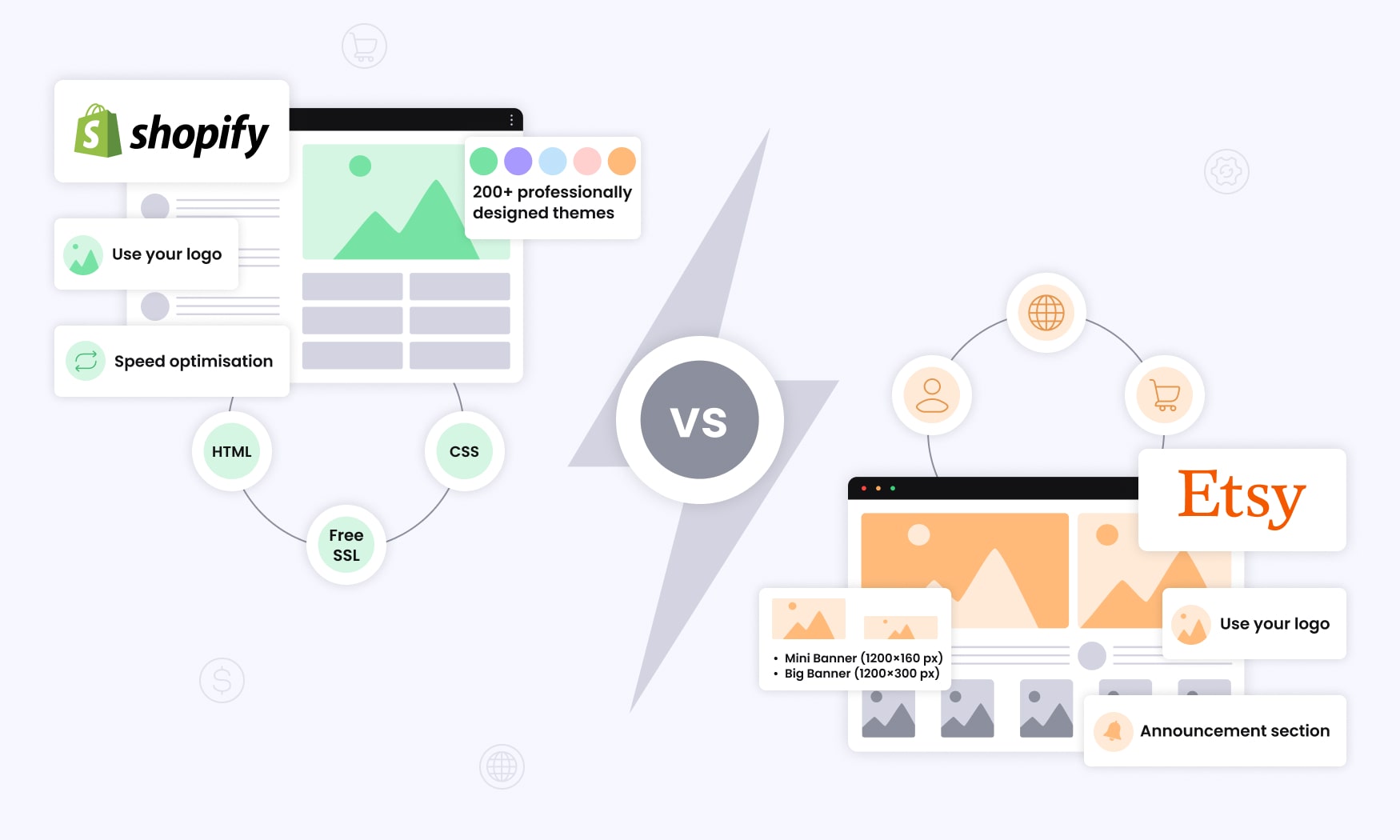
The level of control you have over your store’s look and functionality is one of the biggest differences between Shopify and Etsy, and it directly impacts your brand identity and customer experience.
Shopify design capabilities:
Shopify gives you full creative freedom. You can choose from 200+ professionally designed themes, including 23 free and over 245 paid options ranging from $140–$500. Every theme is mobile-responsive, conversion-optimized, and built with modern layouts that are easy to customize.
If you’ve got dev skills (or a developer), you can go deeper. Shopify gives full access to HTML, CSS, and Liquid, its own templating language, so you can create a completely custom design without breaking the platform’s core performance or security.
But if you’re not tech-savvy, don’t worry – the drag-and-drop theme editor is super easy to use and play around with to land the colours, fonts, layouts, and content you want. You don’t need to be a website builder or expert to set everything up. You can reorder components, add and delete sections, as you like, and experiment with your store design until it feels just right!
Every Shopify plan includes a free SSL right out of the box, but if you want your own custom domain, you’ll have to purchase this separately. As an extra perk, you’ll also get speed optimisation built right in, which will keep your pages in tip-top form when it comes to customer experience and SEO.
Etsy customization options:
Etsy keeps things simple, and that simplicity comes with limits. That is, unless you have an Etsy Plus account, which gives you access to more advanced customization features.
But if you are a basic seller, your customization options are limited to:
- Two banner sizes: Mini Banner (1200×160 px) or Big Banner (1200×300 px)
- Shop icon/logo upload
- Shop owner photo upload
- Announcement section (use for sales alerts, vacation notifications, or other important information)
- About section (add details about yourself, your brand, or your selling online process)
Your shop policies, about section, and – most importantly – product photography do the heavy lifting when it comes to standing out. Since every shop follows the same structure, your visuals become the make-or-break factor for getting clicks and conversions.
When it comes to colour schemes and layouts, these are stock-standard, locked into ETSY’s standard marketplace design. The reason for this uniform approach is that it keeps the platform familiar to buyers. However, from a seller’s point of view, this means you have very little room to put your own stamp on the look and feel of your brand.
On top of that, your store lives under the Etsy subdomain, which makes it that much harder to stand out as your own independent brand. However, while you can’t fiddle with the design side of things, the copy and content are completely in your hands!
The other great thing is the Etsy app, which makes it super easy to keep on top of orders and customer messages.
| Feature | Shopify | Etsy |
| Theme Selection | 200+ themes available | Fixed marketplace design |
| Custom CSS/HTML | Full access | Not available |
| Custom Domain | Yes, included | etsy.com subdomain only (or custom domain for a fee) |
| Mobile Optimization | All themes are responsive & optimized | Platform-optimized |
| Brand Control | You get complete control | Limited to banner/logo |
| Page Speed | Themes optimized for speed | Etsy controls the overall speed |
Features and functionality
The range of tools at your disposal is the deciding factor in how well you’ll be able to manage (and grow) your online business. So, determining which platform’s features will meet your business needs is a crucial part of your decision-making process, and this will determine planning for long-term success.
Shopify feature set:
Shopify will give you everything you need to run and scale a proper brand and online store. You can list as many products as you like, track your stock levels across multiple locations, and manage all the usual suspects: variants, SKUs, bundles, subscriptions, and even digital products – all from one neatly laid out dashboard.
Its built-in analytics show exactly what’s driving sales, from traffic sources to customer behavior. You can plug in Google Analytics for deeper insights and run smarter campaigns based on real conversion data.
The platform also has abandoned cart recovery baked in (a simple feature that recovers a surprising amount of revenue), automatically emailing customers who left without checking out. You can layer on discount codes, gift cards, and auto promotions to run marketing campaigns without needing extra apps.
For sellers that ship worldwide, things like multi-currency capabilities, taxes figured out automatically, and shipping rates that update in real time make doing business overseas esier to manage. And to top it all off, Shopify POS makes sure your online and offline inventory stay perfectly in line (even if you also sell in person).
And if you do business-to-business, you’ll still find useful tools like wholesale pricing rules that save time, purchase orders to keep everything on track, and low-stock alerts that give you more warning. Shopify doesn’t just let you run an online store – it gives you a full commerce system that’ll grow with your company.
Etsy feature set:
Etsy keeps things simple, and that’s both its benefit and the reason why some online sellers might find it a bit limited. But in reality, if it’s simple sales you’re after, it’ll do the job just fine. You can list products with up to 20 photos to showcase them in the best light, match them up with detailed descriptions, and manage your basic stock levels with ease.
But if your sales process has multiple options or more complicated details, Etsy can become clunky. Etsy Stats will give you a rough idea of how your business is performing through views, visits, and the total number of sales. While this is good enough to see what’s selling fast, it might not be quite enough to really understand what makes your products fly off your online shelf.
You can run sales and coupons, and take advantage of seasonal promos to catch holiday traffic, which is handy, but relatively basic.
Shipping’s easy. You get discounted carrier rates, built-in label printing, and automatic shipping cost calculations for international orders.
Communication runs through Etsy Messages, so you can talk to buyers, but always inside Etsy’s walls. You don’t truly own that relationship; Etsy does.
Sales tools comparison
Both platforms give you sales tools, but considering the difference in their target audience, there are nuances in them as well.
Shopify advanced sales features:
- Upselling and cross-selling apps
- Subscription billing and recurring payments
- Advanced checkout customization
- Multiple payment gateway options
- Wholesale customer portals
- Multi-channel inventory synchronization
Etsy Sales Tools:
- Basic promotional pricing
- Limited discount code options
- Built-in buyer traffic from the marketplace
- Etsy Ads for promoted listings
- Social media sharing tools
- Simple order management system
The real difference lies in Shopify’s app ecosystem, which lets you build advanced sales systems; Etsy keeps you within its marketplace box. Shopify gives you control and flexibility. Etsy gives you convenience and limits.
SEO and marketing capabilities
Your success in attracting customers (and keeping them!) comes down to the marketing tools and search visibility each platform gives you. The better your reach and optimization options, the stronger your brand grows over time.
Shopify SEO and marketing:
Your Shopify store gives you full control over your marketing engine. You can edit the meta titles, descriptions, and URLs, create a clean and organised XML sitemap, and then make use of schema markup to make your products stand out a bit more in the Google search results.
The built-in blog turns your store into a content hub, perfect for ranking for keywords, linking to products, and building authority that drives organic traffic long-term.
For retention, Shopify’s email tools make direct communication easy. You can use the native Shopify Email app or plug into tools like Klaviyo, Mailchimp, or Constant Contact to run automated sequences for welcomes, abandoned carts, or promotions.
Shopify also syncs your store with all the big names in social media. Think Facebook, Instagram, Pinterest, and TikTok, which means shoppers can buy straight from social media posts. Plus, with built-in integrations for Google Ads and Meta Ads, you can set up campaigns, track how things are going, and then tweak your spend to get the best out of your paid ad investment to boost online sales.
Etsy SEO and marketing:
With an Etsy store, you get access to the platform’s internal SEO system, where you can test and trial different title tags and descriptions to get noticed in Etsy marketplace searches. But apart from that, don’t expect to get much more when it comes to deeper SEO-type settings like metadata and site structure.
What Etsy does offer is strong domain authority, which can get your items ranking well on those long tail niche keywords (especially if you’re selling handmade, vintage, or craft supplies). But the catch is that all these rankings are actually helping Etsy build its brand position – not yours.
When it comes to Etsy Ads, your listings get some extra visibility by promoting your products on search results and category pages. You can pick the keywords and interests you want to target, but the system is actually more geared towards making it easier for buyers to use the platform, rather than getting super precise results.
You can still drive traffic from social media, but every click leads back to Etsy, not your own domain. So again, that builds Etsy’s brand more than yours.
And when it comes to email marketing, options are nearly nonexistent. Etsy owns the customer relationship. You can message buyers, but you can’t collect or use their email addresses for future marketing.
Bottom line: Etsy makes promotion easy inside its walls, but you never really get to own your audience.
| Marketing Feature | Shopify | Etsy |
| SEO Control | Complete | Limited to listings |
| Blog/Content Marketing | Built-in blog | Not available |
| Email Marketing | Full control + tools | Platform-restricted |
| Social Media Selling | Multi-platform integration | Sharing tools provided |
| Customer Data Access | Complete ownership | Platform-controlled |
| Advertising Options | Google Ads, Meta Ads & apps | Etsy Ads only (mandatory Offsite Ads) |
Customer Support Quality
When tech issues hit or orders start backing up, reliable support isn’t a nice-to-have but something that’s mandatory. The faster you can get help, the faster you can get back to serving customers and keeping sales moving.
Shopify Support Experience
Shopify backs its users with 24/7 support via live chat for all plans and email, and phone support for Shopify Plus or Retail plans. Live chat replies are near instant, while emails usually get a response within a day, which is fast enough to keep your business running without downtime.
The Shopify Help Center gives you immediate access to resources, tutorials, and troubleshooting advice so you can usually sort out problems for yourself without needing to talk to support.
For those who want to buff up their ecommerce platform skills, Shopify Academy offers a bunch of free courses on e-commerce marketing and the best ways to use the Shopify store platform. For store owners, it will help you avoid making rookie mistakes so you can get more out of the online store.
The Shopify Community forums are another great resource. This is where Shopify store owners, experts, and developers get together to share experiences, glitches, and solutions.
And if you’re after some customisation, the Shopify Partners network puts you in touch with top-notch developers and agencies who can handle all sorts of builds or integrations you’re looking to add to your Shopify store.
Etsy support structure
With an Etsy store, as a standard seller and show owner, you’ll primarily rely on email-based support. However, if you have Star Seller Status, you will have live chat support from your Shop Manager Dashboard during business hours.
But having said that, the Etsy Help Centre does cover the basics, including everything from policies and best practices to all the frequently asked questions you’d expect a seller to have.
Etsy’s Seller Handbook is also helpful. It gives you a stack of tips, trends, and advice on how to actually succeed in the online marketplace. That being said, if your problem is a bit more hands-on, your best option is to contact support.
You’ll also find community forums where you can connect with other sellers, share experiences, get advice, and get the inside scoop on any changes to policies or algorithms. If you’ve used community forums in the past, you’ll know they can sometimes be a better resource than official documentation.
Who Should Choose Shopify?
Shopify is built for entrepreneurs who want control, scalability, and brand ownership, and not just quick access to an online marketplace. It’s for people building businesses via a dedicated ecommerce platform, not just listings.
If you’re planning to grow beyond handmade products, Shopify gives you unlimited product listings, advanced inventory tools, and the flexibility to expand into wholesale, dropshipping, or print-on-demand – no category restrictions.
Already have traffic from social, email, or existing customers? Shopify lets you turn that audience into loyal buyers through custom branding, seamless design, and a unified customer experience.
For more complex setups, Shopify’s app ecosystem provides a perfect solution. You can plug in tools for analytics, subscriptions, loyalty programs, or backend systems, all without breaking your existing workflow.
Running multi-channel sales? Shopify syncs everything from your website to social stores to physical retail, keeping inventory and customer data aligned across every channel.
And speaking of data, Shopify gives you full ownership of it. Every email, purchase, and behavior metric is yours to use for smarter marketing and stronger customer relationships.
The monthly fee makes sense when you’re running consistent sales — because the return in profit, control, and growth potential more than pays it back.
Who Should Choose Etsy?
Etsy is best for creative entrepreneurs who want fast market access and built-in traffic without worrying about websites, tech setups, or marketing campaigns. It’s the go-to platform for getting your products in front of buyers quickly – no ads, no coding, no stress.
If your Etsy shop sells handmade goods, vintage items, or unique crafts, Etsy’s audience is already out there looking for you. Shoppers go to the Etsy ecommerce platform specifically because they know they’re going to find truly unique pieces that no one else has. So if this group of people is your primary customer base, an Etsy shop is the perfect choice.
For new online store sellers who don’t have their own website and who have zero to minimal experience with ecommerce platforms, getting started on Etsy will be easy.
As one of the most well-known ecommerce platforms focused on niche, artisan, and unique products, it has over 93+ million active buyers. So even if you don’t have your own traffic, you will have Etsy’s huge audience and regular user base. It’s the perfect place to test out products and start making sales without having to fork out large chunks of cash (for ads) and building your own marketing mechanism.
If you’re not a developer and don’t have a huge amount of resources to invest in your online store, an Etsy shop is one of the easiest ways to go. An Etsy store is easy to set up, and it’s just as easy to handle orders. The idea behind it is to give sellers the time to focus on making stuff, so they don’t waste time on admin.
The other great thing about Etsy is that it thrives on community. There are loads of seller forums and creative groups where you can connect with other sellers, get feedback and advice, and help your small shop grow really quickly.
If your main aim is to get selling ASAP and tap into that built-in buyer base (and you’re not too fussed about building a brand), Etsy is one of the quickest ways to get to market.
Conclusion
Picking between Shopify and Etsy ultimately depends on what your primary goal is. With Etsy, you get to tap into millions of active buyers instantly, and it’s a safety net for testing out new ideas without taking a huge risk. But then there’s Shopify. It gives you total control, where you’re free to build your own brand, own your customer data, and scale however you see fit.
| Business Type | Recommended Platform | Key Reasons |
| New artisan/crafter | Etsy | Built-in traffic, low startup cost, community support |
| Scaling a handmade business | Both platforms | Maximize reach while building an independent brand |
| Product-based startup | Shopify | Full control, advanced features, growth potential |
| Seasonal/hobby business | Etsy | Pay-per-use pricing, simplified management |
| Multi-product brand | Shopify | Unlimited categories, advanced inventory management |
| Service-based business | Shopify | Flexible product types, booking integrations |
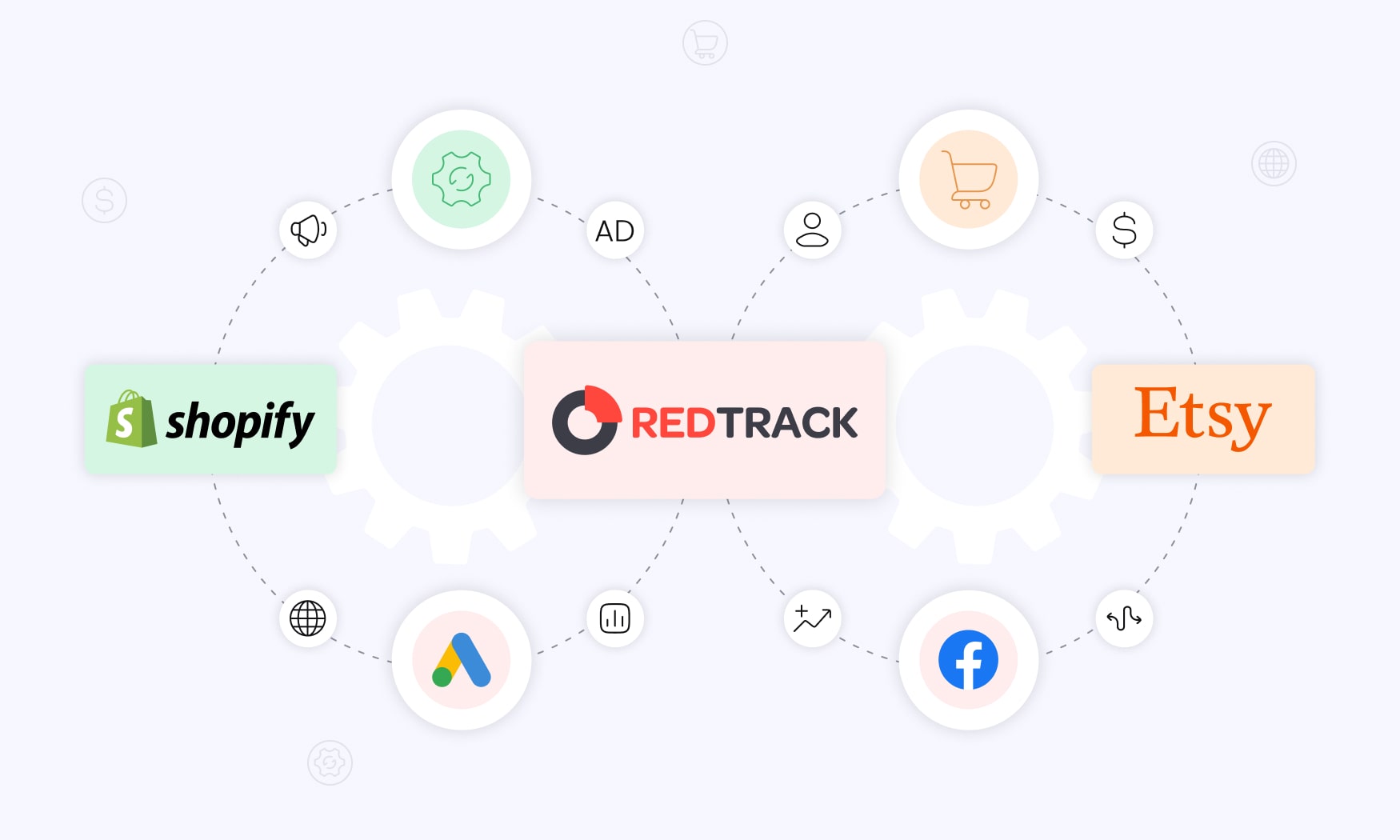
Whichever way you decide to go – an Etsy shop or a Shopify store – the key to success will lie in actually being able to track your progress and know what’s working. That’s where RedTrack comes in.
With RedTrack, you can see exactly what’s driving sales for you, be it Etsy Ads, Facebook Ad campaigns, Google traffic, or influencer shoutouts sending people to your Shopify store. It gives you a clear view of every single click, conversion, and cost, so you can see what actually matters.
Thanks to RedTrack, media buyers and eCommerce marketers don’t have to keep guessing and hoping for the best. You can scale up ad spend with confidence, automate some of the more tedious optimization work, and just focus on what really matters, which is growing your business profitably.
Whether you’re testing out your first handmade collection on Etsy or building a full-on brand on Shopify, RedTrack is there to keep your tracking sharp, give you accurate attribution, and help you make some real predictions about how your business is going to do next.


